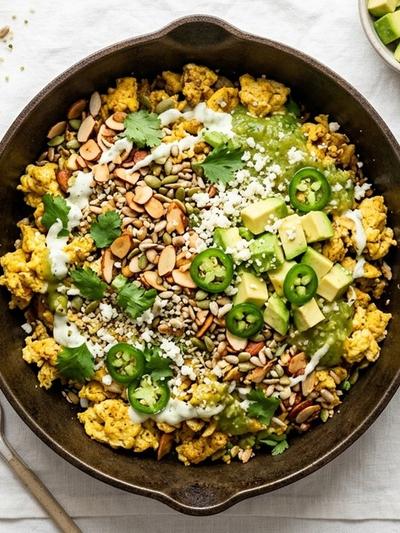
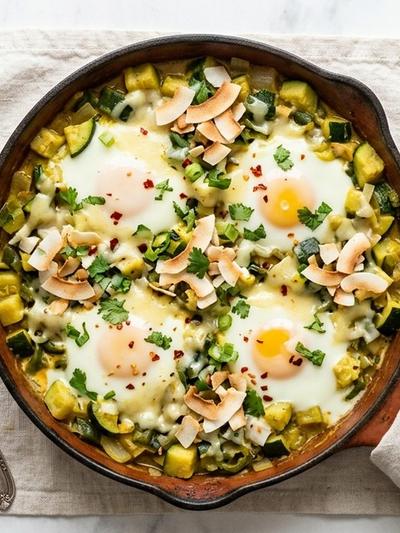
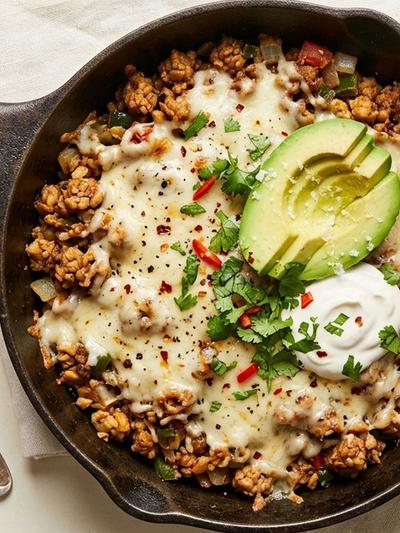
Imagine cracking eggs into a bubbling pool of tangy tomatillo salsa verde, then dropping generous spoonfuls of creamy whole-milk ricotta right on top so they go soft and pillowy as everything cooks together. That is exactly what this one-skillet breakfast delivers — bright, gently spiced, and impossibly creamy, with charred poblano and jalapeño adding just the right amount of smoky heat. A final tumble of ripe avocado slices, toasted pepitas, and crumbled cotija cheese turns the whole thing into a Mexican-inspired morning feast you will want to make every single weekend.
Each serving packs roughly 42 grams of fat from butter, ricotta, cream cheese, and avocado, keeping your macros firmly in the keto sweet spot at about 73 percent of calories from fat. With only 7 grams of net carbs and 22 grams of protein per plate, this breakfast fuels your morning without knocking you out of ketosis. The combination of egg protein and rich dairy fat means you stay satisfied well past lunch.
Best of all, everything cooks in a single skillet in under 25 minutes, and cleanup is a breeze. It scales easily for two or feeds a family of four straight from the pan. If you meal-prep your salsa verde and toast your pepitas ahead of time, you can have this on the table in closer to 15 minutes on a busy weekday morning.
Ingredients (serves 4)
For the skillet eggs:
- 8 large eggs
- 1¼ cups (280g) whole-milk ricotta cheese
- 2 oz (56g) cream cheese, softened and cut into small cubes
- 4 tablespoons (56g) unsalted butter
- ¾ cup (180ml) salsa verde (tomatillo-based, check label for no added sugar)
- 1 medium poblano pepper, seeded and diced
- 1 jalapeño pepper, sliced into thin rings (seeds removed for less heat)
- ½ teaspoon ground cumin
- ¼ teaspoon smoked paprika
- ½ teaspoon fine sea salt
- ¼ teaspoon freshly ground black pepper
For topping:
- 1 large ripe avocado, sliced
- 2 tablespoons (16g) raw pepitas (pumpkin seeds), toasted
- 1 oz (28g) cotija cheese, crumbled
- 2 tablespoons fresh cilantro leaves, roughly chopped
- 1 lime, cut into wedges
Instructions
Toast the pepitas. Place a large oven-safe skillet (10- to 12-inch) over medium heat. Add the pepitas and toast, stirring frequently, for about 2 minutes until they begin to pop and turn golden. Transfer immediately to a small bowl and set aside.
Char the peppers. Return the skillet to medium-high heat and add 1 tablespoon of the butter. Once melted and foaming, add the diced poblano and sliced jalapeño. Cook for 3 to 4 minutes, stirring occasionally, until the edges are lightly charred and the poblano has softened. Stir in the cumin and smoked paprika, and cook for 30 seconds until fragrant.
Add the salsa verde. Pour the salsa verde into the skillet and stir to combine with the peppers. Let it come to a gentle simmer, about 1 minute. The sauce should be bubbling lightly around the edges.
Drop in the remaining butter and cream cheese. Add the remaining 3 tablespoons of butter and the cubed cream cheese to the simmering salsa verde. Stir gently as they melt into the sauce, creating a rich, creamy green base. This should take about 1 to 2 minutes. Season with the salt and black pepper.
Crack in the eggs. Reduce heat to medium-low. Using the back of a spoon, make eight small wells in the sauce. Crack one egg into each well. The whites should begin to set almost immediately around the edges.
Add the ricotta. Drop rounded tablespoons of ricotta into the spaces between the eggs — you should have about 8 to 10 dollops scattered across the skillet. Do not stir. The ricotta will warm and soften without fully melting, creating pockets of creamy richness.
Cover and cook. Place a lid or sheet of aluminum foil over the skillet. Cook for 6 to 8 minutes, checking at the 6-minute mark. The eggs are done when the whites are fully set but the yolks are still slightly jiggly — they will continue to cook from residual heat once you remove the lid. For fully set yolks, cook an additional 1 to 2 minutes.
Top and serve. Remove the skillet from heat. Fan the avocado slices over the top, scatter with the toasted pepitas and crumbled cotija cheese, then finish with fresh cilantro. Squeeze lime juice generously over everything. Serve immediately, scooping portions straight from the skillet.
Nutrition per Serving
| Nutrient | Amount |
|---|---|
| Calories | ~510 kcal |
| Fat | ~42g |
| Protein | ~22g |
| Total Carbs | ~10g |
| Fiber | ~3g |
| Net Carbs | ~7g |
Nutrition values are approximate and may vary based on specific brands and ingredient sizes used.
Tips & Variations
Choose your salsa verde carefully. Not all store-bought salsa verde is keto-friendly — some brands add sugar, cornstarch, or other thickeners that can bump up the carb count. Check the label and aim for one with 1 to 2 grams of carbs per 2-tablespoon serving. Brands like Herdez or Frontera tend to be clean choices, or make your own by roasting tomatillos with garlic and blending with cilantro.
Swap the ricotta for mascarpone or queso fresco. Mascarpone will make the dish even richer and creamier, adding a few extra grams of fat per serving while keeping carbs nearly identical. Queso fresco, on the other hand, holds its shape better and adds a pleasant crumbly texture. Either substitution works one-to-one by weight.
Make it spicier or milder. Leave the jalapeño seeds in for serious heat, or replace the jalapeño entirely with a milder Anaheim pepper if you prefer a gentler breakfast. You can also stir in a half-teaspoon of chipotle powder with the cumin for a deeper, smokier flavor without increasing carbs.
Store leftovers properly for meal prep. Refrigerate leftover egg portions (without avocado topping) in airtight containers for up to 3 days. Reheat gently in a skillet over low heat with a splash of water or a small pat of butter to keep the eggs from drying out. Add fresh avocado, pepitas, and cilantro just before eating.
Watch out for hidden carbs in toppings. It is tempting to add a drizzle of hot sauce or a spoonful of sour cream. Most hot sauces are fine at zero to one carb per serving, but flavored varieties and creamy sauces can contain added sugars. Sour cream is a great keto-friendly addition — full-fat versions typically add less than 1 gram of carbs per 2-tablespoon serving and boost your fat intake.