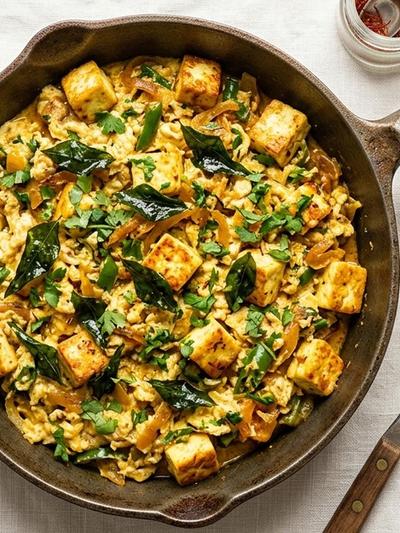
Imagine biting into a golden, buttery omelette stuffed with cumin-seared paneer, charred bell pepper, and a hit of warming garam masala — then drizzling it all with a bright, herbaceous mint-cilantro chutney. That is the magic of this keto paneer kathi roll omelette. Inspired by the iconic Indian street food where spiced fillings are wrapped in a thin egg paratha, this version skips the flour entirely and lets a rich, ghee-fried omelette do the wrapping. Every bite delivers layers of flavor: the satisfying squeak of golden paneer, the warmth of toasted cumin, and a cooling rush of fresh herbs.
With 46 grams of fat and only 5 grams of net carbs per serving, this breakfast sits perfectly in your keto macros. The generous amount of ghee and paneer deliver the sustained energy you need to power through your morning, while 27 grams of protein keep you satisfied well past lunchtime. The fat-to-calorie ratio lands right around 78 percent, making this a textbook ketogenic meal without any artificial manipulation.
Best of all, this entire dish comes together in a single skillet in just over 20 minutes. There is no marinating, no oven preheating, and no elaborate prep — you sear the filling, pour the eggs right over, fold, and serve. It is ideal for busy weekday mornings when you want something that feels special but refuse to spend your morning scrubbing pans.
Ingredients (serves 2)
For the spiced paneer filling:
- 5 oz (150g) paneer, cut into small 1/2-inch cubes
- 1 tablespoon ghee
- 1/4 teaspoon cumin seeds
- 1 small green chili, finely chopped (adjust to taste)
- 2 tablespoons (20g) finely diced red onion
- 2 tablespoons (20g) finely diced green bell pepper
- 1/4 teaspoon ground turmeric
- 1/2 teaspoon garam masala
- 1/4 teaspoon Kashmiri red chili powder (or paprika)
- Salt to taste
For the omelette wrap:
- 4 large eggs
- 2 tablespoons (30ml) heavy whipping cream
- 1/4 teaspoon salt
- Pinch of freshly ground black pepper
- 1 tablespoon ghee (for cooking)
For the mint-cilantro chutney:
- 1/2 cup (15g) packed fresh mint leaves
- 1/2 cup (15g) packed fresh cilantro (stems included)
- 1 small green chili
- 2 tablespoons (30g) full-fat Greek yogurt
- 1 tablespoon (15ml) lemon juice
- 1 tablespoon (15ml) extra virgin olive oil
- 2 tablespoons water
- Salt to taste
Instructions
Make the chutney first. Add the mint, cilantro, green chili, yogurt, lemon juice, olive oil, water, and a pinch of salt to a small blender or mini food processor. Blend until smooth and vibrant green, about 30 seconds. Taste and adjust salt or lemon. Set aside — this can sit at room temperature while you cook.
Heat a 10-inch non-stick or well-seasoned cast iron skillet over medium-high heat. Add 1 tablespoon of ghee and let it shimmer. Toss in the cumin seeds and let them sputter for about 10 seconds until fragrant and slightly darkened — this blooms their essential oils and builds the flavor base of the entire dish.
Sear the paneer and vegetables. Add the diced paneer, red onion, green bell pepper, and chopped green chili to the skillet. Cook for 3 to 4 minutes, stirring occasionally, until the paneer develops golden spots on at least two sides and the onion turns translucent. The slight char on the paneer is what gives this filling its addictive, street-food quality.
Spice the filling. Sprinkle the turmeric, garam masala, and Kashmiri chili powder over the paneer mixture. Stir well and cook for another 30 seconds until the spices are fragrant and coat every piece. Transfer the filling to a small bowl and set aside.
Beat the eggs. In a medium bowl, whisk together the eggs, heavy cream, salt, and black pepper until the mixture is uniform and slightly frothy. The cream makes the omelette richer, more tender, and harder to overcook.
Cook the first omelette. Return the skillet to medium heat and add half the remaining ghee (about 1/2 tablespoon). Once it melts and coats the pan, pour in half the egg mixture. Tilt the skillet gently to spread the egg into an even circle. Let it cook undisturbed for about 60 seconds until the edges set. Using a spatula, gently lift the edges and tilt the pan to let uncooked egg flow underneath. Continue for another 60 to 90 seconds until the top is just barely set — it should still look slightly glossy, not dry.
Fill and fold. Spoon half the spiced paneer filling down the center of the omelette in a line. Fold one side of the omelette over the filling, then fold the other side on top to create a snug roll or burrito shape. Let it sit seam-side down for 15 seconds to seal. Gently slide onto a plate.
Repeat with the second omelette. Add the remaining ghee to the skillet and repeat steps 6 and 7 with the remaining egg mixture and filling.
Serve immediately. Drizzle each kathi roll omelette generously with the mint-cilantro chutney. Garnish with a few extra cilantro leaves and a thin slice of green chili if you like it fiery.
Nutrition per Serving
| Nutrient | Amount |
|---|---|
| Calories | ~528 kcal |
| Fat | ~46g |
| Protein | ~27g |
| Total Carbs | ~7g |
| Fiber | ~2g |
| Net Carbs | ~5g |
Nutrition values are approximate and based on the stated ingredients and serving size of 2.
Tips & Variations
Use full-fat, firm paneer for the best texture. Soft or crumbly paneer will break apart when you sear it, turning your filling into a paste rather than satisfying cubes. If your paneer feels too soft, press it between paper towels for 10 minutes before cubing. Store-bought blocks from the refrigerated section tend to be firmer than freshly made paneer.
Add a tablespoon of cream cheese to the egg mixture for extra richness. This bumps the fat content even higher and creates an almost custard-like omelette that feels incredibly luxurious. It adds roughly 50 calories and 5 grams of fat per serving with negligible carb impact — a great option if you need to hit higher fat macros.
Watch your onion quantity carefully. Onions are one of the sneakiest carb sources in Indian cooking. The 2 tablespoons called for here keep the flavor authentic while adding less than 1 gram of net carbs per serving. If you are tracking very strictly, you can substitute thinly sliced scallion greens for the onion to cut carbs further while keeping that allium flavor.
Store leftover chutney for up to 5 days. Keep it in a small airtight jar in the fridge — it actually improves overnight as the flavors meld. This chutney works beautifully on scrambled eggs, grilled halloumi, or as a dip for cheese crisps throughout the week. Double the batch if you like to meal prep.
Swap the bell pepper for a handful of fresh baby spinach. If you want to boost your greens, wilt a small handful of spinach into the paneer mixture during step 4. Spinach adds almost zero carbs, blends seamlessly with the Indian spice profile, and gives you extra iron and magnesium — two minerals that keto dieters sometimes run low on.