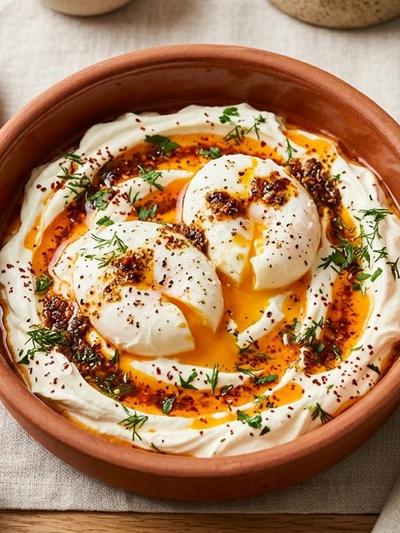
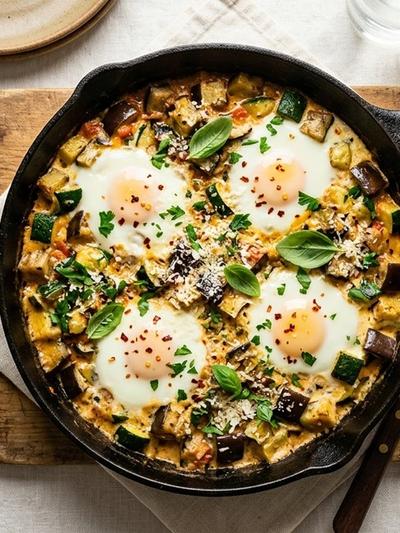
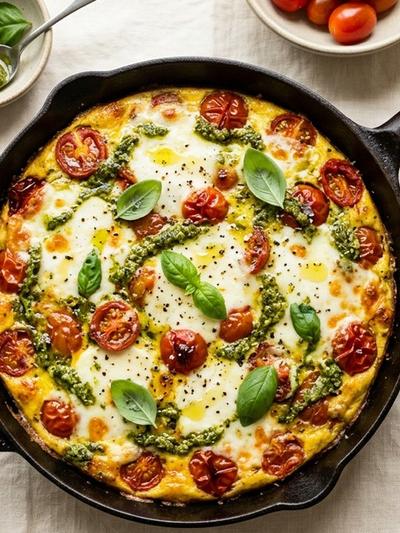
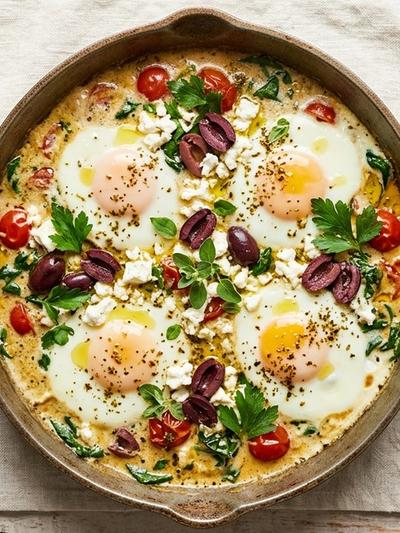
Imagine cracking eggs into a pool of sizzling, ruby-tinted sumac butter where slices of halloumi have just turned golden and crispy at the edges. The tangy, almost citrusy warmth of sumac mingles with briny kalamata olives, sweet cherry tomatoes that have just begun to burst, and a final shower of fresh dill and mint. This is the kind of breakfast that makes you slow down, tear off a piece of keto bread, and savor every last swipe across the skillet.
With roughly 38 grams of fat, 22 grams of protein, and only 5 grams of net carbs per serving, this dish lands squarely in the keto sweet spot. The generous amount of butter provides your primary fat source, while halloumi and eggs deliver satisfying protein without pushing you over your carb limit. It is a textbook example of how Mediterranean ingredients naturally lend themselves to a high-fat, low-carb way of eating.
Best of all, this entire breakfast comes together in a single skillet in about 20 minutes — five of which are hands-off while the eggs gently set. There is almost no prep work, no complicated techniques, and cleanup is a breeze. It is equally perfect for a lazy weekend morning or a quick weekday breakfast when you want something that feels special without the fuss.
Ingredients (serves 2)
For the skillet:
- 3 tablespoons (42g) unsalted butter
- 3.5 oz (100g) halloumi cheese, sliced into ¼-inch (6mm) strips
- 6 cherry tomatoes, halved (about 3 oz / 85g)
- 8 kalamata olives, pitted and halved (about 1 oz / 30g)
- 1 small clove garlic, thinly sliced
- 1½ teaspoons ground sumac
- ¼ teaspoon red pepper flakes (Aleppo pepper if available)
- 4 large eggs
- Salt and freshly ground black pepper, to taste
For finishing:
- 1 tablespoon extra-virgin olive oil
- 1 tablespoon fresh dill, roughly chopped
- 1 tablespoon fresh mint leaves, torn
- ½ teaspoon flaky sea salt (such as Maldon)
- 1 teaspoon sumac, for garnish
Instructions
Crisp the halloumi. Place a 10-inch (25cm) nonstick or well-seasoned cast-iron skillet over medium heat. Add 1 tablespoon of the butter and let it melt until it begins to foam. Lay the halloumi strips in a single layer and cook undisturbed for 2 minutes per side, until each strip is deeply golden brown with crispy edges. Transfer the halloumi to a small plate and set aside.
Build the sumac butter base. Reduce the heat to medium-low. Add the remaining 2 tablespoons of butter to the same skillet. Once melted, stir in the ground sumac, red pepper flakes, and sliced garlic. Cook for about 45 seconds, stirring constantly, until the butter turns a beautiful reddish-amber color and the garlic is fragrant but not browned. The sumac will bloom in the warm fat, releasing its tangy, floral aroma.
Add the tomatoes and olives. Scatter the halved cherry tomatoes cut-side down into the sumac butter. Add the kalamata olive halves. Cook for about 2 minutes, gently pressing the tomatoes once with a spatula, until they begin to soften and release their juices into the butter. Season lightly with a pinch of salt — remember that both the halloumi and olives are already salty.
Nestle the halloumi back in. Arrange the crispy halloumi strips around the skillet, leaving four open spaces for the eggs. This creates little wells where the eggs can sit against the cheese and tomatoes.
Crack in the eggs. Carefully crack one egg into each of the four open spaces in the skillet. Season the egg whites lightly with black pepper. Cover the skillet with a lid or a sheet of aluminum foil, and let the eggs cook undisturbed for 4 to 5 minutes. At 4 minutes, the whites will be fully set with beautifully runny yolks. At 5 minutes, the yolks will be jammy. Check at the 4-minute mark and cook to your preference.
Finish and serve. Remove the skillet from the heat. Drizzle the extra-virgin olive oil over the top. Scatter the fresh dill and torn mint leaves across the entire dish. Sprinkle with the extra teaspoon of sumac and the flaky sea salt. Serve immediately, straight from the skillet, with spoons for scooping up every drop of that sumac butter.
Nutrition per Serving
| Nutrient | Amount |
|---|---|
| Calories | ~445 kcal |
| Fat | ~38g |
| Protein | ~22g |
| Total Carbs | ~7g |
| Fiber | ~2g |
| Net Carbs | ~5g |
Nutrition values are approximate and calculated based on the stated ingredients and serving size of 2.
Tips & Variations
Use Aleppo pepper for authenticity. If you can find Aleppo pepper flakes (also labeled pul biber or Maraş pepper) at a Middle Eastern grocery store or online, use them instead of standard red pepper flakes. Aleppo pepper has a fruity, mild heat with an almost sun-dried tomato quality that pairs beautifully with sumac. It transforms the dish from great to truly authentic.
Pair with keto-friendly dippers. This skillet begs to be soaked up with something. Serve it alongside keto 90-second bread, sliced and toasted, or a few slices of firm cucumber for a cool, crunchy contrast. A small side of full-fat Greek yogurt mixed with a pinch of sumac also makes a wonderful accompaniment that adds extra fat without significant carbs.
Watch for hidden carbs in store-bought halloumi. While traditional halloumi is very low in carbs (typically under 1g per ounce), some commercial brands add starch or flour to the brine. Always check the nutrition label and choose a brand with fewer than 2g of carbs per serving. Authentic Cypriot halloumi made from sheep and goat milk tends to be the cleanest option.
Scale up for meal prep. Double the recipe in a 12-inch skillet and portion it into containers. The halloumi, tomatoes, olives, and sumac butter reheat beautifully in a microwave for 90 seconds or in a skillet over low heat for 3 minutes. Cook the eggs fresh each morning for the best texture, or accept slightly firmer yolks from reheated eggs — they are still delicious.
Adjust the fat ratio easily. If you are tracking macros closely and need more fat, add an extra tablespoon of butter to the base or increase the olive oil drizzle to 2 tablespoons. If you find the dish already rich enough, you can reduce the butter by a tablespoon and the dish will still have plenty of flavor from the sumac, olives, and halloumi. Every tablespoon of butter adds roughly 11g of fat and 100 calories with zero carbs.