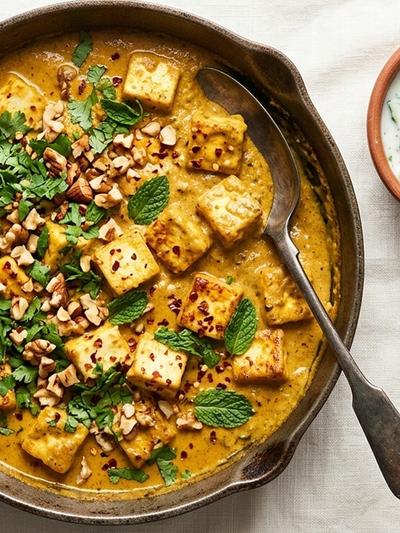
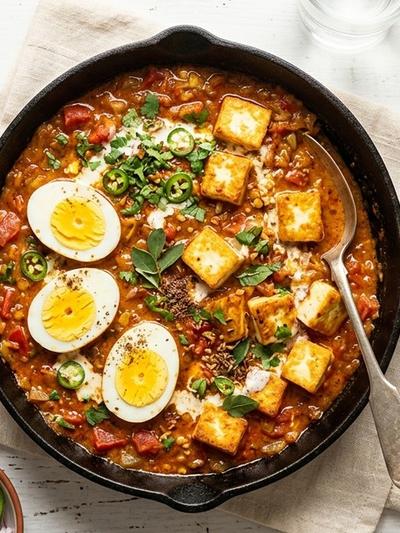
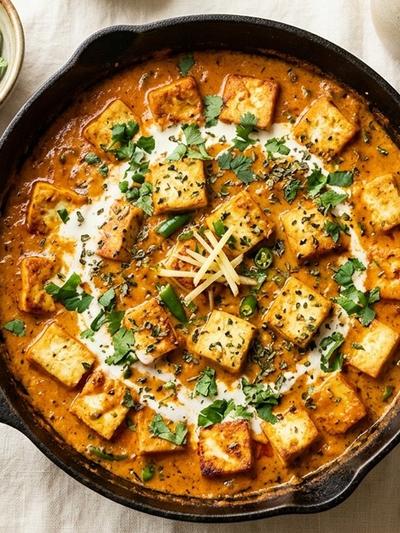
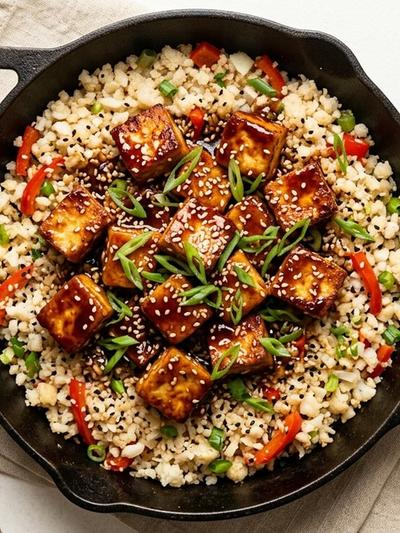
Mangalorean ghee roast is one of South Indian cuisine's best-kept secrets — a dish built entirely on the fragrance of whole spices bloomed in sizzling ghee, ground into a rust-colored paste, then tumbled with whatever protein you choose until every surface is slicked with smoky, tangy heat. In this vegetarian keto version, thick cubes of paneer get seared until their edges crackle and turn golden, then coated in that intoxicating paste of dried Kashmiri chilies, coriander, cumin, and a whisper of tamarind. A handful of curry leaves fried until papery and shatteringly crisp finishes the whole thing off, filling your kitchen with one of the most irresistible aromas in Indian cooking.
Each serving delivers 41 grams of fat primarily from ghee and the paneer itself, keeping you deep in ketosis with only 7 grams of net carbs. The 20 grams of protein come entirely from the paneer — no eggs or supplementary protein needed. This is a rich, satisfying dinner that hits every keto macro target without any tricks or specialty products, just real spices and good fat.
The entire recipe happens in a single skillet in under 30 minutes, start to plate. You toast the spices, blend them, sear the paneer, and toss it all together in the same pan. There is almost nothing to clean up and no time wasted waiting around. It is the kind of weeknight dinner that feels like a weekend project but absolutely is not.
Ingredients (serves 4)
For the spice paste:
- 6 dried Kashmiri red chilies, stems removed
- 2 teaspoons coriander seeds
- 1 teaspoon cumin seeds
- 1/2 teaspoon black peppercorns
- 2 tablespoons (10g) unsweetened desiccated coconut
- 4 cloves garlic, roughly chopped
- 1 inch (2.5cm) piece fresh ginger, roughly chopped
- 1/2 teaspoon tamarind paste
- 3 tablespoons (45ml) water
For the paneer and finishing:
- 1 lb (450g) paneer, cut into 1-inch (2.5cm) cubes
- 4 tablespoons (56g) ghee, divided
- 2 sprigs fresh curry leaves (about 20 leaves)
- 1 small green bell pepper, cut into thin strips
- 3 tablespoons (45ml) coconut cream
- 1/2 teaspoon fine sea salt, or to taste
- Fresh cilantro for garnish (optional)
Instructions
Fry the curry leaves. Heat 1 tablespoon of the ghee in a large skillet or wok over medium-high heat. Once the ghee shimmers, add the curry leaves — stand back, they will sputter. Fry for 15 to 20 seconds until the leaves darken, turn translucent, and go quiet. Transfer the crispy leaves to a small plate lined with a paper towel and set aside.
Toast the spices. Lower the heat to medium. In the same skillet with the residual ghee, add the dried Kashmiri chilies, coriander seeds, cumin seeds, and black peppercorns. Stir constantly for about 90 seconds, until the spices darken a shade and smell deeply fragrant — you will feel the heat in your nose. Add the desiccated coconut, chopped garlic, and chopped ginger. Stir for another 60 seconds until the coconut turns golden brown and the garlic softens. Transfer the entire mixture to a small blender or spice grinder. Do not wipe the skillet.
Blend the paste. Add the tamarind paste and 3 tablespoons of water to the toasted spice mixture. Blend until you get a thick, slightly gritty paste — about 30 seconds in a powerful blender, or up to a minute in a smaller grinder. It does not need to be perfectly smooth. A little texture is traditional and adds to the final dish. Set aside.
Sear the paneer. Return the skillet to medium-high heat and add 2 tablespoons of ghee. Pat the paneer cubes dry with a paper towel if they feel moist — this step matters for getting a proper sear. Once the ghee is hot and just beginning to smoke, arrange the paneer in a single layer. Let it cook undisturbed for 2 minutes until the bottom side turns deep golden. Flip each cube and sear the opposite side for another 2 minutes. You do not need to brown every face, just two sides. Push the paneer to the edges of the skillet.
Cook the bell pepper. Add the remaining 1 tablespoon of ghee to the center of the skillet. Toss in the bell pepper strips and cook for 90 seconds, stirring occasionally, until they just begin to soften but still have some bite.
Add the spice paste. Reduce the heat to medium-low. Scrape the entire spice paste into the skillet and stir everything together, coating each paneer cube and bell pepper strip evenly. Cook for 2 to 3 minutes, stirring gently so the paneer does not crumble, until the paste tightens around the paneer and the raw spice smell cooks off. You will see the ghee begin to separate slightly at the edges of the paste — that is your cue that it is ready.
Finish with coconut cream. Pour the coconut cream over the paneer and fold it in gently. It will loosen the masala into a thin, glossy coating rather than a saucy curry. Cook for 1 more minute. Taste and adjust salt.
Serve. Transfer to a warm serving plate or bowl. Crush the reserved crispy curry leaves lightly between your fingers and scatter them over the top. Add a few torn cilantro leaves if you like. Serve immediately alongside cauliflower rice or a simple cucumber raita.
Nutrition per Serving
| Nutrient | Amount |
|---|---|
| Calories | ~500 kcal |
| Fat | ~41g |
| Protein | ~20g |
| Total Carbs | ~9g |
| Fiber | ~2g |
| Net Carbs | ~7g |
Nutritional values are approximate and based on standard paneer, ghee, and coconut cream. Variations in paneer brand and fat content will affect totals.
Tips & Variations
Use Kashmiri chilies for color without excessive heat. Kashmiri dried red chilies give ghee roast its signature deep rust color and a moderate, rounded warmth rather than face-melting heat. If you substitute other dried red chilies like arbol or Thai, reduce the quantity by half and expect a significantly spicier result. If you cannot find Kashmiri chilies, a mix of sweet paprika and a single arbol chili works as a stand-in.
Pat your paneer dry before searing. This is not optional. Wet paneer steams instead of searing, giving you a pale, rubbery cube instead of a crackling golden one. If your paneer came packed in water, slice it, lay the cubes on a clean kitchen towel for five minutes, then pat the tops dry. The difference in texture is dramatic.
Watch the coconut cream carb count. Not all coconut creams are equal — some brands add sugar or thickeners that raise the carb content. Check the label and aim for a brand with 1 to 2 grams of carbs per tablespoon. Full-fat canned coconut milk (the thick cream layer at the top) is an excellent alternative with similarly low carbs.
Turn leftovers into a stuffed pepper dinner. This ghee roast reheats beautifully. Halve two bell peppers, fill them with the leftover paneer mixture, top with shredded mozzarella, and bake at 400°F (200°C) for 15 minutes. It transforms into an entirely different meal, and the additional carbs from the pepper are manageable if you track your daily total.
Make it a bigger meal with cauliflower rice. On its own, this dish is intensely flavored and rich — it does not need a heavy side. A half-cup of cauliflower rice per person adds bulk with only about 2 grams of net carbs. Fry the cauliflower rice in a teaspoon of ghee with a pinch of turmeric and mustard seeds for a South Indian touch that pairs naturally with the Mangalorean spice profile.