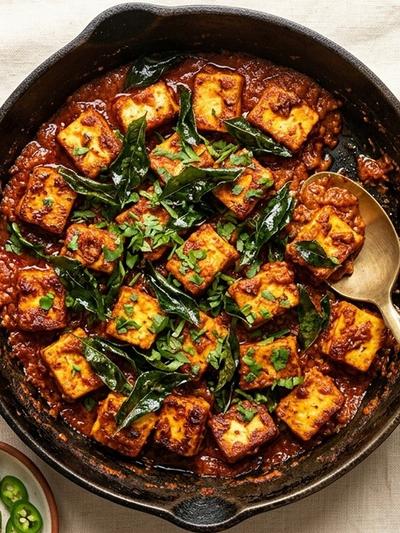
Imagine biting into golden-seared cubes of paneer coated in a glossy, savory-sweet teriyaki glaze — each piece lacquered with caramelized ginger, garlic, and toasted sesame. Beneath it sits a bed of buttery cauliflower rice flecked with sesame seeds and bright scallion greens, soaking up every drop of that umami-rich sauce. This one-skillet dinner captures the soul of a Japanese izakaya dish while keeping everything firmly in keto territory. It is deeply satisfying, incredibly aromatic, and ready in under 30 minutes.
The macro profile here is tailor-made for ketogenic success. Each serving delivers 42 grams of fat — primarily from the paneer itself, toasted sesame oil, and butter — while net carbs land at just 7 grams. You get a solid 24 grams of protein from the paneer, making this a well-rounded evening meal that keeps you satiated for hours without any blood sugar spike.
Best of all, this entire dinner comes together in a single skillet. You sear the paneer, build the sauce, and toast the cauliflower rice all in the same pan, which means you spend more time eating and less time scrubbing dishes. It is perfect for busy weeknights when you want something that feels restaurant-quality without the restaurant-level cleanup.
Ingredients (serves 2)
For the keto teriyaki sauce:
- 2 tablespoons (30ml) tamari or coconut aminos
- 1 tablespoon (15ml) rice vinegar (unseasoned)
- 1 tablespoon (15ml) toasted sesame oil
- 1 teaspoon freshly grated ginger
- 1 clove garlic, minced
- 1 tablespoon (12g) granulated erythritol or allulose
- ¼ teaspoon xanthan gum (optional, for thickening)
For the paneer:
- 7 oz (200g) paneer, cut into ¾-inch (2cm) cubes
- 1 tablespoon (14g) unsalted butter or ghee
- Pinch of salt
For the sesame cauliflower rice:
- 2 cups (200g) riced cauliflower (fresh or frozen, thawed)
- 1 tablespoon (14g) unsalted butter
- 1 tablespoon (8g) white sesame seeds
- 2 scallions, thinly sliced (green and white parts separated)
- Salt to taste
For garnish:
- 1 teaspoon toasted sesame seeds
- 1 teaspoon toasted sesame oil (for drizzling)
- Thinly sliced scallion greens
- Pinch of red pepper flakes (optional)
Instructions
Prepare the teriyaki sauce. In a small bowl, whisk together the tamari, rice vinegar, toasted sesame oil, grated ginger, minced garlic, and erythritol until the sweetener dissolves. If using xanthan gum, sprinkle it in and whisk vigorously for 15 seconds to avoid clumps. Set aside.
Pat the paneer dry. Use paper towels to press the paneer cubes firmly on all sides. Removing surface moisture is essential — this is what gives you that gorgeous golden crust rather than a pale, steamed exterior.
Sear the paneer. Heat a large nonstick or well-seasoned cast-iron skillet over medium-high heat. Add 1 tablespoon of butter and let it melt until it begins to foam. Place the paneer cubes in a single layer, leaving space between each piece, and cook undisturbed for 2 to 3 minutes until the bottoms turn deep golden brown. Flip and sear the second side for another 2 minutes. The paneer should have a crispy, caramelized exterior while remaining soft and creamy inside.
Glaze the paneer. Reduce heat to medium-low. Pour the prepared teriyaki sauce over the paneer. Gently toss or stir the cubes for 60 to 90 seconds as the sauce bubbles, reduces, and clings to every surface in a shiny, sticky glaze. The kitchen will fill with a deeply fragrant sesame-ginger aroma. Transfer the glazed paneer to a plate and cover loosely with foil to keep warm.
Toast the sesame cauliflower rice. In the same skillet (no need to wipe it — those teriyaki fond bits are flavor gold), increase heat to medium and add the remaining tablespoon of butter. Once melted, add the sesame seeds and scallion whites. Stir for 30 seconds until the seeds turn lightly golden and fragrant.
Cook the cauliflower rice. Add the riced cauliflower to the skillet, spreading it into an even layer. Let it cook undisturbed for 2 to 3 minutes so the bottom layer gets lightly toasted and any excess moisture evaporates — this prevents the soggy, mushy texture that disappoints so many cauliflower rice attempts. Stir, season with salt, and cook for another 2 minutes until the rice is tender but still has a slight bite.
Plate and serve. Divide the sesame cauliflower rice between two plates or shallow bowls. Arrange the teriyaki-glazed paneer on top. Drizzle with a final teaspoon of toasted sesame oil, scatter over the toasted sesame seeds, sliced scallion greens, and a pinch of red pepper flakes if you want a little heat. Serve immediately while the paneer is still crispy and the glaze is glossy.
Nutrition per Serving
| Nutrient | Amount |
|---|---|
| Calories | ~512 kcal |
| Fat | ~42g |
| Protein | ~24g |
| Total Carbs | ~12g |
| Fiber | ~5g |
| Net Carbs | ~7g |
Nutrition values are approximate and may vary based on specific brands of paneer, tamari, and sweetener used.
Tips & Variations
Choose your sweetener wisely. Allulose gives the most authentic teriyaki flavor because it caramelizes like real sugar and has zero net carbs. Erythritol works well but can crystallize slightly as the sauce cools. Avoid maltitol or honey — both spike blood sugar and add significant carbs that would push this dish out of keto range.
Use the right paneer for the best sear. Look for firm, block-style paneer rather than the crumbly fresh variety. If your paneer feels soft, press it between paper towels under a heavy plate for 15 minutes before cubing. Firm paneer holds its shape beautifully during searing and develops a satisfying golden crust that contrasts with its creamy interior.
Make it spicier with Japanese chili. For an authentic kick, add ½ teaspoon of shichimi togarashi (Japanese seven-spice blend) to the finished dish, or stir a small amount of fresh grated ginger and a minced Thai chili directly into the teriyaki sauce before cooking. This transforms the dish from mellow and savory to vibrant and warming.
Boost the fat even higher. If you are tracking macros closely and want to push the fat ratio higher, stir a tablespoon of MCT oil into the cauliflower rice just before plating, or add a pat of butter on top of the hot paneer. You can also drizzle extra toasted sesame oil more generously — it is calorie-dense and keeps you in the keto fat sweet spot.
Meal prep and storage. Store the glazed paneer and cauliflower rice in separate airtight containers in the fridge for up to 3 days. Reheat the paneer in a hot skillet with a splash of water to revive the glaze, and microwave the cauliflower rice with a damp paper towel over top to prevent drying out. The paneer will lose some crispness but the flavor remains excellent.