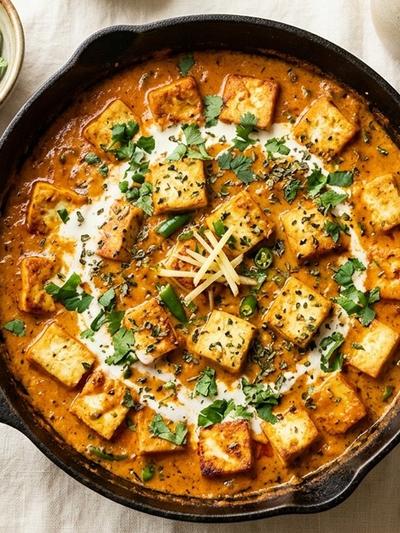
Imagine tender cubes of golden-seared paneer swimming in a velvety, pale-gold sauce made from toasted walnuts, almond flour, and warm Indian spices — cardamom, cinnamon, and a whisper of clove. This one-skillet paneer korma delivers the soul-warming richness of the classic Mughlai dish without the cashews, onion paste, or hidden carbs that make traditional korma a keto minefield. Every spoonful is silky, fragrant, and deeply satisfying, with a final scatter of toasted hemp hearts adding a gentle nutty crunch that ties the whole dish together.
The macro profile here is textbook ketogenic. Each generous serving delivers 42 grams of fat — predominantly from ghee, walnuts, heavy cream, and the paneer itself — alongside 24 grams of protein and only 7 grams of net carbs. That puts fat at roughly 73% of total calories, right in the sweet spot for maintaining ketosis while enjoying a genuinely indulgent dinner.
Best of all, this korma comes together in a single skillet in under 30 minutes. There is no blender required — the almond flour dissolves into the sauce to create body, while finely chopped walnuts melt into the cream as it simmers. It is an ideal weeknight dinner that looks and tastes like you spent hours in the kitchen, and it pairs beautifully with cauliflower rice or a simple side of wilted spinach.
Ingredients (serves 4)
For the walnut-almond cream sauce:
- 1/2 cup (50g) walnuts, finely chopped
- 3 tablespoons (21g) almond flour
- 1 cup (240ml) heavy whipping cream
- 1/2 cup (120ml) water
- 2 tablespoons (30g) ghee
- 1 small yellow onion (about 70g), finely diced
- 1 tablespoon (15g) ginger-garlic paste
- 1 green chili, slit lengthwise (adjust to taste)
- 1 teaspoon garam masala
- 1/2 teaspoon ground turmeric
- 1/2 teaspoon ground cardamom
- 1/4 teaspoon ground cinnamon
- 1 pinch ground clove
- 1/2 teaspoon fine sea salt (adjust to taste)
For the paneer:
- 10 oz (280g) paneer, cut into 1-inch cubes
- 1 tablespoon (15g) ghee
For garnish:
- 2 tablespoons (20g) hemp hearts
- 2 tablespoons fresh cilantro, roughly chopped
- 1 teaspoon flaky sea salt (optional)
Instructions
Toast the walnuts and hemp hearts. Set a large skillet (10 to 12 inches) over medium heat. Add the chopped walnuts and hemp hearts and toast, stirring frequently, for 2 to 3 minutes until fragrant and lightly golden. Transfer to a small bowl and set aside. The walnuts will deepen in color from pale tan to a warm amber — watch carefully, as they can burn quickly.
Sear the paneer. In the same skillet, increase the heat to medium-high and add 1 tablespoon of ghee. Once the ghee shimmers, arrange the paneer cubes in a single layer. Sear without moving for about 2 minutes per side, until the faces develop a deep golden crust. You want crisp edges with a soft, creamy interior. Transfer the paneer to a plate and set aside.
Build the aromatic base. Reduce the heat to medium and add the remaining 2 tablespoons of ghee to the skillet. Add the diced onion and cook for 3 to 4 minutes, stirring occasionally, until softened and translucent. The onion does not need to brown — you want it tender enough to melt into the sauce.
Bloom the spices. Add the ginger-garlic paste and slit green chili to the onion. Stir constantly for 30 to 45 seconds until the raw smell disappears and the paste turns fragrant. Immediately add the garam masala, turmeric, cardamom, cinnamon, and clove. Stir for another 15 seconds — you will smell the spices bloom as they hit the hot fat. This step is critical for developing the deep, layered flavor that defines a great korma.
Create the walnut-almond cream. Sprinkle the almond flour over the spiced onion mixture and stir for 30 seconds to cook out the raw taste. Add the toasted walnuts (reserving the hemp hearts for garnish) and stir to combine. Pour in the heavy cream and water, whisking gently to prevent lumps. The almond flour will thicken the sauce as it heats, while the finely chopped walnuts will soften and partially dissolve into the cream, creating a characteristically rich korma texture.
Simmer the sauce. Bring the mixture to a gentle simmer — do not let it boil vigorously or the cream may separate. Cook for 5 to 6 minutes, stirring occasionally, until the sauce thickens enough to coat the back of a spoon. It should be a beautiful pale gold with visible flecks of spice. Add the salt and taste — adjust seasoning as needed. If the sauce feels too thick, add a splash of water, one tablespoon at a time.
Finish with the paneer. Nestle the seared paneer cubes into the sauce, spooning some of the cream over the top of each piece. Simmer gently for 2 to 3 minutes, just long enough for the paneer to absorb the flavors and heat through. Avoid stirring aggressively — you want to keep those beautiful golden crusts intact.
Garnish and serve. Remove the skillet from the heat. Scatter the reserved toasted hemp hearts and fresh cilantro over the top. Finish with a pinch of flaky sea salt if desired. Serve immediately, straight from the skillet, alongside cauliflower rice, keto garlic naan, or a simple pile of sautéed greens.
Nutrition per Serving
| Nutrient | Amount |
|---|---|
| Calories | ~518 kcal |
| Fat | ~42g |
| Protein | ~24g |
| Total Carbs | ~10g |
| Fiber | ~3g |
| Net Carbs | ~7g |
Nutrition values are approximate and based on the specific ingredients and quantities listed. Your results may vary depending on brands and exact measurements.
Tips & Variations
Use full-fat paneer for the best texture. Reduced-fat paneer will not sear as well and tends to become rubbery when cooked. If you press your own paneer at home, use whole milk for the creamiest results. Store-bought paneer works perfectly — just pat the cubes dry with a paper towel before searing to ensure a proper golden crust.
Swap walnuts for pecans if you prefer a sweeter flavor. Pecans have a slightly lower carb count than walnuts and bring a buttery sweetness that pairs beautifully with the warm spices. The texture of the finished sauce will be nearly identical. Avoid using cashews, which are significantly higher in carbs and can easily push a serving over your net carb target.
Watch your onion quantity to keep carbs in check. Onions are one of the sneakiest carb sources in Indian cooking — a medium onion contains roughly 10 grams of net carbs. This recipe uses just one small onion split across four servings, keeping each portion well under 2 grams of carbs from onion alone. If you want to reduce carbs further, substitute half the onion with a few tablespoons of diced celery for a similar aromatic backbone.
Make it richer with a finishing fat. For an even more indulgent korma, stir a tablespoon of cold butter or a drizzle of cream into the finished sauce just before serving. This restaurant-style technique, known as tempering with butter, adds a glossy sheen and an extra layer of richness that makes the dish taste truly special.
Store and reheat with care. Refrigerate leftovers in an airtight container for up to 4 days. Reheat gently in a skillet over low heat, adding a splash of cream or water to loosen the sauce — almond flour sauces thicken considerably as they cool. Avoid microwaving on high power, as paneer can turn tough. Use 50% power in 30-second intervals for the best results.