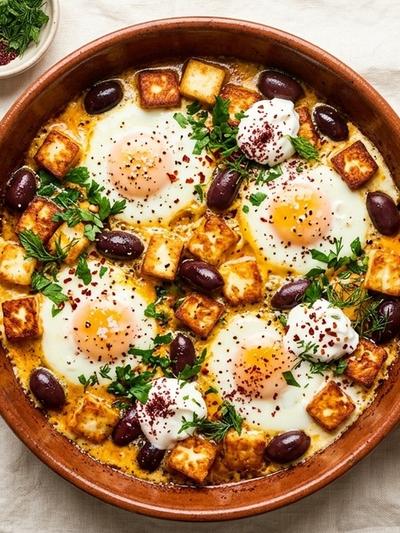
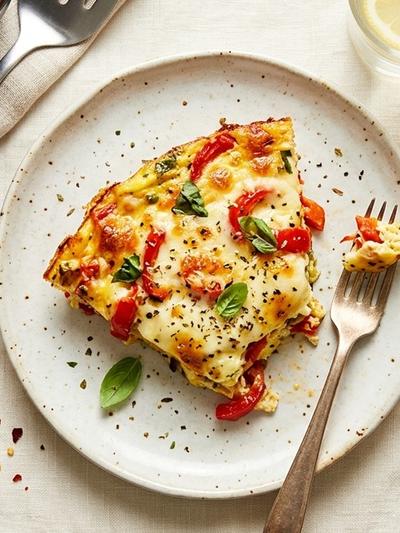
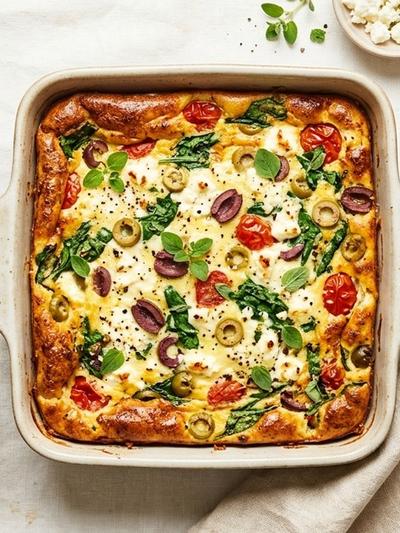
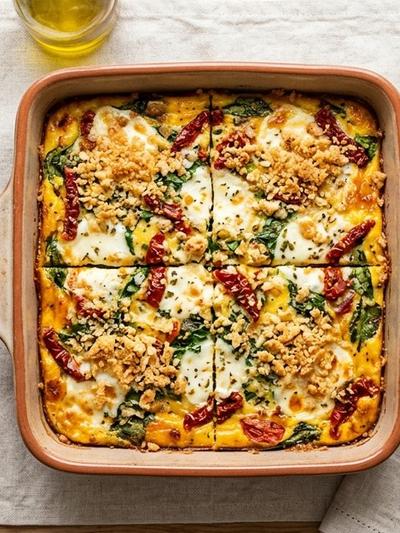
Imagine cutting into a thick, golden slab of egg bake and hitting a pocket of melted mascarpone so impossibly creamy it barely holds its shape, wrapped around a salty cube of halloumi that crisped in a hot pan before it ever touched the oven. That is this breakfast. Fresh dill runs through every bite, the kind of grassy, anise-tinged brightness that makes Eastern Mediterranean cooking irresistible, while a generous dusting of sumac across the top adds a fruity tartness that wakes everything up. It tastes like a lazy Sunday on the Aegean coast, except you made it in under an hour and it feeds you all week.
The macros here are built for ketosis without a single compromise on flavor. Mascarpone and halloumi deliver a combined wall of fat that keeps the ratio right where you need it — roughly 78 percent of calories from fat, with just 4 grams of net carbs per generous serving. Eggs and halloumi together supply 25 grams of protein per slice, enough to keep you full through a busy morning without needing a mid-morning snack. There is no flour, no breadcrumb filler, and no hidden sugars — just rich dairy, eggs, greens, and herbs doing what they do best.
The real magic is the meal-prep angle. You bake the whole thing in a single dish on Sunday evening, let it cool, slice it into four portions, and stash them in the fridge. Each morning you pull one out, reheat it in the microwave or a warm oven, and sit down to a breakfast that tastes freshly made. The mascarpone custard actually improves overnight as the flavors meld, and the halloumi cubes hold their pleasantly chewy texture through days of storage. Five days of breakfast, one round of dishes.
Ingredients (serves 4)
For the egg base:
- 8 large eggs
- 8 oz (225g) mascarpone cheese, softened at room temperature for 10 minutes
- ½ tsp fine sea salt
- ¼ tsp freshly ground black pepper
- ½ tsp garlic powder
For the filling:
- 7 oz (200g) halloumi cheese, cut into ½-inch (1.25cm) cubes
- 2 cups (60g) baby spinach
- 12 Kalamata olives, pitted and halved
- ¼ cup (7g) fresh dill, roughly chopped
For finishing:
- 2 tbsp (30ml) extra-virgin olive oil, divided
- 1 tsp ground sumac
- Fresh dill sprigs, for garnish
Instructions
Preheat your oven to 350°F (175°C). Lightly grease an 8×8-inch (20×20cm) baking dish with a thin slick of olive oil or butter. Set it aside.
Sear the halloumi. Heat 1 tablespoon of olive oil in a large nonstick skillet over medium-high heat until the oil shimmers. Add the halloumi cubes in a single layer and cook without moving them for about 2 minutes per side, turning them with tongs, until they develop a deep golden crust on at least two sides. You want real color here — pale halloumi will taste rubbery after baking, but well-seared halloumi stays pleasantly chewy. Transfer the cubes to a plate.
Wilt the spinach. In the same skillet, still over medium heat, add the baby spinach. Toss it with tongs for about 30 to 45 seconds, just until it collapses and turns bright green. You are not cooking it down to mush — you want it barely wilted so it does not release excess water into the bake. Remove from heat and set aside.
Whisk the egg base. In a large mixing bowl, combine the eggs and softened mascarpone. Whisk vigorously for about 60 seconds until the mixture is completely smooth with no lumps of mascarpone visible. It should look like a thick, pale yellow custard. Season with salt, pepper, and garlic powder and whisk again to combine.
Assemble the bake. Scatter the seared halloumi cubes, wilted spinach, olive halves, and chopped dill evenly across the bottom of the prepared baking dish. Pour the egg-mascarpone mixture over the top, making sure the liquid settles around all the filling ingredients. Give the dish a gentle shake to level it out. Drizzle the remaining tablespoon of olive oil over the surface.
Bake on the center rack for 28 to 32 minutes. The bake is done when the edges are puffed and golden, the center is set but still has a very slight jiggle when you tap the side of the dish, and a toothpick inserted in the middle comes out clean. Do not overbake — mascarpone keeps its silky texture only if you pull the dish while the center still looks barely underdone. It will firm up as it cools.
Finish and cool. Remove from the oven and immediately sprinkle the sumac evenly across the top while the surface is still hot and slightly tacky so the spice adheres. Scatter a few fresh dill sprigs over the top. Let the bake rest in the dish for at least 10 minutes before slicing — this rest period allows the custard to set fully and makes for much cleaner cuts.
Slice and store. Cut into 4 equal portions. Serve one warm, and transfer the remaining portions to individual airtight containers. Refrigerate for up to 5 days.
Reheat each portion in the microwave for 60 to 90 seconds on medium power, or in a 300°F (150°C) oven for 8 to 10 minutes. The oven method gives slightly better texture, crisping the edges back up, but the microwave works perfectly well for busy mornings.
Nutrition per Serving
| Nutrient | Amount |
|---|---|
| Calories | ~595 kcal |
| Fat | ~52g |
| Protein | ~25g |
| Total Carbs | ~5g |
| Fiber | ~1g |
| Net Carbs | ~4g |
Nutrition values are approximate and may vary depending on specific brands of mascarpone and halloumi used.
Tips & Variations
Soften the mascarpone properly. Cold mascarpone straight from the fridge will form stubborn lumps when whisked with eggs, and those lumps will not fully melt during baking, leaving you with uneven pockets of raw-tasting cheese. Let it sit at room temperature for at least 10 minutes, or microwave it for 15 seconds, before whisking. You want it spreadable, not warm.
Swap the cheese, keep the structure. Ricotta (whole milk, not part-skim) can replace mascarpone one-to-one and will give you a lighter, fluffier bake with a slightly more cottage-cheese-like texture. Cream cheese also works but produces a denser, more cheesecake-like result — reduce it to 6 oz (170g) if substituting, since cream cheese has a more assertive flavor and firmer set. All three options keep net carbs under 5 grams per serving.
Do not skip searing the halloumi. Raw halloumi baked directly in the custard turns soft and squeaky in a way that feels texturally wrong after refrigeration. The golden sear creates a thin crust that holds up beautifully through days of storage and reheating, giving each bite a pleasant chew against the silky egg base. It takes 4 minutes and makes or breaks the recipe.
Add heat with Aleppo pepper. If you like a gentle warmth in your breakfast, replace the sumac garnish with 1 teaspoon of Aleppo pepper flakes (pul biber), or use half sumac and half Aleppo for the best of both worlds. Aleppo pepper adds a slow, fruity heat without the sharp burn of red pepper flakes, and it adds zero net carbs.
Watch for hidden carbs in flavored mascarpone. Some grocery store mascarpone brands, particularly flavored or whipped varieties, add sugar or stabilizers that can push carb counts up significantly. Always check the nutrition label and buy plain, full-fat mascarpone. The ingredient list should read nothing more than cream and citric acid (or tartaric acid). If you see sugar, corn starch, or carrageenan, choose a different brand.