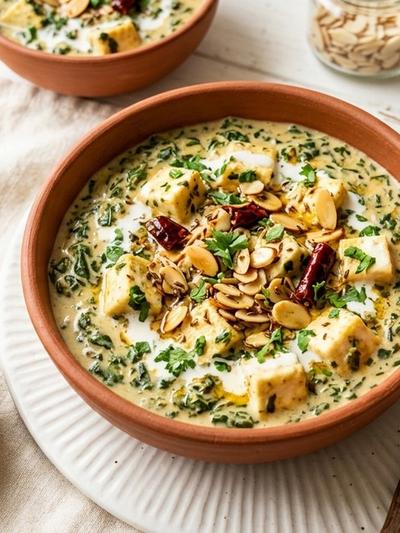
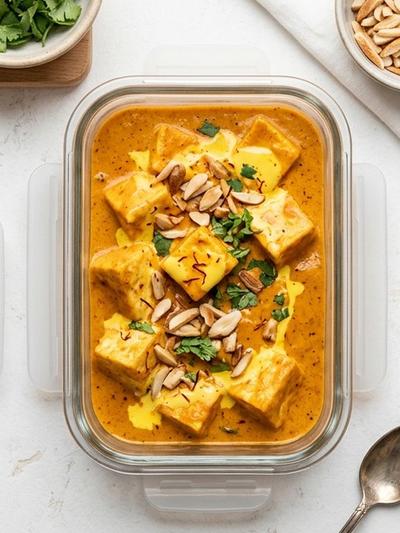
Paneer Kali Mirch is one of those North Indian restaurant dishes that makes you close your eyes mid-bite. Thick cubes of paneer, seared until the edges go golden and slightly chewy, then dragged through a lush cream sauce where freshly cracked black pepper does all the talking. The coconut cream adds a subtle sweetness that rounds out the heat, while a flurry of curry leaves fried in butter delivers that unmistakable South Indian aroma the moment you pop open a container. This is not a timid dish — it is bold, peppery, and deeply satisfying.
The macro profile here is tailor-made for keto. Each generous serving delivers 58 grams of fat from paneer, ghee, heavy cream, and coconut cream, while net carbs stay at just 7 grams. Paneer pulls its weight as a protein source too, bringing 21 grams per portion without a single gram of hidden sugar. No thickeners, no flour, no cornstarch — the sauce gets its body from reduced cream and a touch of cream cheese that melts into silk.
What makes this recipe ideal for batch prep is that the sauce actually improves as it sits. The black pepper blooms, the cream tightens around the paneer, and by day three or four it tastes even more cohesive than it did fresh off the stove. You will spend about 35 minutes from cutting board to finished pot, and you walk away with four ready-to-reheat dinners that pair beautifully with cauliflower rice, a simple cucumber raita, or nothing at all — the curry is rich enough to eat on its own.
Ingredients (serves 4)
For the paneer:
- 1 lb (450g) paneer, cut into 1-inch cubes
- 1 tablespoon ghee
- 1/4 teaspoon turmeric powder
- Pinch of salt
For the peppercorn cream sauce:
- 1 tablespoon ghee
- 1/2 small yellow onion (about 60g / 2 oz), finely diced
- 2 tablespoons ginger-garlic paste
- 2 green chilies, slit lengthwise
- 1 small green bell pepper (about 100g / 3.5 oz), cut into thin strips
- 1 1/2 teaspoons freshly cracked black pepper (coarse)
- 1 teaspoon garam masala
- 1/2 teaspoon ground coriander
- 1/4 teaspoon turmeric powder
- 3/4 cup (180ml) heavy whipping cream
- 1/2 cup (120ml) full-fat coconut cream
- 2 tablespoons (30g) full-fat cream cheese
- Salt to taste
For the crispy curry leaf finish:
- 1 tablespoon unsalted butter
- 15-20 fresh curry leaves
- 1/2 teaspoon whole black peppercorns, lightly crushed
- Fresh cilantro for garnish
Instructions
Sear the paneer. Heat 1 tablespoon of ghee in a large heavy-bottomed skillet or Dutch oven over medium-high heat. Toss the paneer cubes with turmeric and a pinch of salt, then spread them in a single layer in the hot pan. Sear without moving for 2 minutes per side until golden brown on at least two faces. Transfer to a plate and set aside. The paneer does not need to be cooked through — it will finish in the sauce.
Build the aromatic base. In the same pan, reduce heat to medium and add the remaining 1 tablespoon of ghee. Add the diced onion and cook for 3 to 4 minutes, stirring occasionally, until softened and just starting to turn translucent. Add the ginger-garlic paste, slit green chilies, and green bell pepper strips. Cook for another 2 minutes until the raw smell of the ginger-garlic paste disappears and the peppers have softened slightly.
Toast the spices. Add the cracked black pepper, garam masala, ground coriander, and turmeric directly to the pan. Stir constantly for 30 to 45 seconds. You should smell the pepper bloom — it will hit the back of your throat. This brief toasting step is critical for unlocking the full depth of the spice blend.
Create the cream sauce. Pour in the heavy cream and coconut cream, stirring to deglaze any fond from the bottom of the pan. Bring to a gentle simmer — not a rolling boil, as the cream can break. Drop in the cream cheese and stir until it dissolves completely into the sauce, about 1 minute. The sauce should look pale gold and coat the back of a spoon.
Simmer with paneer. Return the seared paneer cubes to the sauce. Fold gently so every piece is coated. Reduce heat to low and simmer uncovered for 8 to 10 minutes, stirring once or twice. The sauce will reduce and thicken noticeably, and the paneer will absorb flavor throughout. Taste and adjust salt — remember that paneer itself is mildly salted.
Fry the curry leaves. While the curry simmers, heat 1 tablespoon of butter in a small pan over medium-high heat. Once the butter foams and the foam begins to subside, add the curry leaves and crushed peppercorns. Stand back — the leaves will splutter aggressively for 5 to 8 seconds. Fry for 30 seconds total until the leaves are crisp, darkened, and fragrant. Remove from heat immediately.
Finish and portion. Pour the curry leaf butter over the paneer curry and fold through once. Garnish with fresh cilantro. If eating immediately, serve hot. For meal prep, let the curry cool to room temperature for 15 to 20 minutes, then divide evenly among four airtight containers. Refrigerate within 2 hours of cooking.
Nutrition per Serving
| Nutrient | Amount |
|---|---|
| Calories | ~638 kcal |
| Fat | ~58g |
| Protein | ~21g |
| Total Carbs | ~8g |
| Fiber | ~1g |
| Net Carbs | ~7g |
Nutrition values are approximate and based on standard nutritional data for the stated ingredients and portions.
Tips & Variations
Use freshly cracked pepper, not pre-ground. The entire soul of Kali Mirch is the pepper, and pre-ground black pepper loses its volatile oils within weeks of grinding. Buy whole Tellicherry or Malabar peppercorns and crack them coarsely in a mortar and pestle or under the flat of a heavy knife. The difference is not subtle — it is the difference between a dish that tingles and one that tastes dusty.
Storing and reheating for the week. Portioned containers keep well in the refrigerator for up to 5 days. Reheat in a microwave for 2 to 3 minutes, stirring halfway through, or warm gently in a small saucepan over medium-low heat with a splash of water or cream to loosen the sauce. The curry also freezes well for up to 6 weeks — thaw overnight in the refrigerator before reheating.
Watch for hidden carbs in store-bought paneer. Some commercial paneer brands add starches or stabilizers that bump carb counts above what you would expect from pure paneer. Check the label and choose brands that list only milk, acid (citric acid or vinegar), and salt. Better yet, make your own from full-fat milk and lemon juice — it takes 20 minutes and you control exactly what goes in.
Adjust the heat without changing the flavor profile. The green chilies add brightness and slow-building heat, while the black pepper brings immediate sharp warmth. For a milder version, remove the seeds from the green chilies or reduce to one. For more fire, add 1/2 teaspoon of crushed red chili flakes along with the cracked pepper. The coconut cream already does excellent work tempering the spice, so you have room to push the heat higher than you might expect.
Pair with low-carb sides to complete the plate. Cauliflower rice tossed with a pinch of turmeric and cumin is the classic keto pairing and adds roughly 3 grams of net carbs per half-cup serving. A simple cucumber raita made with full-fat yogurt, grated cucumber, and a pinch of roasted cumin powder adds healthy fats and probiotics without meaningful carbs. Avoid serving with naan or roti substitutes if you are keeping net carbs very tight — the curry is rich and creamy enough to eat with just a spoon.