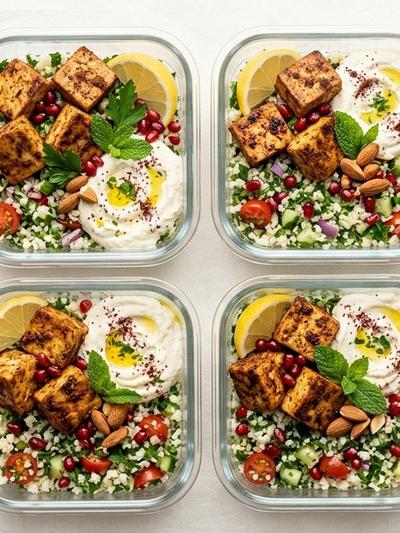
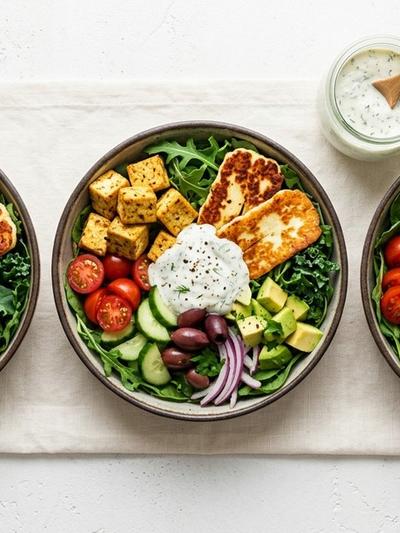
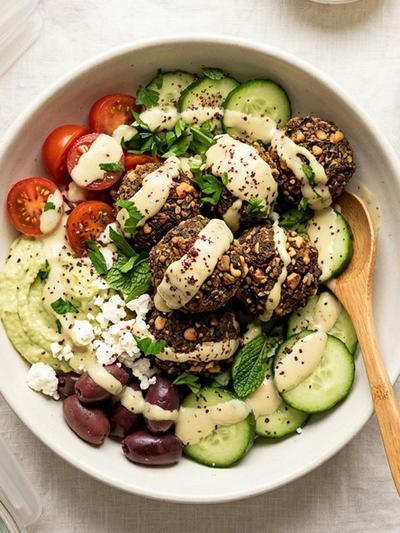
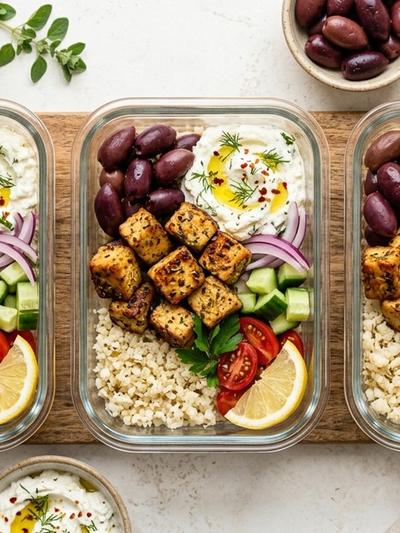
Imagine cracking open a meal-prep container at your desk and being hit with the aroma of oregano, lemon zest, and smoked paprika — golden slabs of halloumi nestled beside warmly spiced tempeh crumbles, all drizzled with a bright, herbaceous tahini dressing. These Greek Tempeh Souvlaki Bowls deliver the bold, sun-drenched flavors of a Mediterranean mezze spread in a format that is perfectly portioned and ready to reheat in minutes. Every bite balances the satisfying chew of marinated tempeh with the salty, squeaky crispness of pan-fried halloumi and the cool crunch of cucumbers and olives.
With 38 grams of fat, 29 grams of protein, and only 8 grams of net carbs per serving, these bowls nail the keto macro balance effortlessly. The generous olive oil–based marinade and tahini dressing provide heart-healthy monounsaturated fats, while the combination of tempeh and halloumi delivers a double hit of complete protein. Fat accounts for roughly 68% of calories — right in the keto sweet spot.
Best of all, this entire recipe comes together in under 45 minutes and yields four perfectly portioned bowls that stay fresh in the fridge for up to five days. The cauliflower rice base, crunchy vegetables, and protein components all reheat beautifully without going soggy, making this one of the most weekday-friendly keto lunches you can batch cook. Prepare it on Sunday evening and your lunches are handled through Thursday.
Ingredients (serves 4)
For the souvlaki tempeh:
- 16 oz (450g) tempeh, cut into ½-inch cubes
- 3 tablespoons (45ml) extra-virgin olive oil
- 2 tablespoons (30ml) fresh lemon juice
- 2 cloves garlic, minced
- 1½ teaspoons dried oregano
- 1 teaspoon smoked paprika
- ½ teaspoon ground cumin
- ½ teaspoon sea salt
- ¼ teaspoon black pepper
For the crispy halloumi:
- 8 oz (225g) halloumi cheese, sliced into ¼-inch planks
- 1 tablespoon (15ml) extra-virgin olive oil
For the cauliflower rice base:
- 4 cups (480g) riced cauliflower, fresh or frozen
- 1 tablespoon (15ml) extra-virgin olive oil
- 1 teaspoon za'atar seasoning
- ¼ teaspoon sea salt
For the herb tahini dressing:
- 3 tablespoons (45g) tahini
- 2 tablespoons (30ml) extra-virgin olive oil
- 2 tablespoons (30ml) fresh lemon juice
- 1 tablespoon (15ml) water, plus more to thin
- 1 clove garlic, finely grated
- 2 tablespoons fresh parsley, finely chopped
- 1 tablespoon fresh dill, finely chopped
- ¼ teaspoon sea salt
For the bowl assembly:
- 1 medium cucumber (about 6 oz / 170g), diced
- 16 Kalamata olives (about 2 oz / 56g), halved
- 2 oz (56g) crumbled feta cheese
- ½ teaspoon red pepper flakes (optional)
Instructions
Steam the tempeh. Bring about an inch of water to a boil in a saucepan fitted with a steamer basket. Steam the tempeh cubes for 10 minutes — this removes bitterness and opens the pores so the marinade penetrates deeply. Drain and pat dry with a clean towel.
Marinate the tempeh. In a medium bowl, whisk together 3 tablespoons olive oil, lemon juice, garlic, oregano, smoked paprika, cumin, salt, and pepper. Add the steamed tempeh cubes and toss gently until every piece is well coated. Let sit for at least 10 minutes while you prepare the other components. For deeper flavor, marinate in the fridge for up to 24 hours.
Cook the cauliflower rice. Heat 1 tablespoon olive oil in a large skillet over medium-high heat. Add the riced cauliflower, za'atar, and salt. Cook for 5 to 6 minutes, stirring occasionally, until the cauliflower is tender and any excess moisture has evaporated. The edges should just begin to turn golden. Transfer to a large bowl and set aside.
Pan-fry the tempeh. Using the same skillet over medium-high heat, add the marinated tempeh cubes along with any remaining marinade. Cook for 6 to 8 minutes, turning every couple of minutes, until the cubes are deeply golden and caramelized on at least two sides. The edges should look crispy and lightly charred. Transfer to a plate.
Crisp the halloumi. Wipe the skillet clean and return to medium heat. Add 1 tablespoon olive oil and lay the halloumi slices in a single layer. Cook undisturbed for 2 to 3 minutes per side until each plank develops a rich, golden-brown crust. The cheese should be crispy on the outside but still slightly soft and squeaky inside. Transfer to a cutting board and slice each plank into bite-sized strips.
Make the herb tahini dressing. In a small bowl, whisk together tahini, olive oil, lemon juice, water, grated garlic, parsley, dill, and salt until smooth. The dressing should be pourable — add another teaspoon of water at a time if it seems too thick. Taste and adjust lemon juice or salt as needed.
Assemble the bowls. Divide the za'atar cauliflower rice evenly among four meal-prep containers. Arrange the souvlaki tempeh cubes and halloumi strips on top of each portion of cauliflower rice. Add the diced cucumber and halved Kalamata olives alongside. Crumble the feta evenly over all four bowls. Sprinkle with red pepper flakes if using.
Store the dressing separately. Divide the herb tahini dressing into four small containers or silicone cups. Keep the dressing separate from the bowls until ready to eat — this prevents the cauliflower rice from getting soggy during storage.
To serve. When ready to eat, remove the dressing container. Microwave the bowl for 1½ to 2 minutes until warmed through, or enjoy it cold. Drizzle the herb tahini dressing generously over the top and dig in.
Nutrition per Serving
| Nutrient | Amount |
|---|---|
| Calories | ~502 kcal |
| Fat | ~38g |
| Protein | ~29g |
| Total Carbs | ~13g |
| Fiber | ~5g |
| Net Carbs | ~8g |
Nutrition values are approximate and based on the stated ingredients and serving sizes.
Tips & Variations
Don't skip steaming the tempeh. Steaming is a game-changer for tempeh — it mellows out the naturally bitter, fermented flavor and creates a spongier texture that absorbs the souvlaki marinade far more effectively. If you are pressed for time, you can simmer the cubes in salted water for 10 minutes instead.
Swap halloumi for pan-fried feta if you prefer. While halloumi delivers that iconic crispy, squeaky texture, firm feta slices pan-fried in olive oil make a wonderful substitute with a tangier, creamier result. Just note that feta is softer and will crumble more easily, so handle it gently.
Watch the hidden carbs in store-bought za'atar. Some za'atar blends contain added sumac berries or wheat, which can bump up the carb count unexpectedly. Check the label and choose a blend that lists sesame seeds, thyme, oregano, and sumac as the primary ingredients without fillers. Alternatively, make your own by mixing 1 tablespoon toasted sesame seeds with 1 teaspoon each dried thyme and dried oregano.
Add extra fat if your macros need a boost. If you are targeting higher fat intake, toss a quarter of a sliced avocado into each bowl at serving time, or increase the olive oil in the dressing by a tablespoon. Each tablespoon of olive oil adds roughly 14 grams of fat and 120 calories without affecting the carb count.
These bowls taste great cold, too. If you don't have access to a microwave at work, these bowls work beautifully as cold Mediterranean salad bowls. The tempeh and halloumi are both delicious at room temperature, and the crisp cucumber and olives stay perfectly crunchy.