There is something utterly irresistible about halloumi that has been pan-seared until the edges crackle and turn deep golden, then bathed in a fragrant Thai lemongrass coconut sauce that is simultaneously rich, citrusy, and gently spiced. These meal-prep bowls pair that seared halloumi with a vibrant, crunchy cabbage slaw dressed in toasted sesame oil and lime, all nestled on a bed of fluffy cauliflower rice. Every bite delivers a contrast of warm, squeaky cheese against cool, crisp slaw — the kind of lunch that makes colleagues lean over and ask what you are eating.
The macro profile here is textbook ketogenic. Each generous serving delivers approximately 36 grams of fat — primarily from the halloumi, coconut cream, and sesame oil — while keeping net carbohydrates to just 6 grams. With 24 grams of protein from the halloumi and eggs in the sauce base, these bowls keep you satiated through the entire afternoon without any blood sugar crash. Fat accounts for roughly 70% of the total calories, placing this squarely in the optimal keto range.
Designed from the ground up for batch cooking, this recipe produces four complete lunches in under 45 minutes. The halloumi and sauce actually improve as they sit together in the fridge, absorbing more of that lemongrass-coconut flavor overnight. The slaw stays crisp for up to four days when stored separately, and the cauliflower rice reheats beautifully in the microwave. Pack everything into containers on Sunday evening and your weekday lunches are sorted.
Ingredients (serves 4)
For the lemongrass coconut sauce:
- 1 can (13.5 oz / 400ml) full-fat coconut cream
- 2 stalks lemongrass, outer layers removed, finely minced (white part only)
- 2 tablespoons (30ml) coconut aminos (or tamari for soy-based option)
- 1 tablespoon (15ml) toasted sesame oil
- 1 tablespoon (6g) fresh ginger, finely grated
- 2 cloves garlic, minced
- 1 teaspoon Thai red curry paste (check for sugar-free or low-sugar)
- 1 teaspoon (5ml) rice vinegar (unseasoned)
- ½ teaspoon white pepper
- Juice of 1 lime (about 2 tablespoons / 30ml)
For the halloumi:
- 1 lb (450g) halloumi cheese, cut into ½-inch (1.25cm) thick slabs
- 2 tablespoons (28g) coconut oil or ghee
- 1 tablespoon (8g) white sesame seeds
For the sesame cabbage slaw:
- 3 cups (210g) green cabbage, finely shredded
- 1 cup (90g) purple cabbage, finely shredded
- 2 medium scallions, thinly sliced
- 1 tablespoon (15ml) toasted sesame oil
- 1 tablespoon (15ml) rice vinegar (unseasoned)
- 1 teaspoon (5ml) coconut aminos
- 1 tablespoon (8g) toasted sesame seeds
- Pinch of red pepper flakes
For the cauliflower rice base:
- 1 large head cauliflower, riced (about 4 cups / 480g), or 1 lb (450g) pre-riced cauliflower
- 1 tablespoon (14g) coconut oil
- ½ teaspoon salt
For garnish:
- Fresh cilantro leaves
- Lime wedges
- Extra sesame seeds
- Sliced Thai chili (optional, for heat)
Instructions
Prepare the cauliflower rice. Heat 1 tablespoon of coconut oil in a large skillet or wok over medium-high heat. Add the riced cauliflower and salt, then sauté for 5 to 6 minutes, stirring frequently, until the cauliflower is tender but not mushy and any excess moisture has cooked off. The rice should look dry and slightly translucent at the edges. Transfer to a large bowl and set aside. Wipe the skillet clean.
Make the lemongrass coconut sauce. In a medium saucepan over medium heat, warm 1 tablespoon of toasted sesame oil. Add the minced lemongrass, grated ginger, and garlic. Sauté for 2 to 3 minutes until fragrant and softened — you should smell an intense citrusy aroma. Stir in the Thai red curry paste and cook for 30 seconds. Pour in the coconut cream and coconut aminos, then add the rice vinegar and white pepper. Bring to a gentle simmer and cook for 8 to 10 minutes, stirring occasionally, until the sauce has thickened slightly and reduced by about one-quarter. Remove from heat, stir in the lime juice, and taste for seasoning. The sauce should be creamy, aromatic, and balanced between rich, tangy, and savory.
Sear the halloumi. Pat the halloumi slabs dry with a paper towel — this is critical for achieving a golden crust. Heat 2 tablespoons of coconut oil in the same large skillet over medium-high heat until the oil shimmers. Lay the halloumi slabs in a single layer without crowding the pan. Sear undisturbed for 2 to 3 minutes per side until a deep golden-brown crust forms. Sprinkle the white sesame seeds into the pan during the last minute of cooking, letting them toast against the cheese. Transfer the halloumi to a cutting board and slice each slab into thick strips or bite-sized cubes.
Toss the sesame cabbage slaw. In a large bowl, combine the shredded green and purple cabbage with the sliced scallions. In a small bowl, whisk together the toasted sesame oil, rice vinegar, coconut aminos, and red pepper flakes. Pour the dressing over the cabbage and toss thoroughly. Sprinkle with toasted sesame seeds and toss once more. The slaw should be glossy and well coated.
Combine the halloumi with the sauce. Add the seared halloumi pieces to the warm lemongrass coconut sauce and gently fold them in, ensuring each piece is well coated. Let the halloumi sit in the sauce for at least 2 minutes so it absorbs some of the flavor.
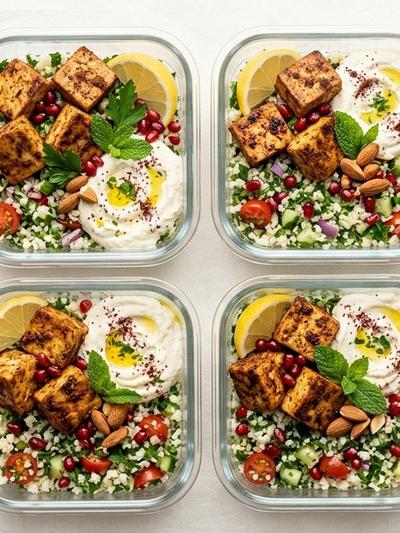
Assemble the bowls. Divide the cauliflower rice evenly among four meal-prep containers. Spoon the coconut-sauced halloumi over one half of the rice. Place a generous portion of sesame cabbage slaw alongside the halloumi — keep the slaw separate from the hot components so it stays crunchy. Drizzle any remaining sauce from the pan over the halloumi. Garnish with fresh cilantro, a squeeze of lime, extra sesame seeds, and sliced Thai chili if you enjoy extra heat.
Store for the week. Let the containers cool to room temperature before sealing. Refrigerate for up to 4 days. To reheat, microwave the halloumi and cauliflower rice portion for 90 seconds to 2 minutes at 80% power, keeping the slaw cold — add the slaw after reheating for maximum crunch.
Nutrition per Serving
| Nutrient | Amount |
|---|---|
| Calories | ~465 kcal |
| Fat | ~36g |
| Protein | ~24g |
| Total Carbs | ~10g |
| Fiber | ~4g |
| Net Carbs | ~6g |
Nutrition values are approximate and based on the stated ingredients. Actual values may vary depending on specific brands of halloumi and coconut cream used.
Tips & Variations
Use the best halloumi you can find. Not all halloumi is created equal — look for brands with a high fat content and minimal added starch. Some budget halloumi contains potato starch as a filler, which adds unnecessary carbs. Check the label and aim for brands with 2g or fewer carbs per serving. Cypriot or Greek imports tend to be the most reliable.
Swap in paneer for a softer texture. If you cannot find halloumi or prefer a milder cheese, paneer is an excellent substitute. Cube it and pan-fry in ghee until golden on all sides. Paneer will not develop the same squeaky texture but absorbs the lemongrass sauce beautifully. The macros stay very similar since both cheeses have comparable fat and protein profiles.
Watch for hidden carbs in curry paste. Many commercial Thai curry pastes contain added sugar or high-carb fillers. Read labels carefully and choose a paste where sugar is not in the first five ingredients, or make your own by blending dried chilies, lemongrass, galangal, and shrimp-free shrimp paste substitute. Mae Ploy and Mekhala both offer options that are relatively low in carbohydrates.
Double the sauce for extra richness. If you prefer a saucier bowl, make a double batch of the lemongrass coconut sauce. The extra sauce stores well in a sealed jar for up to five days and is wonderful drizzled over eggs, roasted vegetables, or even as a dipping sauce for cheese crisps. It also freezes well for up to a month.
Keep the slaw separate until serving. This is the single most important meal-prep tip for this recipe. If the sesame cabbage slaw sits in contact with the warm halloumi and sauce, it will wilt and lose its crunch within hours. Use divided meal-prep containers, or store the slaw in a small separate container. This extra step makes the difference between a mediocre reheated lunch and one that tastes freshly made.