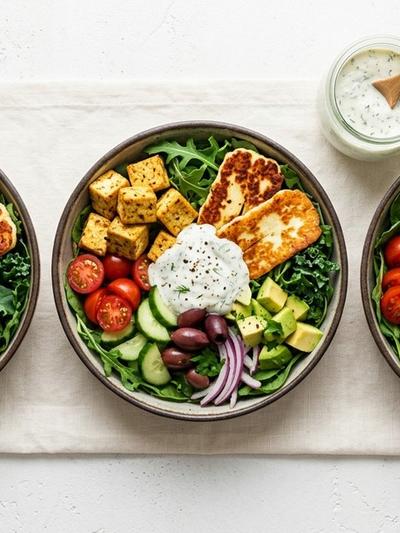
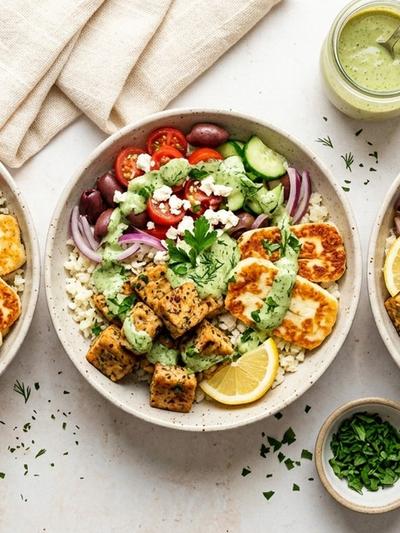
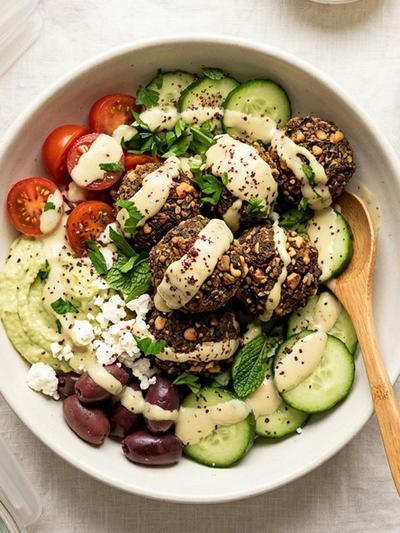
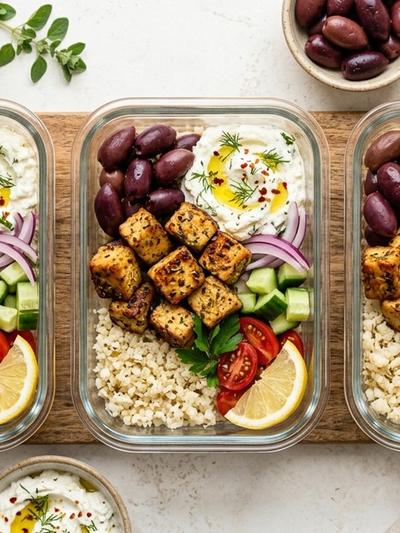
Baharat is the warm, fragrant spice blend that anchors kitchens from Istanbul to Beirut, and it turns plain baked tofu into something genuinely crave-worthy. Think cinnamon-kissed paprika, toasty cumin, and a whisper of clove pressed into thick tofu slabs and roasted until the edges go golden and slightly crisp. Pair that with a bright, herby cauliflower tabbouleh and a cloud of tangy whipped feta, and you have a Mediterranean lunch bowl that tastes nothing like diet food.
Each serving delivers roughly 56 grams of fat and only 9 grams of net carbs, putting it squarely in the ketogenic sweet spot. The fat comes from quality sources — extra-virgin olive oil, real feta, and cream cheese — while 30 grams of protein per bowl keeps you fueled through the afternoon without a blood sugar crash. This is high-fat eating that actually tastes like a proper meal, not a workaround.
Best of all, these bowls are designed for batch cooking. One hour of weekend prep yields four ready-to-grab lunches that hold up beautifully in the fridge for three to five days. The tofu firms up even more as it cools, the tabbouleh stays crisp without wilting, and the whipped feta keeps its creamy texture all week long. Pack it, grab it, eat it cold or warm it up — either way works.
Ingredients (serves 4)
For the Baharat Tofu:
- 2 blocks (14 oz / 400g each) extra-firm tofu
- 2 tbsp (30ml) extra-virgin olive oil
- 1 tbsp baharat spice blend
- 3/4 tsp fine sea salt
- 1/2 tsp black pepper
For the Cauliflower Tabbouleh:
- 1 small head cauliflower, cut into florets (~12 oz / 340g florets)
- 1 cup packed flat-leaf parsley, finely chopped
- 1/4 cup fresh mint leaves, finely chopped
- 2 tbsp (30ml) extra-virgin olive oil
- 2 tbsp fresh lemon juice
- 1/2 tsp fine sea salt
- 1/4 tsp black pepper
For the Whipped Feta:
- 6 oz (170g) crumbled feta cheese
- 3 oz (85g) cream cheese, softened
- 1 1/2 tbsp (22ml) extra-virgin olive oil
- 1 tbsp fresh lemon juice
- 1 small garlic clove, minced
- Pinch of red pepper flakes
For Assembly:
- 3 tbsp (25g) pine nuts, toasted
- 1/3 cup (40g) kalamata olives, pitted and halved
- 1 tbsp extra-virgin olive oil, for drizzle
- Sumac, for sprinkling (optional)
- Fresh mint leaves, for garnish
Instructions
Press the tofu. Drain both blocks of tofu and wrap them in a clean kitchen towel or several layers of paper towel. Place a heavy skillet or cutting board on top and press for at least 15 minutes. This step removes excess moisture and is essential for achieving firm, flavorful slabs that hold their texture through several days of storage.
Preheat the oven. Set your oven to 400°F (200°C) and line a large rimmed baking sheet with parchment paper.
Season the tofu. Slice each pressed tofu block crosswise into 6 rectangular slabs, giving you 12 pieces total (3 per serving). In a large bowl, combine the olive oil, baharat spice blend, salt, and pepper. Add the tofu slabs and gently toss until every piece is evenly coated. Arrange the slabs in a single layer on the prepared baking sheet with a little space between each piece.
Bake the tofu. Roast for 15 minutes, then carefully flip each slab and bake for another 12 to 15 minutes. The tofu is done when the surface looks dry and matte with golden-brown edges that are just beginning to crisp. Remove from the oven and let cool completely on the baking sheet. The slabs will firm up further as they cool.
Make the cauliflower tabbouleh. While the tofu bakes, pulse the cauliflower florets in a food processor in short bursts until they resemble coarse couscous — about 8 to 10 pulses. Be careful not to over-process; you want distinct small grains, not a paste. Alternatively, grate the florets on the large holes of a box grater. Transfer the riced cauliflower to a large bowl and add the chopped parsley, mint, olive oil, lemon juice, salt, and pepper. Toss everything together thoroughly. The tabbouleh is used raw, which keeps it crunchy and fresh for days of meal prep. Taste and adjust the lemon and salt to your preference.
Make the whipped feta. Add the crumbled feta, softened cream cheese, olive oil, lemon juice, minced garlic, and red pepper flakes to a food processor or high-powered blender. Process for 60 to 90 seconds, scraping down the sides once, until the mixture is completely smooth and billowy. If it seems too thick, add a teaspoon of water at a time and pulse again. Transfer to a jar or airtight container.
Toast the pine nuts. Place the pine nuts in a dry skillet over medium-low heat. Stir frequently for 3 to 4 minutes until they turn golden and fragrant. Watch them closely — pine nuts go from toasted to burnt in seconds. Slide them off the hot pan immediately onto a plate to cool.
Assemble the meal-prep bowls. Divide the cauliflower tabbouleh among four airtight containers, spreading it across the bottom. Arrange 3 tofu slabs on top of each portion. Scatter the halved kalamata olives and toasted pine nuts evenly among the bowls. Drizzle each with a little olive oil and sprinkle with sumac if using. Spoon the whipped feta into four small separate containers or silicone cups to keep it from making the tabbouleh soggy. Refrigerate everything promptly.
To serve. When ready to eat, dollop the whipped feta over the bowl and garnish with fresh mint. These bowls are excellent eaten cold, straight from the fridge. If you prefer warm tofu, remove the feta and microwave just the tofu and tabbouleh for 60 to 90 seconds, then add the cold whipped feta on top for contrast.
Nutrition per Serving
| Nutrient | Amount |
|---|---|
| Calories | ~650 kcal |
| Fat | ~56g |
| Protein | ~30g |
| Total Carbs | ~12g |
| Fiber | ~3g |
| Net Carbs | ~9g |
Nutrition is approximate and calculated based on the stated ingredients and quantities. Actual values may vary by brand.
Tips & Variations
Buying or making baharat. Look for baharat spice blend at Middle Eastern grocery stores or order it online. To make your own, whisk together 1 teaspoon each of ground black pepper, paprika, and ground coriander with 1/2 teaspoon each of ground cinnamon, ground cumin, and ground cardamom, plus 1/4 teaspoon each of ground cloves and ground nutmeg. This yields about 2 tablespoons — exactly what the recipe needs.
Keep the whipped feta separate. This is the single most important meal-prep tip for this recipe. If you stir the feta directly into the bowl before storing, moisture from the tabbouleh will thin it out and make the cauliflower base soggy by day three. Small mason jars, silicone baking cups with lids, or even reusable condiment containers all work well.
Watch for hidden carbs in store-bought spice blends. Some pre-mixed baharat blends include sugar, maltodextrin, or starch as fillers — all of which add carbs that are not accounted for in this recipe's nutrition. Always check the ingredients list and opt for blends that contain only whole spices. Pure spice blends without additives are the safest bet.
Swap the pine nuts if needed. Pine nuts add a buttery richness that suits the Mediterranean flavor profile, but they can be expensive. Slivered almonds, roughly chopped walnuts, or even hemp hearts are solid keto-friendly substitutes that will keep the fat content high and the carbs low. Toast them the same way for the best flavor.
Double the tofu for the week. If you eat these bowls frequently, bake four blocks of tofu at once instead of two. The extra baharat tofu stores perfectly in the fridge for up to five days and can be tossed into salads, wrapped in lettuce with tahini, or eaten as a high-protein snack on its own. The spice coating acts almost like a dry brine and improves in flavor after a day or two.