After months of hearty winter stews and roasted root vegetables, spring arrives with a wave of fresh produce that happens to be extraordinarily keto-friendly. Asparagus, radishes, artichokes, spring greens — many of the season's star ingredients are naturally low in carbohydrates and packed with the micronutrients that vegetarian keto dieters need most.
Yet spring also brings unique challenges. Easter brunches, Passover seders, outdoor gatherings, and farmer's market temptations can throw off even the most disciplined keto routine. That basket of fresh strawberries looks innocent enough, but pair it with a slice of carrot cake at a spring potluck and you've blown through your daily carb limit before dinner.
The good news is that spring might actually be the easiest season for vegetarian keto. Unlike summer with its sweet stone fruits and corn, or autumn with its squashes and apples, spring produce skews heavily toward leafy greens, cruciferous vegetables, and low-carb stalks. When you know which ingredients to reach for — and which to enjoy in careful moderation — eating seasonally and staying in ketosis becomes almost effortless.
This guide breaks down every major spring vegetable by its carb count, gives you a complete spring entertaining menu for holidays like Easter and Mother's Day, and offers practical strategies for shopping at farmer's markets without derailing your macros. Whether you follow a lacto-ovo vegetarian keto plan or a fully vegan keto approach, you'll find plenty of ideas to make this spring your most delicious season yet.
The Best Spring Vegetables for Vegetarian Keto
Spring produce is a goldmine for keto dieters. Here's a comprehensive breakdown of the season's best offerings, listed by net carbs per cup (raw, unless noted):
Ultra-Low Carb (Under 3g Net Carbs Per Cup)
- Asparagus — 2.4g net carbs, 2.2g protein. The undisputed king of spring keto vegetables. Rich in folate, vitamins A, C, and K. Roast with olive oil and parmesan, or shave raw into salads.
- Radishes — 2.0g net carbs. These peppery roots become buttery and mild when roasted, making them an excellent low-carb potato substitute. One cup of halved radishes roasted in butter is just 2g net carbs compared to 26g for the same amount of roasted potatoes.
- Spinach — 0.4g net carbs. Spring spinach is tender and sweet compared to its winter counterpart. Packed with iron, magnesium, and potassium — three minerals vegetarian keto dieters commonly run low on.
- Watercress — 0.2g net carbs. One of the most nutrient-dense foods on the planet. Toss it into salads, blend into soups, or use as a peppery bed for eggs.
- Arugula — 0.7g net carbs. Another spring green that's practically free in carb terms and loaded with calcium.
Low Carb (3–5g Net Carbs Per Cup)
- Artichokes — 4.8g net carbs per medium artichoke. High in fiber (6.9g) and a good source of plant-based protein at 3.5g per artichoke. The hearts are particularly versatile in keto cooking.
- Snap peas — 4.8g net carbs. Best enjoyed in small portions. A 1/2 cup serving keeps you at a reasonable 2.4g net carbs and adds satisfying crunch to stir-fries.
- Green onions/scallions — 4.7g net carbs per cup, but since you typically use 2–3 stalks (about 1g net carbs), they're essentially free as a garnish.
- Fennel — 3.6g net carbs. Its anise flavor works beautifully in Mediterranean-style keto dishes. Try it shaved raw with olive oil and lemon.
- Morel mushrooms — 1.7g net carbs. A spring forager's treasure. If you can find them at the farmer's market (expect to pay $30–50 per pound), they're worth every penny sautéed in brown butter.
Moderate Carb — Use With Care (5–8g Net Carbs Per Cup)
- Peas — 7.4g net carbs. Not off-limits, but use them as an accent rather than a base. Two tablespoons of fresh peas stirred into a dish adds about 1.5g net carbs and a burst of spring flavor.
- Fava beans — 6.5g net carbs (shelled). Similar to peas — a few scattered into a salad won't break ketosis, but don't make them the star.
- Spring carrots — 6.1g net carbs. Baby spring carrots are sweeter than their winter counterparts. Stick to 1/4 cup diced as a flavor component.
For a complete breakdown of keto-friendly vegetables and pantry staples beyond this seasonal list, check out our vegetarian keto food list.
A Complete Spring Holiday Menu for Vegetarian Keto
Easter, Passover, Mother's Day brunch — spring is packed with occasions that call for something more festive than your weeknight routine. Here's a complete entertaining menu that feeds 6–8 guests, keeps everyone under 12g net carbs for the meal, and impresses even your non-keto friends and family.
The Drinks Table
Start guests off with a keto-friendly beverage station. A spiced coconut horchata with cinnamon and lime makes a stunning non-alcoholic centerpiece — creamy, aromatic, and just 2g net carbs per serving. For something warm, a Thai toasted coconut and lemongrass latte gives the gathering an unexpected, elegant touch. Set out sparkling water with cucumber and fresh mint alongside, and your drink station is covered.
Starters & Grazing
Build a spring-themed grazing board around keto staples: cubes of aged cheddar and gruyère, marinated artichoke hearts, olives, marcona almonds, and cucumber cream cheese bites arranged on a bed of fresh arugula. Add halved radishes with flaky salt and good butter for a simple, seasonal touch. The entire starter spread comes in at roughly 4g net carbs per person if guests graze freely.
The Main Course
For a showstopper spring main, consider a vegetable-forward approach: a large keto spinach and cheese pie as the centerpiece, surrounded by roasted asparagus bundles wrapped in thin strips of gruyère that crisp in the oven, and a Mediterranean cauliflower rice bowl station where guests can build their own plates with toppings like crumbled feta, kalamata olives, roasted artichoke hearts, and fresh herbs.
For protein, set out a platter of deviled eggs with three variations — classic, everything bagel seasoned, and sriracha — alongside a shakshuka kept warm in a cast-iron skillet for guests who want something heartier. Each of these provides substantial protein, which is essential on vegetarian keto. Our protein sources guide has more ideas if you want to round things out.
Dessert
A keto New York cheesecake is the obvious crowd-pleaser — rich, creamy, and no one will guess it's keto. For something lighter, set out keto chia seed pudding in individual jars, topped with a few fresh raspberries (1g net carbs per 10 berries) and toasted coconut flakes.
Total estimated carbs for the full meal: 10–14g net carbs per guest, depending on portions. That leaves room for a second slice of cheesecake.
Farmer's Market Strategies for Keto Shoppers
Spring farmer's markets are one of the great pleasures of the season, but they can also be a minefield of artisan bread, honey, and fruit preserves. Here's how to navigate them like a keto pro.
Set a carb budget before you go. Decide in advance how many net carbs you want to "spend" on produce for the week. For most vegetarian keto dieters staying under 20–25g daily net carbs, budgeting 8–12g per day on vegetables is a good target. That means your weekly produce haul should contain roughly 56–84g of net carbs total.
Hit the greens first. Leafy greens are almost always the best deal at a farmer's market — both for your wallet and your macros. A big bag of spring mix, a bunch of spinach, and some arugula will cost you almost nothing in carbs and form the base of your meals all week.
Ask vendors about their growing practices. Small-scale farmers often grow unusual varieties of keto-friendly vegetables — purple radishes, white asparagus, specialty mushrooms — that you won't find at the grocery store. These add variety to your meals without adding carbs.
The "fist test" for portions. When you're eyeing something moderate-carb like snap peas or baby carrots, buy a fist-sized amount. That's roughly 1/2 cup, which keeps most spring vegetables in the 2–3g net carb range per serving.
Spring herbs are your secret weapon. Fresh dill, cilantro, chives, mint, tarragon, and parsley are essentially zero-carb and transform simple keto dishes into something special. Buy generous bunches. Store them in jars of water in your fridge (like flowers) and they'll last up to two weeks.
What to skip or limit. Steer past the strawberry stands (7.4g net carbs per cup) unless you're buying a small basket to use sparingly. Same for spring potatoes, sweet onions, beets, and anything from the bakery table. If a vendor offers samples of jam or honey, a polite "no thanks" keeps you on track.
Spring Meal Prep for Busy Weeks
Spring is notoriously hectic — longer days, more social commitments, the pull of the outdoors. A solid Sunday meal prep session keeps your vegetarian keto on autopilot. Here's a practical weekly framework built around spring produce.
Sunday Prep Session (90 minutes)
Roast a sheet pan of spring vegetables (30 min): Toss asparagus, radishes, fennel, and halved Brussels sprouts with avocado oil, salt, and pepper. Roast at 425°F for 20–25 minutes. This becomes your go-to side dish all week. Yields about 8 servings at 2–3g net carbs each.
Make a big batch of perfect cauliflower rice (15 min): Four cups of cauliflower rice stores well for 5 days and serves as the base for stir-fries, bowls, and pilafs.
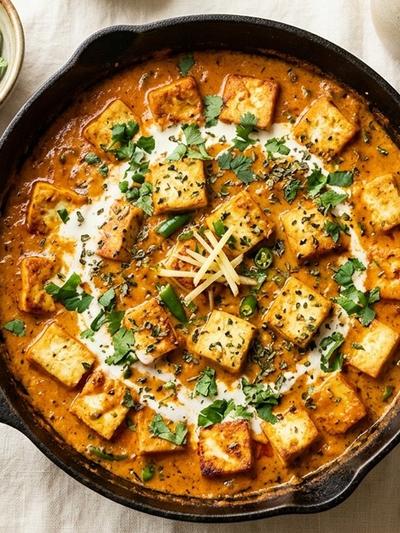
Prep a protein anchor (20 min): Hard-boil a dozen eggs, cube a block of paneer, or press and slice firm tofu. Having protein ready to grab eliminates the biggest friction point in vegetarian keto meal prep. For more high-protein keto options, eggs and paneer are the workhorses of spring cooking.
Assemble grab-and-go breakfasts (15 min): Bake a batch of keto egg muffins with spinach and cheese. They reheat in 30 seconds and deliver 12g protein and just 1g net carbs each. Make 8–10 to cover weekday mornings.
Prepare a spring dressing or sauce (10 min): Blend a green goddess dressing with avocado, fresh herbs, lemon juice, and olive oil. Or make a simple lemon-tahini dressing. Either one keeps for a week and makes raw spring vegetables irresistible.
Sample Weekday Meals Using Your Prep
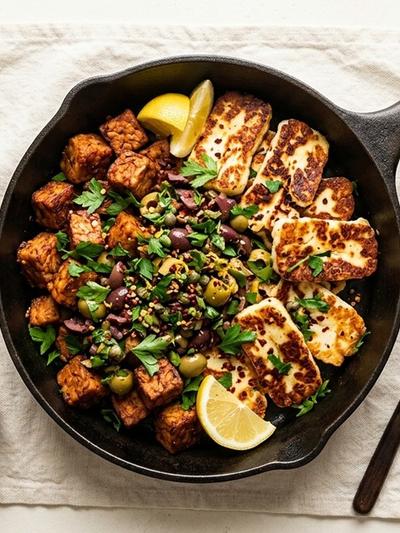
- Monday: Egg muffins for breakfast, Greek salad with feta and olives for lunch, roasted vegetables with halloumi for dinner
- Tuesday: Berry smoothie bowl for breakfast, leftover roasted vegetables over cauliflower rice with a fried egg for lunch, zucchini noodle alfredo for dinner
- Wednesday: Egg muffins for breakfast, egg salad lettuce wraps for lunch, paneer pesto zucchini lasagna for dinner (this recipe is specifically designed for meal prep)
- Thursday: Spinach and gruyère omelet for breakfast, cauliflower rice bowl with cubed paneer and green goddess dressing for lunch, keto vegetarian chili for dinner
- Friday: Spring farmer's market day — treat yourself to something fresh and spontaneous
For more ideas you can batch-cook, browse our full meal prep recipe collection.
The Vegan Keto Spring Playbook
Following a vegan keto diet in spring comes with distinct advantages and a few specific challenges. The advantage: spring produce is naturally plant-based, and the abundance of fresh vegetables means less reliance on processed vegan keto products. The challenge: without eggs and dairy, you need to be more intentional about protein and fat sources.
Spring Protein Strategies for Vegan Keto
Tofu and tempeh remain your primary protein anchors. A 100g serving of extra-firm tofu provides 8g protein and just 1.9g net carbs, while tempeh delivers 19g protein and 3.8g net carbs per 100g. In spring, pair these with seasonal vegetables for lighter, fresher meals:
- Marinate firm tofu in lemon, fresh herbs, and olive oil, then grill alongside asparagus spears
- Crumble tempeh into a spring stir-fry with snap peas, scallions, and sesame oil — similar to our popular sesame ginger tofu stir-fry but with seasonal vegetables swapped in
- Blend silken tofu with fresh herbs and lemon for a vegan "ricotta" to use in spring vegetable lasagnas
Hemp hearts (10g protein, 1g net carb per 3 tablespoons) and pumpkin seeds (8.5g protein, 1.3g net carbs per ounce) are shelf-stable protein boosters you can scatter over virtually anything. Our Thai coconut sesame breakfast porridge with hemp hearts is an excellent vegan keto breakfast that works year-round.
Spring Fat Sources Beyond Coconut Oil
Avocados peak in spring and early summer. A whole avocado delivers 21g fat, 2.6g net carbs, and significant potassium — a mineral vegan keto dieters are frequently deficient in. Build at least one meal per day around avocado:
- Mash onto keto 90-second bread (use a flax egg for the vegan version) with everything bagel seasoning and a squeeze of lemon
- Stuff with a spring vegetable salad dressed in olive oil and fresh dill
- Blend into smoothies for added creaminess without dairy — our keto green smoothie is a great starting point
A Note on Vegan Keto Macros in Spring
Because spring vegetables are so low in calories, vegan keto dieters sometimes under-eat without realizing it. A giant salad of arugula, radishes, and asparagus might feel like a full meal, but it could clock in at just 80–100 calories. Always anchor spring meals with a concentrated fat and protein source: a generous pour of olive oil (120 calories per tablespoon), a full avocado (234 calories), or a hearty serving of nuts (almonds deliver 164 calories per ounce). If you're new to vegan keto, our complete guide to vegetarian keto covers how to adapt the standard approach for fully plant-based eating.
Spring Keto Swaps for Classic Seasonal Dishes
Many beloved spring dishes are carb-heavy by default, but with the right swaps, you can enjoy the flavors of the season without leaving ketosis.
Instead of pasta primavera → Spring Vegetable Zucchini Noodles. Spiralize zucchini and toss with sautéed asparagus tips, halved snap peas, fresh peas (just a tablespoon), lemon zest, olive oil, and shaved parmesan. Total: about 6g net carbs versus 45g+ for traditional pasta primavera.
Instead of quiche with a flour crust → Crustless Spring Quiche. Pour your egg and cream mixture directly into a greased pie dish. Fill with spring spinach, scallions, fresh herbs, and goat cheese. You save 15–18g net carbs by ditching the crust, and honestly, the filling is the best part anyway.
Instead of carrot cake → Keto Spice Cake with Cream Cheese Frosting. Use almond flour and a small amount of finely grated zucchini (not carrot) for moisture. Flavor with cinnamon, nutmeg, and ginger. Top with a sugar-free cream cheese frosting. You'll capture the spirit of the classic without the 40g+ carbs per slice.
Instead of strawberry shortcake → Berries and Whipped Cream on Almond Flour Biscuits. Make small biscuits from almond flour, butter, and a touch of erythritol. Top with 3–4 sliced strawberries (about 2g net carbs) and unsweetened whipped cream. All the satisfaction, 5g net carbs total.
Instead of potato salad at cookouts → Roasted Radish "Potato" Salad. Halve and roast radishes until tender (their sharpness mellows completely), then toss with mayo, mustard, celery, dill, and hard-boiled egg. Guests consistently mistake this for actual potato salad. At 3g net carbs per generous serving compared to 20g+ for potato salad, it's the ultimate spring cookout swap.
Instead of lemonade → Keto Sparkling Lemonade. Squeeze fresh lemon juice into sparkling water with a few drops of liquid stevia and a sprig of fresh mint. Zero carbs, completely refreshing, and ready in 30 seconds.
These swaps work for any spring gathering. Browse our complete recipe collection for more ideas that fit the season, or use our search page to find exactly what you need.
Frequently Asked Questions
Which spring fruits can I eat on vegetarian keto?
Most spring fruits are relatively high in sugar, but a few work in small portions. Strawberries are the most keto-friendly spring fruit at 7.4g net carbs per cup — a serving of 4–5 medium berries (about 1/3 cup) comes to roughly 2.5g net carbs. Rhubarb is surprisingly low at 1.7g net carbs per cup when raw, though it needs sweetener to be palatable — stew it with erythritol and vanilla for a keto-friendly compote. Avoid cherries (18g net carbs per cup), apricots (11.5g), and most melons. When in doubt, stick to berries in measured portions and count them toward your daily carb budget.
How do I handle Easter or Passover meals on vegetarian keto?
Focus on the naturally keto-friendly parts of the holiday table. For Easter, build your plate around deviled eggs, cheese boards, roasted spring vegetables, and salads — skip the dinner rolls, glazed carrots, and dessert table. For Passover, many traditional dishes translate well: charoset can be made keto-friendly using walnuts and a small amount of apple with cinnamon, matzo ball soup can use almond flour matzo balls in a rich vegetable broth, and vegetable kugels work with cauliflower instead of potato or noodles. Bring a keto dish to share so you always have a safe option. The spring holiday menu section above in this article has a complete plan that works for any gathering.
Can I eat asparagus every day on keto without issues?
Absolutely. Asparagus is one of the most nutrient-dense, lowest-carb vegetables available, and eating it daily during its peak season (March through June) is both safe and beneficial. At just 2.4g net carbs per cup, it fits easily into any keto plan. It's also a natural prebiotic that feeds beneficial gut bacteria — important for vegetarian keto dieters who may get less fiber diversity than omnivores. The only caveat: asparagus is high in purines, so if you have gout or kidney stone issues, moderate your intake and consult your doctor. For everyone else, enjoy it roasted, grilled, shaved raw, or blended into soups throughout the season.
What's the best way to store spring produce to make it last on keto meal prep?
Different spring vegetables require different storage strategies. Asparagus lasts longest (up to 10 days) when you trim the ends and stand the bunch upright in a jar with an inch of water, covered loosely with a plastic bag in the fridge. Leafy greens like spinach and arugula should be washed, dried thoroughly in a salad spinner, and stored in a container lined with paper towels — they'll last 5–7 days. Radishes keep for up to two weeks in the fridge if you remove the greens (which draw out moisture) immediately after buying. Fresh herbs stay vibrant for 1–2 weeks when treated like flowers: trim stems and place in a jar of water on the counter (basil) or in the fridge (everything else). Artichokes are best used within 3–4 days of purchase.
Is it harder to stay in ketosis during spring compared to other seasons?
Spring is actually one of the easier seasons for keto. The produce that comes into season — asparagus, radishes, leafy greens, artichokes, fresh herbs — is overwhelmingly low-carb. Compare that to summer (sweet corn, watermelon, peaches), fall (squash, apples, sweet potatoes), or winter (root vegetables, citrus). The main challenge in spring is social: holiday gatherings and outdoor events tend to feature carb-heavy foods like potato salad, bread, fruit desserts, and sugary drinks. The key is planning ahead. Eat before events so you aren't ravenous, bring a keto-friendly dish to share, and focus on the protein and fat options available. If you're just getting started, our 7-day vegetarian keto meal plan can help you build a baseline routine that holds up even during busy social seasons.