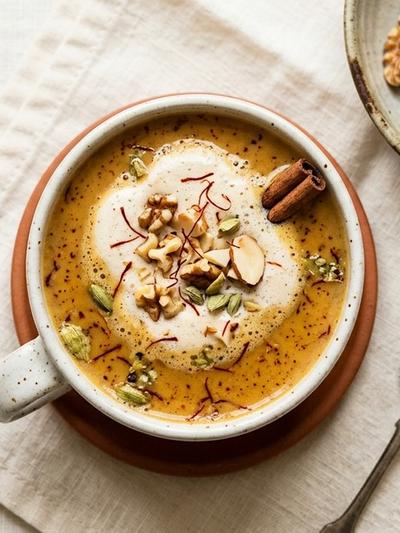
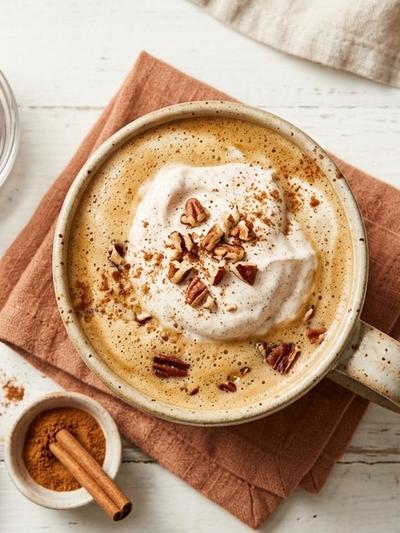
There is nothing quite like a properly brewed masala chai — the heady perfume of crushed cardamom, the gentle heat of fresh ginger and black pepper, the deep warmth of cinnamon and cloves swirling through a creamy, sweetened cup. This keto version trades sugar and regular milk for a velvety blend of coconut cream, almond butter, and hemp hearts, creating a chai that is richer and more luxurious than any coffeehouse could dream up. Every sip delivers the authentic complexity of Indian spice-box flavors with a silky, almost dessert-like body that feels indulgent while keeping you firmly in ketosis.
With roughly 37 grams of fat and only 3 grams of net carbs per serving, this masala chai is practically a fat bomb you can drink. The coconut cream and ghee provide a generous dose of medium-chain and short-chain fatty acids, while almond butter and hemp hearts contribute healthy monounsaturated fats along with a modest protein boost. Fat makes up over 80% of the calories here, making this an ideal keto beverage to sip alongside a lighter meal or enjoy as a satisfying afternoon pick-me-up.
The entire recipe comes together in a single saucepan in under fifteen minutes — no special equipment, no blender required. You simply toast your whole spices, simmer them in water, then whisk in the creamy base. It is the kind of effortless ritual that can anchor your morning or provide a cozy evening wind-down. Make a double batch and store the spiced concentrate in the fridge for an even faster chai on busy weekdays.
Ingredients (serves 2)
For the spice base:
- 1½ cups (360ml) filtered water
- 3 green cardamom pods, lightly crushed
- 1 cinnamon stick, about 3 inches (7cm)
- 3 whole cloves
- 1 inch (2.5cm) piece fresh ginger, thinly sliced
- 4 whole black peppercorns
- 1 star anise (optional, for depth)
For the chai:
- 2 bags Assam or CTC black tea (or 2 teaspoons loose-leaf)
- ½ cup (120ml) full-fat coconut cream
- 2 tablespoons (32g) creamy almond butter, unsweetened
- 2 tablespoons (20g) hemp hearts
- 1 tablespoon (14g) ghee or unsalted butter
- 1–2 teaspoons granulated erythritol or monk fruit sweetener, to taste
- Pinch of ground nutmeg
For garnish (optional):
- Small pinch of saffron threads
- Sprinkle of crushed toasted almonds
- Dusting of ground cinnamon
Instructions
Toast the whole spices. Place a small saucepan over medium heat. Add the crushed cardamom pods, cinnamon stick, cloves, black peppercorns, and star anise (if using). Dry-toast, stirring occasionally, for about 60–90 seconds until the spices become fragrant and you can smell the cinnamon and cloves blooming. This step intensifies the essential oils and gives the chai its signature depth.
Simmer the spice water. Pour the filtered water into the saucepan and add the sliced fresh ginger. Bring to a gentle boil, then reduce the heat to medium-low. Let the spices simmer for 4–5 minutes — the water should turn a pale golden color and smell deeply aromatic. The longer you simmer, the spicier and more robust the flavor.
Steep the tea. Add the tea bags or loose-leaf tea to the simmering spice water. Let it steep for 2–3 minutes, depending on how strong you like your chai. For a bold, malty flavor typical of Indian chai, lean toward 3 minutes. Remove the tea bags (or strain out loose leaves) and discard.
Whisk in the creamy base. Reduce the heat to low. Add the coconut cream, almond butter, ghee, and hemp hearts to the saucepan. Whisk vigorously for about 30 seconds until the almond butter is fully dissolved and the mixture looks uniformly creamy with no streaks of oil floating on top. The hemp hearts will remain as tiny, soft specks throughout — this is exactly what you want, as they add a subtle nutty texture and extra nutrition.
Sweeten and season. Stir in the erythritol or monk fruit sweetener and the pinch of ground nutmeg. Taste and adjust — if you prefer a sweeter chai, add another half teaspoon of sweetener. Let the chai warm through for another minute on low heat without boiling; you want it steaming hot but not bubbling, which could cause the coconut cream to separate.
Strain and serve. Place a fine-mesh strainer over two mugs and pour the chai through, catching the whole spices and ginger slices. If you prefer a completely smooth texture with no hemp heart specks, use a nut milk bag or cheesecloth-lined strainer instead. Garnish each cup with a pinch of saffron threads, a scatter of crushed toasted almonds, and a light dusting of ground cinnamon. Serve immediately while hot.
Nutrition per Serving
| Nutrient | Amount |
|---|---|
| Calories | ~370 kcal |
| Fat | ~37g |
| Protein | ~7g |
| Total Carbs | ~6g |
| Fiber | ~3g |
| Net Carbs | ~3g |
Nutritional values are approximate and based on the specific brands and quantities of coconut cream, almond butter, hemp hearts, and ghee listed above.
Tips & Variations
Make a spice concentrate ahead of time. Simmer a large batch of the spice water (step 1–2) using four times the water and spices, then store it in a jar in the fridge for up to five days. When you want chai, simply heat one-and-a-half cups of concentrate, steep your tea, and whisk in the creamy base. This cuts your daily prep time to under five minutes.
Swap hemp hearts for chia seeds. If you cannot find hemp hearts, stir in one tablespoon of ground chia seeds along with the coconut cream. Chia will thicken the chai slightly, giving it a more velvety, almost pudding-like consistency. Let it sit for two minutes after whisking to allow the chia to hydrate. The net carb count stays nearly identical.
Watch your sweetener for keto compliance. Erythritol and monk fruit blends have zero net carbs and no glycemic impact, making them ideal here. Avoid honey, jaggery, coconut sugar, or agave — even small amounts will spike the carb count well beyond keto range. If your almond butter contains added sugar, switch to a brand with only almonds and salt on the ingredient list.
Turn it into a bulletproof chai. For an even higher-fat version, add one teaspoon of MCT oil along with the ghee. This pushes the fat content above 40 grams per serving and can help with sustained energy and mental clarity during intermittent fasting windows. Whisk especially well to emulsify the MCT oil so it does not pool on the surface.
Try it iced for warmer months. Brew the chai as directed but let it cool to room temperature, then pour over ice in a tall glass. The almond butter and coconut cream make it naturally thick enough to stay creamy even when chilled. Add a splash more coconut cream if the ice dilutes it too much, and stir in a few extra hemp hearts for texture.