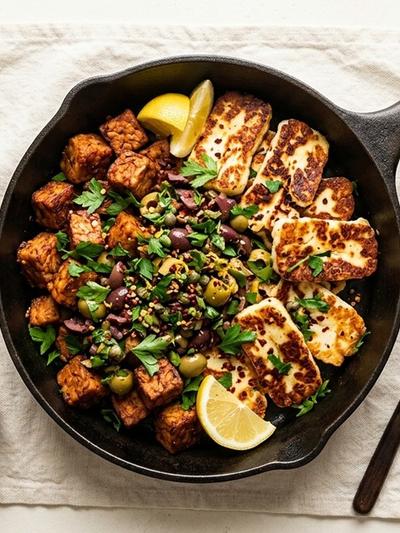
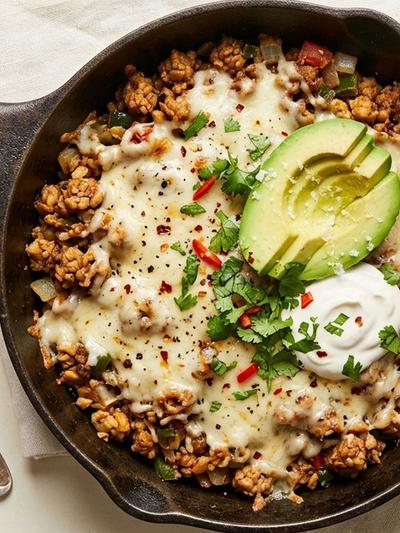
Chettinad cuisine is one of South India's boldest culinary traditions, and this one-pan curry captures its soul — cracked black pepper, toasted fennel, aromatic curry leaves, and a whisper of cinnamon all simmered into a rich coconut cream sauce. Cubes of golden-seared paneer and halved eggs nestle into this fragrant gravy, soaking up every layer of spice. The result is deeply savory, warming without being aggressively spicy, and impossibly satisfying for a weekday lunch.
With roughly 46 grams of fat and only 4 grams of net carbs per serving, this curry is textbook ketogenic. The fat comes from three luxurious sources — ghee for searing, full-fat paneer, and thick coconut cream — while the eggs and paneer together deliver over 25 grams of protein. There is no flour, no sugar, and no starchy thickener. The sauce gets its body entirely from reduced coconut cream and the natural richness of the spice paste.
Best of all, this is a true one-pan recipe. You sear the paneer, bloom the spices, build the sauce, and simmer the eggs all in the same skillet in under 25 minutes. It reheats beautifully, making it ideal for packing into lunch containers. Serve it as-is for a comforting bowl meal, or alongside a small portion of cauliflower rice if you want something more substantial.
Ingredients (serves 2)
For the Chettinad spice paste:
- 1 tablespoon (8g) whole black peppercorns
- 1 teaspoon (3g) fennel seeds
- 1 teaspoon (3g) cumin seeds
- 1/2 teaspoon (1g) ground cinnamon
- 1/4 teaspoon (0.5g) ground turmeric
- 2 tablespoons (30ml) water
For the curry:
- 2 tablespoons (28g) ghee
- 5 oz (150g) paneer, cut into 3/4-inch cubes
- 1 small onion (about 50g), finely diced
- 2 cloves garlic, minced
- 1-inch (2.5cm) piece fresh ginger, grated
- 1 sprig (10–12 leaves) fresh curry leaves
- 1 green chili, slit lengthwise
- 1 small tomato (about 60g), finely chopped
- 1/3 cup (80ml) full-fat coconut cream
- 1/4 teaspoon salt, or to taste
- 4 large eggs, hard-boiled and halved
- Fresh cilantro, for garnish
Instructions
Toast and grind the spice paste. Place the black peppercorns, fennel seeds, and cumin seeds in a dry skillet over medium heat. Toast for 60–90 seconds, shaking the pan frequently, until the spices are deeply fragrant and the fennel begins to darken slightly. Transfer to a mortar and pestle or spice grinder and crush to a coarse powder — you want some texture, not a fine dust. Stir in the cinnamon, turmeric, and water to form a loose paste. Set aside.
Sear the paneer. In the same skillet, melt the ghee over medium-high heat. Add the paneer cubes in a single layer and cook undisturbed for 2 minutes per side until golden brown on at least two sides. Remove the paneer to a plate and set aside, leaving the ghee in the pan.
Build the aromatic base. Reduce heat to medium. Add the curry leaves — stand back, as they will splutter — followed immediately by the slit green chili and diced onion. Sauté for 3–4 minutes until the onion turns translucent and lightly golden at the edges. Add the garlic and ginger, stirring for 30 seconds until fragrant.
Bloom the spice paste. Add the ground Chettinad spice paste to the skillet and stir constantly for 1 minute. The paste should sizzle and darken slightly, releasing an intensely peppery aroma. If it sticks, add a splash of water.
Add the tomato and simmer. Stir in the chopped tomato and cook for 2–3 minutes until it breaks down into a rough sauce and the raw smell disappears. The mixture should look like a thick, dark masala at this point.
Pour in the coconut cream. Add the coconut cream and salt, stirring to combine into a smooth, creamy sauce. Bring to a gentle simmer and cook for 2 minutes, allowing the sauce to thicken slightly and the flavors to meld together.
Add the paneer and eggs. Return the seared paneer cubes to the skillet, nestling them into the sauce. Place the halved hard-boiled eggs cut-side up on top of the curry. Spoon a little sauce over the eggs and paneer. Cover the skillet and cook on low heat for 2–3 minutes, just long enough for everything to warm through and absorb the spices.
Garnish and serve. Remove from heat, scatter fresh cilantro over the top, and serve directly from the skillet. For meal prep, let the curry cool completely before transferring to airtight containers.
Nutrition per Serving
| Nutrient | Amount |
|---|---|
| Calories | ~540 kcal |
| Fat | ~46g |
| Protein | ~26g |
| Total Carbs | ~6g |
| Fiber | ~2g |
| Net Carbs | ~4g |
Nutrition is approximate, calculated using the stated ingredients and standard USDA values for paneer, eggs, ghee, and coconut cream.
Tips & Variations
Use a mortar and pestle for the best flavor. A coarse hand-ground paste releases more aromatic oils than a blade grinder and gives the curry its characteristic rustic texture. If using a spice grinder, pulse in short bursts rather than running it continuously — you want a rough grind, not powder.
Swap coconut cream for heavy cream if you prefer. Full-fat heavy whipping cream works beautifully here and adds even more richness. The macros stay nearly identical since both are high-fat and very low-carb. Coconut cream gives a more authentically South Indian flavor, but heavy cream makes the sauce silkier.
Watch your onion and tomato portions for carb control. These are the primary carb sources in this recipe. Stick to the stated amounts — one small onion and one small tomato — to keep net carbs at 4 grams per serving. Using a large onion or extra tomato could push a single serving closer to 7–8 grams of net carbs.
Make the eggs ahead for faster assembly. Hard-boil a batch of eggs at the start of the week and store them peeled in the refrigerator. With pre-boiled eggs, this entire curry comes together in about 12 minutes of active cooking. You can also score the peeled eggs lightly with a knife before adding them to the curry so the spiced sauce penetrates deeper.
Adjust the heat level to your preference. Chettinad food is traditionally quite peppery. If you are sensitive to black pepper heat, reduce the peppercorns to 2 teaspoons. For more fire, keep the green chili seeds intact or add a dried red Kashmiri chili to the spice toast in step one. The curry leaves are non-negotiable for authenticity — they add a nutty, herbaceous depth that dried herbs cannot replicate.