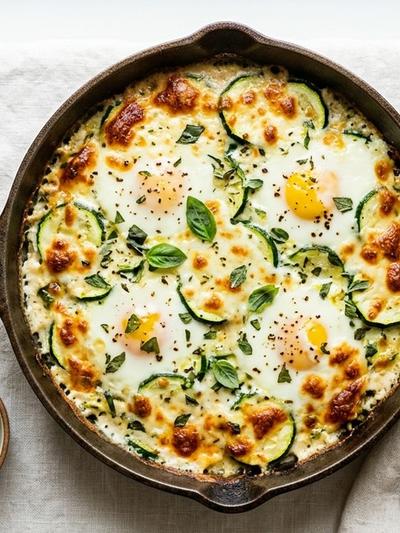
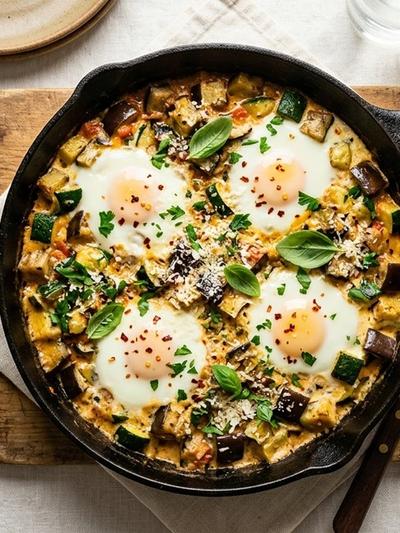
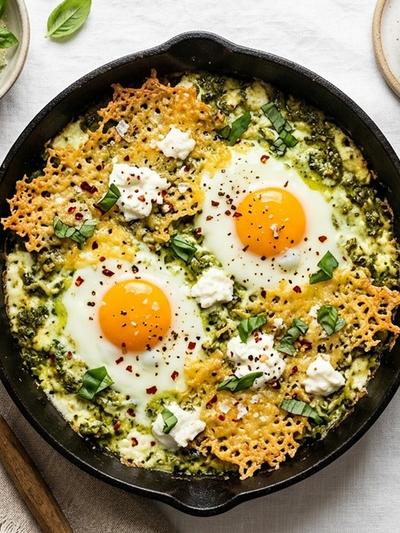
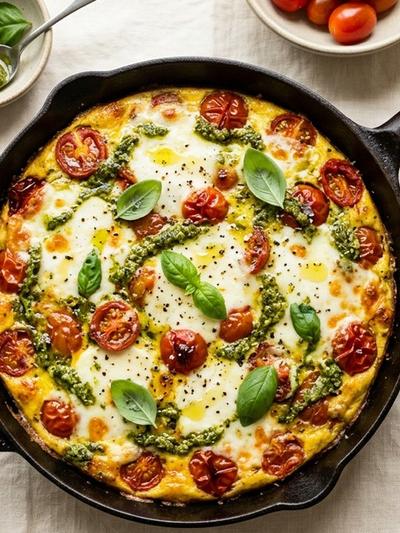
Caramelized fennel, pools of melted fresh mozzarella, and perfectly set eggs — all from one skillet in under 30 minutes. The fennel turns sweet and silky as it cooks down in olive oil and butter, then thick slabs of mozzarella melt into it while eggs gently set on top. A drizzle of lemon-Parmesan oil pulls the whole thing together with a brightness that cuts right through the richness. This is the kind of Italian breakfast that makes you slow down, pour another coffee, and actually enjoy your morning.
Each serving delivers 63 grams of fat and only 8 grams of net carbs, which lands squarely in keto territory. The 38 grams of protein come from a generous portion of eggs and a full three ounces of fresh mozzarella per person. Fat accounts for roughly 75 percent of total calories here, exactly where you want to be on a well-formulated ketogenic diet.
Beyond the macros, the beauty of this recipe is its simplicity. One skillet, eight ingredients you probably already have, and less than half an hour from cold pan to table. It reheats well for the next morning, scales up easily for a weekend brunch, and looks far more impressive than the effort it takes to pull together.
Ingredients (serves 2)
For the skillet:
- 6 large eggs
- 6 oz (170g) fresh mozzarella, torn into rough 1-inch pieces
- 1 small fennel bulb (about 5 oz / 150g trimmed weight), thinly sliced, fronds reserved
- 2 tbsp (30ml) extra-virgin olive oil
- 1 tbsp (14g) unsalted butter
- 2 cloves garlic, thinly sliced
- Pinch of red pepper flakes
- Salt and freshly ground black pepper
For the lemon-Parmesan oil:
- 1 tbsp (15ml) extra-virgin olive oil
- 2 tbsp (10g) finely grated Parmesan
- 1 tsp lemon zest
- 1 tbsp (15ml) fresh lemon juice
- Fresh basil leaves, for serving
Instructions
Prepare the fennel. Trim the fennel bulb, removing the tough outer layer and the stalks. Save any feathery fronds for garnish. Halve the bulb lengthwise, cut out the core, and slice each half into thin half-moons, about ⅛ inch (3mm) thick.
Caramelize the fennel. Heat 2 tablespoons of olive oil and the butter in a 10-inch (25cm) oven-safe or lidded skillet over medium heat. Once the butter foams, add the sliced fennel in a single layer and season with a generous pinch of salt and a few grinds of black pepper. Cook for 8 to 10 minutes, stirring every couple of minutes, until the fennel is soft, golden at the edges, and noticeably sweet.
Add the garlic. Push the fennel to the edges of the skillet and drop the sliced garlic into the center along with the red pepper flakes. Cook for about 45 seconds, stirring the garlic constantly, until fragrant but not browned. Toss the garlic through the fennel and spread everything into an even layer across the pan.
Layer the mozzarella. Reduce the heat to medium-low. Scatter the torn mozzarella pieces evenly over the fennel. Let the cheese sit undisturbed for about 1 minute so it begins to soften against the hot fennel.
Crack in the eggs. Using the back of a spoon, make 6 small wells in the fennel-mozzarella layer. Crack one egg into each well. Season the eggs lightly with salt and pepper. Cover the skillet with a lid or a sheet of aluminum foil.
Cook until set. Let the eggs cook covered over medium-low heat for 6 to 8 minutes. Check at 6 minutes — the whites should be fully set and opaque, while the yolks remain soft and runny. If you prefer firmer yolks, continue cooking for another 1 to 2 minutes. The mozzarella will be fully melted and bubbling gently around the eggs.
Make the lemon-Parmesan oil. While the eggs cook, stir together 1 tablespoon of olive oil, the grated Parmesan, lemon zest, and lemon juice in a small bowl. It will form a loose, slightly grainy drizzle.
Finish and serve. Remove the skillet from the heat. Spoon the lemon-Parmesan oil over the eggs in a zigzag pattern. Tear a few basil leaves over the top and scatter the reserved fennel fronds. Serve immediately, straight from the skillet, with spoons or a spatula to scoop out individual portions.
Nutrition per Serving
| Nutrient | Amount |
|---|---|
| Calories | ~745 kcal |
| Fat | ~63g |
| Protein | ~38g |
| Total Carbs | ~10g |
| Fiber | ~2g |
| Net Carbs | ~8g |
Nutrition values are approximate and based on standard USDA data for the ingredients listed.
Tips & Variations
Choose the right mozzarella. Fresh mozzarella packed in water (the soft, milky kind sold in balls) is what you want here. It melts into creamy pockets that mix with the fennel beautifully. Low-moisture shredded mozzarella will work in a pinch, but the texture becomes more rubbery and stringy rather than lush. If your market carries burrata, use it instead — split it open over the finished dish right before serving for an absurdly rich upgrade.
Watch for hidden carbs in pre-shredded cheese. Bagged shredded cheese often contains potato starch or cellulose as anti-caking agents, which adds a gram or two of carbs per serving that are not always reflected accurately on the label. For keto precision, buy blocks or balls and shred or tear them yourself. This recipe keeps net carbs at 8 grams, and that number assumes no fillers in the cheese.
Swap the fennel for other low-carb Italian vegetables. If fennel is not available or not your thing, try thinly sliced zucchini rounds, baby spinach (add it right before the mozzarella since it wilts fast), or halved cherry tomatoes (use only 4 to 5 to keep carbs down). Each swap will change the flavor profile but the cooking method stays the same. Avoid bell peppers in large quantities — they carry more sugar than most people expect.
Store and reheat for a second breakfast. Leftovers keep in an airtight container in the fridge for up to 2 days. Reheat gently in a covered skillet over low heat for 4 to 5 minutes, or in a 300°F (150°C) oven for about 8 minutes. The yolks will set fully during reheating, so if you like runny yolks, this is best eaten fresh. The flavor actually deepens overnight as the fennel and lemon oil meld together.
Make it heartier without adding carbs. Lay a few slices of avocado alongside each serving for extra fat and creaminess. You could also scatter toasted pine nuts over the finished dish — about 1 tablespoon per serving adds 3 grams of fat and less than 1 gram of net carbs. A spoonful of pesto on the side works too, but check store-bought pesto labels since many brands add sugar or cheap fillers.