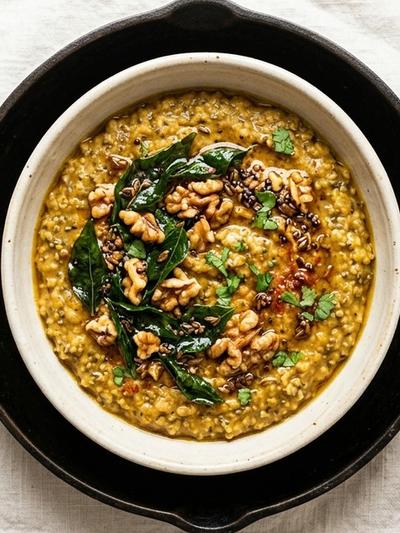
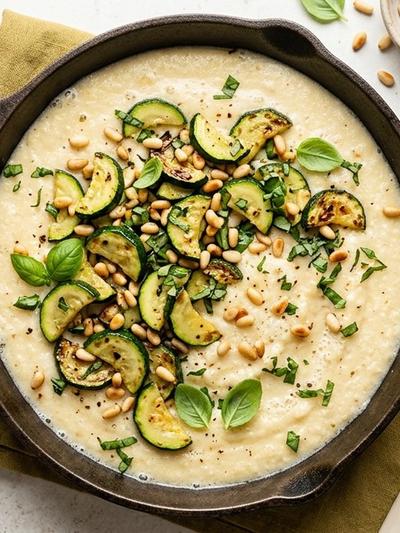
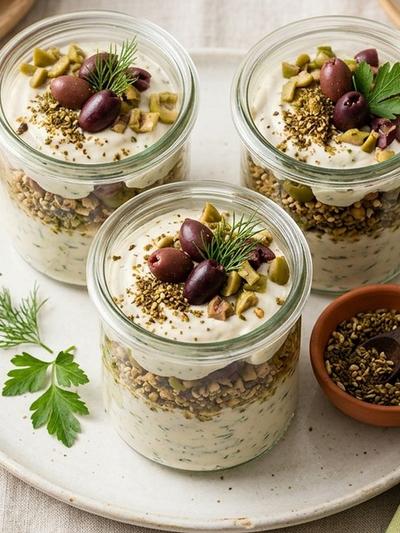
Imagine a warm bowl of thick, nutty porridge swirled with tahini, scattered with toasted walnuts and sesame seeds, and brightened by a squeeze of fresh lemon and a sprinkle of za'atar. This Mediterranean-inspired breakfast porridge replaces oats with a base of hemp hearts, chia seeds, and ground flaxseed, all simmered in rich coconut cream until luxuriously thick. Every spoonful delivers that satisfying, stick-to-your-ribs warmth you crave in the morning, with layers of earthy, nutty, and subtly spiced flavor that feel worlds away from a typical grain-free breakfast.
With 38 grams of fat and only 5 grams of net carbs per serving, this porridge is a keto powerhouse. The combination of coconut cream, tahini, and walnuts drives the fat content sky-high — exactly where you want it on a ketogenic diet — while the blend of seeds delivers 12 grams of plant-based protein without a single animal product. It's the kind of macro profile that keeps you satiated well past lunch.
Best of all, the entire recipe comes together in one skillet in just 15 minutes, including prep. There's no soaking, no blending, and virtually no cleanup. It's perfect for busy weekday mornings when you want something nourishing and warm, and it scales easily if you're feeding a crowd.
Ingredients (serves 2)
For the porridge base:
- 1/4 cup (40g) hemp hearts
- 2 tablespoons (20g) chia seeds
- 2 tablespoons (14g) ground flaxseed (golden or brown)
- 2 tablespoons (14g) almond flour
- 3/4 cup (180ml) full-fat coconut cream
- 1/2 cup (120ml) water
- 1 tablespoon (15ml) coconut oil
- 1/4 teaspoon fine sea salt
- 1/4 teaspoon ground cinnamon
For the Mediterranean topping:
- 2 tablespoons (30g) tahini
- 2 tablespoons (15g) raw walnuts, roughly chopped
- 1 teaspoon sesame seeds (white or a mix of black and white)
- 1 teaspoon za'atar spice blend
- 1 teaspoon extra-virgin olive oil
- 1/2 teaspoon fresh lemon juice
- Small pinch of flaky sea salt (such as Maldon)
Instructions
Toast the walnuts and sesame seeds. Set a medium skillet over medium heat and add the chopped walnuts and sesame seeds. Toast, stirring frequently, for 2–3 minutes until the walnuts are fragrant and the sesame seeds just begin to turn golden. Transfer them to a small bowl and set aside. Give the skillet a quick wipe — no need to wash it.
Warm the coconut oil. Return the skillet to medium heat and add the coconut oil. Let it melt and shimmer for about 20 seconds.
Combine the dry ingredients. Add the hemp hearts, chia seeds, ground flaxseed, almond flour, salt, and cinnamon directly to the skillet. Stir everything together in the oil for about 30 seconds until the seeds are evenly coated and you can smell the warm, toasty aroma of the flax and hemp.
Add the liquids. Pour in the coconut cream and water. Stir well with a spatula or wooden spoon, making sure to break up any clumps of chia seeds. The mixture will look quite thin at first — this is normal.
Simmer until thick. Reduce the heat to medium-low and cook, stirring every 30 seconds or so, for 4–6 minutes. The chia seeds will absorb liquid quickly, and the porridge will thicken to a creamy, oatmeal-like consistency. You'll know it's ready when a spoon drawn through the center leaves a trail that slowly fills back in. If it gets too thick for your liking, splash in an extra tablespoon or two of water.
Divide and top. Spoon the porridge into two bowls. Drizzle each bowl with a tablespoon of tahini and a half teaspoon of olive oil. Scatter the toasted walnuts and sesame seeds over the top, then sprinkle generously with za'atar. Finish with a squeeze of lemon juice and a pinch of flaky sea salt.
Serve immediately. The porridge will continue to thicken as it sits, so enjoy it while it's warm. If it firms up, stir in a splash of warm water or coconut cream to loosen.
Nutrition per Serving
| Nutrient | Amount |
|---|---|
| Calories | ~420 kcal |
| Fat | ~38g |
| Protein | ~12g |
| Total Carbs | ~12g |
| Fiber | ~7g |
| Net Carbs | ~5g |
Nutrition values are approximate and based on the specific brands and quantities listed above.
Tips & Variations
Make it a batch-prep breakfast. You can double or triple the dry ingredient mix (hemp hearts, chia seeds, flax, almond flour, cinnamon, and salt) and store it in a jar at room temperature for up to a month. Each morning, just scoop out 1/2 cup of the mix per serving and cook it with the coconut cream and water. Your prep time drops to essentially zero.
Swap za'atar for dukkah. If you love a more intensely nutty, crunchy finish, replace the za'atar with a tablespoon of dukkah spice blend per serving. Dukkah typically contains ground hazelnuts, coriander, and cumin, which pairs beautifully with the tahini and coconut base. Just check the label for any added sugar or non-keto fillers.
Watch your tahini brand. Not all tahini is created equal from a carb perspective. Some brands add sugar or use roasting methods that increase the carb count. Look for tahini with just one ingredient — sesame seeds — and ideally under 3 grams of total carbs per 2-tablespoon serving. Soom and Seed + Mill are reliably clean options.
Add an avocado drizzle for extra fat. If you're chasing higher fat macros or practicing a more aggressive fat-to-protein ratio, mash half a small avocado with a pinch of salt and a squeeze of lemon, then dollop it on top. It sounds unusual on porridge, but the creamy richness pairs surprisingly well with the za'atar and tahini, and it adds roughly 10 grams of healthy fat.
Turn it savory with olives and sun-dried tomatoes. For a completely savory twist, skip the cinnamon in the base and instead stir in a small handful of finely chopped Kalamata olives and a tablespoon of oil-packed sun-dried tomatoes (drained and minced) during the last minute of cooking. Top with a drizzle of good olive oil and a crack of black pepper. This variation leans into a full Mediterranean flavor profile and still keeps net carbs well under 10 grams.