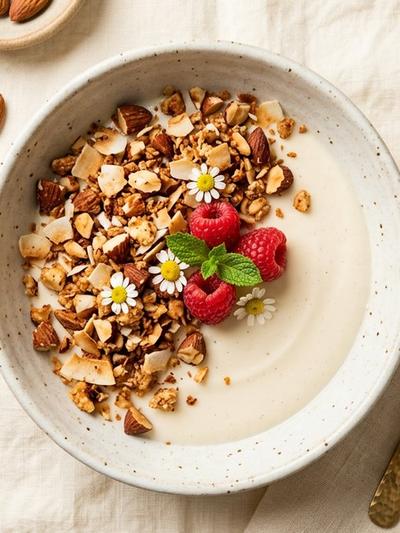
Imagine a warm bowl of creamy Italian polenta — golden, savory, and deeply satisfying — but made entirely from plants and perfectly keto. This coconut cream polenta swaps corn for a velvety blend of coconut cream and coconut flour, simmered with garlic and Italian herbs until thick and luscious. Topped with gently sautéed zucchini ribbons, toasted pine nuts, a shower of nutritional yeast "parmesan," and torn fresh basil, every spoonful delivers that comforting Italian breakfast feeling without a single grain or animal product in sight.
With 50 grams of fat and only 7 grams of net carbs per serving, this bowl hits all the right keto macros. The coconut cream and coconut oil provide a rich base of medium-chain triglycerides, while hemp hearts and pine nuts contribute plant-based protein and additional healthy fats. At over 80% fat by calories, this is a textbook ketogenic breakfast that keeps you fueled well past lunchtime.
Best of all, everything comes together in a single skillet in about 20 minutes — including the toasted toppings. There is no need to dirty extra pots or bowls. Make it on a lazy Sunday morning or as a nourishing weekday breakfast when you want something warm, savory, and a little bit special.
Ingredients (serves 2)
For the coconut polenta:
- 2/3 cup (160ml) full-fat coconut cream
- 1/3 cup (80ml) water
- 2 tablespoons (14g) coconut flour
- 1 tablespoon (14g) coconut oil
- 1 clove garlic, minced
- 1 tablespoon (3g) nutritional yeast
- 1/2 teaspoon dried Italian seasoning (oregano, basil, thyme blend)
- 1/4 teaspoon fine sea salt
- Pinch of black pepper
For the zucchini topping:
- 1 small zucchini (about 5 oz / 140g), diced into small cubes or cut into thin half-moons
- 1 tablespoon (14g) coconut oil
- 1 small clove garlic, thinly sliced
- Pinch of red pepper flakes
- Pinch of sea salt
For finishing:
- 3 tablespoons (25g) pine nuts
- 2 tablespoons (20g) hemp hearts
- 2 tablespoons (6g) unsweetened shredded coconut
- 6–8 fresh basil leaves, torn
- 1 teaspoon (5ml) extra-virgin olive oil, for drizzling
- Additional nutritional yeast, for sprinkling
Instructions
Toast the toppings. Place a large skillet (10-inch / 25cm works well) over medium heat. Add the pine nuts, hemp hearts, and shredded coconut. Toast, stirring frequently, for 2–3 minutes until the pine nuts are golden and the coconut is lightly browned and fragrant. Watch carefully — they can burn quickly. Transfer to a small bowl and set aside. Wipe the skillet clean with a paper towel.
Sauté the zucchini. Return the skillet to medium-high heat and add 1 tablespoon of coconut oil. Once shimmering, add the diced zucchini in a single layer. Let it cook undisturbed for about 2 minutes until the bottoms develop light golden color. Stir, then add the sliced garlic, red pepper flakes, and a pinch of salt. Cook for another 1–2 minutes until the zucchini is just tender but still has a slight bite. Transfer to the bowl with the toasted toppings. No need to wash the skillet.
Build the polenta base. Reduce the heat to medium-low. Add 1 tablespoon of coconut oil to the same skillet along with the minced garlic. Stir for 30 seconds until fragrant — do not let it brown. Pour in the coconut cream and water, stirring to combine. Add the dried Italian seasoning, salt, and pepper. Bring the mixture to a gentle simmer.
Thicken with coconut flour. Sprinkle the coconut flour into the simmering liquid about 1 tablespoon at a time, whisking constantly to prevent lumps. Continue whisking over medium-low heat for 2–3 minutes. The mixture will thicken significantly into a creamy, polenta-like consistency. If it becomes too thick, add a splash of water (1–2 tablespoons) until you reach your desired texture. Stir in the nutritional yeast and taste for seasoning.
Serve. Divide the warm coconut polenta between two bowls. Top generously with the sautéed zucchini, then scatter the toasted pine nut and coconut mixture over the top. Sprinkle with hemp hearts, torn fresh basil, an extra pinch of nutritional yeast, and a drizzle of olive oil. Serve immediately while warm and creamy.
Nutrition per Serving
| Nutrient | Amount |
|---|---|
| Calories | ~548 kcal |
| Fat | ~50g |
| Protein | ~13g |
| Total Carbs | ~12g |
| Fiber | ~5g |
| Net Carbs | ~7g |
Nutrition values are approximate and based on the stated ingredients and serving sizes. Actual values may vary depending on specific brands used.
Tips & Variations
Choose the right coconut cream. For the thickest, richest polenta, use canned coconut cream (not coconut milk). Look for brands with at least 20–24g of fat per 1/4 cup serving. If you can only find full-fat coconut milk, refrigerate the can overnight and scoop out the thick cream that rises to the top, discarding the watery liquid underneath.
Make it heartier with tempeh crumbles. For extra protein and a more substantial breakfast, crumble 2 ounces (60g) of tempeh into the skillet when sautéing the zucchini. Season with a pinch of smoked paprika and Italian herbs. This adds roughly 8g of protein per serving while keeping carbs minimal.
Watch for hidden carbs in nutritional yeast. Most nutritional yeast brands have about 1g net carb per tablespoon, but some fortified varieties contain added sugars or fillers. Always check the label. If you prefer, substitute a sprinkle of hemp seed parmesan — blend hemp hearts with a pinch of garlic powder and salt — for a zero-carb alternative.
Swap the pine nuts if needed. Pine nuts deliver the most authentic Italian flavor, but they can be expensive. Toasted slivered almonds, walnut pieces, or even sunflower seeds work beautifully and keep this nut-free if you use the sunflower seed option. The macros will shift slightly but remain keto-friendly with any of these swaps.
Store and reheat with care. The polenta base thickens considerably as it cools. Store leftovers in an airtight container in the refrigerator for up to 2 days. To reheat, add a splash of coconut cream or water to the skillet over low heat, stirring until creamy again. Keep the toppings stored separately and add them fresh for the best texture.