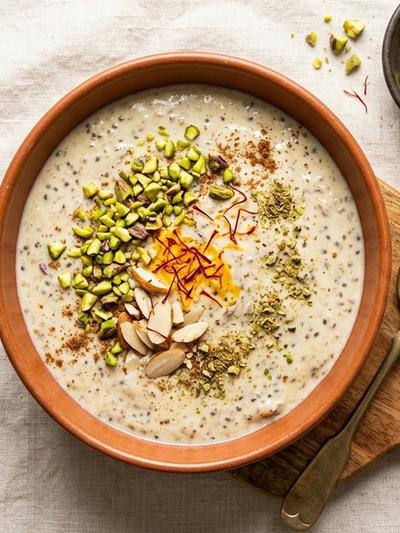
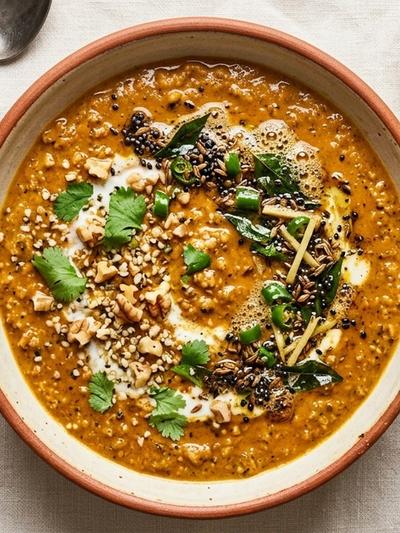
Think of this as keto dalia — India's beloved warm breakfast porridge, rebuilt from the ground up with hemp hearts, chia seeds, ground flax, and almond flour. The base simmers gently in rich coconut cream with cardamom, turmeric, and a few threads of saffron until it thickens into something velvety and deeply warming. Then comes the tadka: a quick sizzle of mustard seeds, fresh curry leaves, and chopped walnuts in hot coconut oil, spooned right over the top. That first bite — creamy porridge meeting crackly, aromatic fat — is the kind of morning that makes you forget you are eating just 7 grams of net carbs.
Each serving delivers 65 grams of fat primarily from full-fat coconut cream and coconut oil, with 16 grams of plant-based protein courtesy of hemp hearts and almond flour. At 680 calories and only 7 grams of net carbs, this bowl sits firmly in deep ketosis territory without a single animal product. The generous fiber from chia and flax — 9 grams per serving — keeps digestion steady well past noon.
The entire recipe comes together in one skillet in under 20 minutes, and there is almost nothing to prep besides measuring. Stir, simmer, sizzle, serve. It reheats beautifully too — add a splash of coconut cream the next morning, warm gently, and the porridge bounces right back. If you batch the dry seed mix over the weekend, weekday mornings shrink to ten minutes flat.
Ingredients (serves 2)
For the porridge:
- 1 tablespoon (14g) coconut oil
- 1/4 teaspoon ground turmeric
- 1/2 teaspoon ground cardamom
- 1/4 teaspoon ground cinnamon
- Small pinch of saffron threads (about 6-8 threads)
- 2 tablespoons (14g) ground flaxseed
- 1/4 cup (28g) almond flour
- 3/4 cup (180ml) full-fat coconut cream
- 1/2 cup (120ml) water
- 2 tablespoons (24g) chia seeds
- 1/3 cup (40g) hemp hearts
- 1-2 teaspoons granulated monk fruit sweetener, or to taste
- 1/4 teaspoon fine sea salt
For the walnut-curry leaf tadka:
- 1 tablespoon (14g) coconut oil
- 1/4 teaspoon black mustard seeds
- 8-10 fresh curry leaves
- 2 tablespoons (14g) roughly chopped walnuts
- Pinch of red chili flakes
For topping:
- 1 tablespoon (5g) unsweetened shredded coconut, lightly toasted
- Extra hemp hearts for garnish (optional)
Instructions
Bloom the spices. Heat 1 tablespoon of coconut oil in a medium skillet (about 10 inches) over medium-low heat. Once the oil shimmers, add the turmeric, cardamom, cinnamon, and saffron threads. Stir for about 30 seconds until the spices turn fragrant and the oil takes on a deep golden color.
Toast the dry mix. Add the ground flaxseed and almond flour to the skillet. Stir constantly for 60-90 seconds until the mixture smells nutty and darkens a shade. This step removes any raw taste from the flax and builds a toasty base flavor that carries through the finished porridge.
Simmer the porridge. Pour in the coconut cream and water. Stir well to dissolve any clumps, then raise the heat to medium. When the liquid begins to gently bubble around the edges, stir in the chia seeds. Reduce heat to medium-low and cook for 5-7 minutes, stirring every minute or so, until the porridge thickens to a creamy, spoonable consistency. The chia seeds will absorb liquid and swell visibly, and the mixture should coat the back of a wooden spoon.
Fold in the hemp hearts. Remove the skillet from heat. Stir in the hemp hearts, monk fruit sweetener, and salt. The residual heat warms the hemp hearts through while preserving their pleasant crunch and slightly nutty pop. Taste and adjust sweetness or salt as needed. Divide the porridge between two bowls.
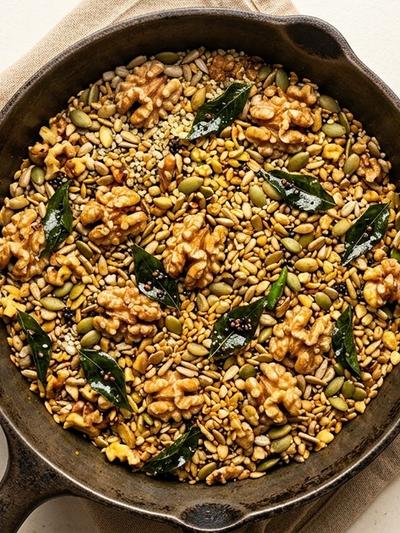
Make the tadka. Return the same skillet to medium-high heat and add the remaining 1 tablespoon of coconut oil. Once hot, drop in the mustard seeds. As soon as they begin to pop and splutter (about 15-20 seconds), toss in the curry leaves — stand back, they will crackle sharply. Immediately add the chopped walnuts and red chili flakes. Stir for 20-30 seconds until the walnuts are fragrant and lightly golden and the curry leaves have turned crisp at the edges.
Finish and serve. Spoon the hot tadka evenly over both bowls of porridge. Scatter the toasted shredded coconut and a pinch of extra hemp hearts on top. Serve immediately while the tadka is still sizzling and the curry leaves are crackling.
Nutrition per Serving
| Nutrient | Amount |
|---|---|
| Calories | ~680 kcal |
| Fat | ~65g |
| Protein | ~16g |
| Total Carbs | ~16g |
| Fiber | ~9g |
| Net Carbs | ~7g |
Nutrition is approximate, calculated from stated ingredient quantities using USDA data.
Tips & Variations
Batch the dry mix ahead. Combine hemp hearts, chia seeds, ground flax, and almond flour in a jar with the measured spices. Shake well and store at room temperature for up to two weeks. On a weekday morning, just melt oil, dump in the mix, add liquid, and go. Total active time drops to about ten minutes.
Go fully savory. Skip the monk fruit sweetener and increase the salt to 1/2 teaspoon. Add a pinch of asafoetida (hing) when you bloom the spices, and stir a handful of chopped fresh cilantro into the finished porridge before spooning on the tadka. This version leans closer to traditional savory upma and pairs well with a squeeze of fresh lime juice.
Watch your coconut cream brand. Carb counts vary between brands more than you might expect. Some add stabilizers or sugar that bump net carbs significantly. Look for cans listing only coconut extract and water — Aroy-D and Thai Kitchen full-fat are reliable choices. If you use coconut milk instead of cream, the porridge will be thinner and roughly 8 grams lower in fat per serving. Add an extra tablespoon of coconut oil to compensate.
Swap the walnuts if needed. Pecans and macadamia nuts work beautifully in the tadka and have even fewer net carbs. For a nut-free version, substitute pumpkin seeds (pepitas) — they toast quickly and add a rich, earthy crunch that holds up well alongside the curry leaves. Sunflower seeds are another solid option.
Reheat gently with extra liquid. Chia porridge firms up considerably once refrigerated, which is normal. To reheat, add 2-3 tablespoons of coconut cream or water per serving and warm in a skillet over low heat, stirring frequently until loosened. The tadka does not reheat well — curry leaves lose their aroma and walnuts lose their crunch — so make a fresh 60-second batch each morning for the best results.