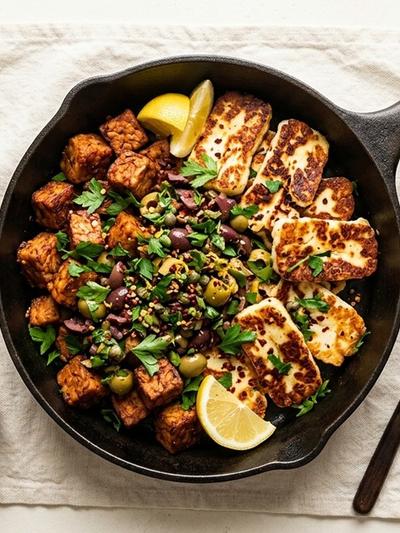
Imagine biting into thick slabs of halloumi with a caramelized golden crust, bathed in a fragrant coconut curry sauce that hums with lemongrass, ginger, and just enough chili heat to wake up your palate. Tender baby bok choy wilts into the sauce, soaking up all that creamy, spiced coconut goodness, while a final shower of toasted sesame seeds adds the perfect nutty crunch. This is the kind of lunch that makes you forget you are eating low-carb — it tastes like something you would order at your favorite Thai restaurant.
With 48 grams of fat and only 6 grams of net carbs per serving, this skillet hits textbook ketogenic ratios without a single questionable ingredient. Halloumi brings both satisfying protein and a generous dose of dairy fat, while full-fat coconut cream forms the rich backbone of the curry sauce. Together, they deliver the satiating, high-fat profile that keeps you fueled through the afternoon without any blood sugar crash.
Best of all, this entire meal comes together in a single skillet in just 20 minutes — five of which are hands-off simmering time. There is no marinating, no multiple pots, and cleanup is a breeze. Pack the leftovers in a container and reheat gently for an equally delicious lunch the next day.
Ingredients (serves 2)
For the halloumi:
- 8 oz (225g) halloumi cheese, sliced into 1/2-inch (1.25cm) thick slabs
- 1 tablespoon coconut oil
For the coconut curry sauce:
- 3/4 cup (180ml) full-fat coconut cream
- 1 tablespoon Thai red curry paste (check label for sugar-free or low-sugar)
- 1 teaspoon freshly grated ginger
- 1 clove garlic, minced
- 1 teaspoon toasted sesame oil
- 1 tablespoon coconut aminos (or tamari for soy option)
- 1/2 teaspoon ground turmeric
For the bok choy and garnish:
- 4 heads baby bok choy (about 8 oz / 225g total), halved lengthwise
- 1 tablespoon toasted white sesame seeds
- 1 scallion, thinly sliced
- 1 small red Thai chili, thinly sliced (optional)
- Fresh cilantro leaves, for serving
- Lime wedge, for serving
Instructions
Heat the skillet and sear the halloumi. Place a large nonstick or well-seasoned cast iron skillet over medium-high heat. Add the coconut oil and let it melt and shimmer. Lay the halloumi slabs in a single layer and cook undisturbed for 2 to 3 minutes, until the bottoms develop a deep golden-brown crust. Flip carefully with a thin spatula and sear the second side for another 2 minutes. Transfer the halloumi to a plate and set aside.
Build the curry base. Reduce the heat to medium. In the same skillet, add the grated ginger and minced garlic. Stir for about 30 seconds until fragrant — do not let it burn. Add the Thai red curry paste and stir it into the aromatics for another 30 seconds, letting the paste bloom and release its oils.
Pour in the coconut cream. Add the coconut cream, coconut aminos, sesame oil, and ground turmeric to the skillet. Stir everything together until the curry paste dissolves completely into the coconut cream, forming a smooth, coral-colored sauce. Let it come to a gentle simmer.
Cook the bok choy. Nestle the halved baby bok choy into the sauce, cut-side down. Cover the skillet with a lid (or a sheet of aluminum foil) and let everything simmer for 3 to 4 minutes, until the white stems of the bok choy are tender but still have a slight bite and the leaves have wilted into the sauce.
Return the halloumi and finish. Remove the lid and tuck the seared halloumi slabs back into the skillet, spooning some of the coconut curry sauce over the top. Let everything warm together for 1 to 2 minutes, allowing the halloumi to absorb some of the sauce without losing its crispy edges.
Garnish and serve. Remove the skillet from the heat. Scatter the toasted sesame seeds, sliced scallion, and red Thai chili (if using) over the top. Tear a few fresh cilantro leaves over everything and serve straight from the skillet with a lime wedge on the side. A squeeze of fresh lime right before eating brightens the entire dish.
Nutrition per Serving
| Nutrient | Amount |
|---|---|
| Calories | ~580 kcal |
| Fat | ~48g |
| Protein | ~24g |
| Total Carbs | ~8g |
| Fiber | ~2g |
| Net Carbs | ~6g |
Nutritional values are approximate and may vary based on specific brands of halloumi, coconut cream, and curry paste used.
Tips & Variations
Choose your curry paste wisely. Not all Thai curry paste is created equal on keto. Many supermarket brands sneak in sugar as a top ingredient. Look for brands like Mae Ploy or Mekhala that keep sugar minimal, or check that sugar is listed near the bottom of the ingredient list. One tablespoon of a clean paste should contribute fewer than 2 grams of carbs.
Swap in different cheeses. While halloumi is ideal here because it holds its shape under heat, you can try thick slices of paneer for a milder flavor, or even firm mozzarella sliced into rounds. Paneer will not develop quite as crispy a crust but absorbs the curry sauce beautifully. Feta is too crumbly for this method — save it for salads.
Make it a heartier bowl. Serve this over cauliflower rice to stretch it to three servings while keeping carbs in check. Simply microwave or pan-fry 2 cups of riced cauliflower with a pinch of salt, then ladle the curry and halloumi over the top. This adds roughly 3 grams of net carbs and 25 calories per serving.
Storage and reheating. Store leftovers in an airtight container in the refrigerator for up to 3 days. Reheat gently in a skillet over medium-low heat with a splash of coconut cream to loosen the sauce — microwaving works but can make the halloumi rubbery. The bok choy will be softer on day two, but the flavors actually deepen overnight.
Boost the fat even further. If your macros call for more fat, drizzle an extra tablespoon of toasted sesame oil over the finished dish or add a tablespoon of grass-fed butter to the curry sauce. Either addition pushes the fat content up by about 14 grams per serving without adding carbs, which can be helpful for those targeting higher fat ratios during early keto adaptation.