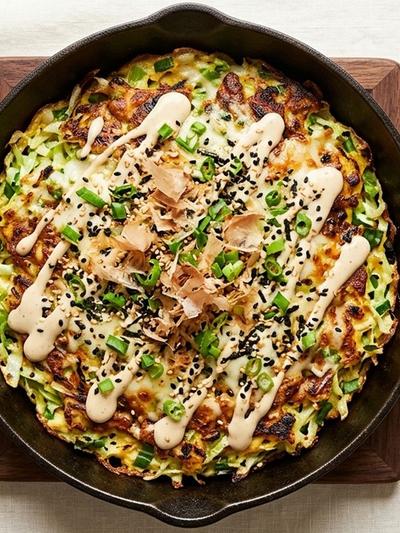
Imagine a golden, lightly crispy pancake that shatters at the edges and gives way to a rich, creamy center threaded with the sharp bite of fresh scallions and a whisper of toasted sesame. These Chinese scallion cream cheese pancakes take the beloved flavors of cong you bing — the iconic Chinese street breakfast — and reimagine them as a quick, satisfying keto meal you can pull together in a single skillet. Every bite delivers that savory, umami-rich warmth you crave in the morning, finished with a punchy ginger-sesame dipping sauce that ties everything together.
The macro profile here is textbook ketogenic. With 54 grams of fat and just 6 grams of net carbs per serving, over 80% of the calories come from fat. The cream cheese forms the backbone of the batter, contributing a velvety richness that keeps you satiated for hours, while four eggs bring the protein up to a solid 20 grams per serving. There is no flour trickery or hidden sugars — just honest, whole ingredients working in harmony.
Practically speaking, these pancakes are a weekday morning dream. Ten minutes of mixing, fifteen minutes of skillet time, and zero oven preheating or complicated steps. The dipping sauce comes together while the first batch cooks, and because everything happens in one nonstick skillet, cleanup is minimal. They are equally perfect for a lazy weekend brunch or as a make-ahead breakfast you can rewarm throughout the week.
Ingredients (serves 2)
For the pancakes:
- 4 oz (113g) cream cheese, softened to room temperature
- 4 large eggs
- 3 tablespoons (21g) almond flour
- 1 teaspoon toasted sesame oil
- 1/4 teaspoon garlic powder
- 1/4 teaspoon ground white pepper
- 1/4 teaspoon fine sea salt
- 3 scallions (green onions), thinly sliced, plus extra for garnish
- 2 tablespoons (30ml) avocado oil, for cooking
For the ginger-sesame dipping sauce:
- 2 tablespoons (30ml) coconut aminos
- 1 teaspoon toasted sesame oil
- 1 teaspoon rice vinegar (unseasoned)
- 1/2 teaspoon fresh ginger, finely grated
- 1/2 teaspoon chili oil (optional, for heat)
For topping:
- 1 tablespoon (9g) toasted white sesame seeds
- Thinly sliced scallion greens
- Red pepper flakes (optional)
Instructions
Prepare the batter. Place the softened cream cheese in a medium mixing bowl. Using a fork or whisk, mash it until smooth with no lumps remaining. Crack in the eggs one at a time, whisking vigorously after each addition until the mixture is completely uniform and pourable. Add the almond flour, toasted sesame oil, garlic powder, white pepper, and salt. Whisk until you have a smooth, slightly thick batter — it should coat the back of a spoon but still flow easily.
Fold in the scallions. Add the sliced scallions to the batter and stir gently with a spatula until they are evenly distributed throughout. Let the batter rest for two to three minutes while you heat the skillet. This brief rest allows the almond flour to hydrate slightly, which helps the pancakes hold together better.
Heat the skillet. Place a 10- or 12-inch nonstick skillet over medium heat. Add one tablespoon of the avocado oil and swirl to coat the entire surface evenly. Let it heat for about 60 seconds until the oil shimmers but does not smoke. Medium heat is critical here — too high and the cream cheese will brown before the center sets, too low and you will not get that desirable crispy edge.
Cook the first batch. Pour roughly one quarter of the batter into the skillet, using the back of a spoon or a gentle swirl to spread it into a circle about five to six inches across. Cook undisturbed for three to four minutes. You will know it is time to flip when the edges turn a deep golden brown, the surface looks mostly set with only a thin layer of wet batter in the very center, and the pancake slides freely when you give the pan a gentle shake.
Flip and finish. Using a wide, thin spatula, carefully slide underneath and flip the pancake in one confident motion. Cook the second side for two to three minutes until golden and firm to a gentle press in the center. Transfer to a plate and cover loosely with foil to keep warm. Add the remaining tablespoon of avocado oil to the skillet and repeat with the remaining batter, making three more pancakes. You should end up with four pancakes total, two per serving.
Make the dipping sauce. While the pancakes cook, whisk together the coconut aminos, toasted sesame oil, rice vinegar, and freshly grated ginger in a small bowl. Stir in the chili oil if using. Taste and adjust — a tiny splash more vinegar brightens it, more chili oil adds warmth.
Serve immediately. Stack or fan the pancakes on plates. Sprinkle generously with toasted sesame seeds and extra sliced scallion greens. Add a pinch of red pepper flakes if you like heat. Serve the ginger-sesame dipping sauce alongside in a small dish for dunking or drizzling.
Nutrition per Serving
| Nutrient | Amount |
|---|---|
| Calories | ~596 kcal |
| Fat | ~54g |
| Protein | ~20g |
| Total Carbs | ~8g |
| Fiber | ~2g |
| Net Carbs | ~6g |
Nutritional values are approximate and based on the stated ingredients using USDA data for standard cream cheese and large eggs.
Tips & Variations
Soften the cream cheese properly. Cold cream cheese will leave lumps in the batter that create uneven cooking and weak spots in the pancakes. Set it out on the counter for at least 30 minutes before you begin, or microwave it in 10-second bursts until it is pliable but not melted. You want it soft enough to whisk smooth, not runny.
Use coconut aminos, not soy sauce. Traditional soy sauce works in a pinch, but coconut aminos deliver a milder, slightly sweeter flavor with roughly the same carb count per tablespoon. If you do use soy sauce, choose tamari (which is gluten-free) and use just one tablespoon instead of two, as it is significantly saltier. Always check the label — some coconut aminos brands add sugar, which can push net carbs higher.
Swap in mascarpone for an even richer pancake. Mascarpone has a slightly higher fat content and milder flavor than cream cheese, which makes these pancakes taste almost custard-like inside. Use the same weight — four ounces — and proceed identically. Ricotta also works but produces a softer, more delicate pancake that is trickier to flip. If using ricotta, drain it through a fine-mesh sieve for 10 minutes first to remove excess moisture.
Make them ahead for meal prep. Cooked pancakes store beautifully in the refrigerator for up to four days in a single layer separated by parchment paper in an airtight container. Rewarm in a dry skillet over medium heat for about 90 seconds per side to restore the crispy edges. The microwave works but sacrifices the texture. Make the dipping sauce separately and store it in a small jar — it keeps for a week refrigerated.
Watch for hidden carbs in your garnishes. Sesame seeds are relatively low-carb at about 2 grams total carbs per tablespoon, but hoisin sauce, sweet chili sauce, and teriyaki glazes can add 5 to 10 grams of sugar per tablespoon. Stick with the ginger-sesame dip in this recipe, or use a few drops of plain chili oil and a squeeze of fresh lime if you want variety without the carb hit.