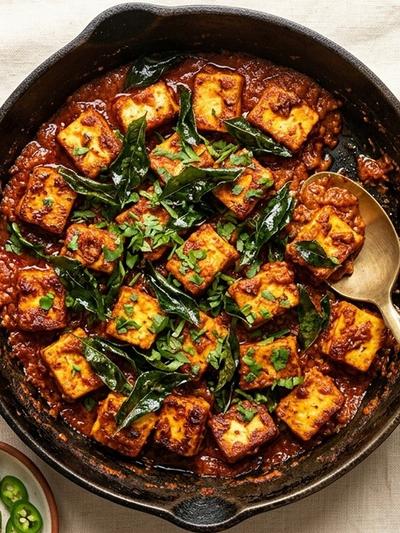
Kerala ishtu is the quiet masterpiece of South Indian cooking. Where most curries shout with chili heat and tomato tang, this stew whispers — a silky, snow-white coconut cream broth gently perfumed with cracked cardamom, slivers of fresh ginger, and handfuls of sizzling curry leaves. Swap the traditional potatoes for golden-seared paneer cubes and small cauliflower florets, and you get a bowl that feels like a warm blanket on a weeknight without a single gram of unnecessary carb.
The macros here practically write themselves for keto. Coconut cream delivers 47 grams of fat per serving — almost entirely from medium-chain triglycerides that your body converts to ketones with remarkable efficiency. Paneer adds 18 grams of protein alongside its own generous fat, while cauliflower keeps total carbs to just 10 grams with 8 grams net. Fat accounts for over 80 percent of the calories in every bowl, making this one of the most naturally ketogenic curries you can cook.
Everything happens in a single pot in 35 minutes. You bloom whole spices, sear the paneer, simmer the cauliflower in coconut cream, and finish with a shower of fresh curry leaves. One pot, one burner, one deeply satisfying dinner. It reheats beautifully the next day too, which means Tuesday's leftovers taste even better than Monday's fresh batch.
Ingredients (serves 4)
For the stew:
- 12 oz (350g) paneer, cut into 1-inch cubes
- 1½ cups (360ml) full-fat coconut cream (one 13.5 oz / 400ml can, well shaken)
- 2 tbsp (30ml) coconut oil
- 1½ cups (150g) small cauliflower florets
- 3 small shallots (50g), thinly sliced
- 1-inch (2.5cm) piece fresh ginger, peeled and cut into thin matchsticks
- 2 green chilies, slit lengthwise (seeds in for heat, removed for mild)
- 15–20 fresh curry leaves (about 2 sprigs)
- 4 green cardamom pods, lightly cracked
- 4 whole cloves
- 1 small cinnamon stick (about 2 inches / 5cm)
- ½ tsp whole black peppercorns
- ½ tsp fine sea salt, plus more to taste
For finishing:
- 1 tbsp (15ml) coconut oil
- 10 fresh curry leaves
- ¼ tsp coarsely cracked black pepper
Instructions
Bloom the whole spices. Set a medium heavy-bottomed pot or Dutch oven over medium heat. Add 2 tablespoons of coconut oil and let it melt. Drop in the cardamom pods, cloves, cinnamon stick, and whole black peppercorns. Stir gently for 45–60 seconds until the spices turn fragrant and the cardamom pods puff slightly. You should smell a warm, sweet aroma rising from the pot.
Sear the paneer. Add the paneer cubes to the pot in a single layer. Let them cook undisturbed for 2 minutes until the bottoms turn a pale golden color. Flip and sear the opposite side for another 1–2 minutes. The paneer does not need to be deeply browned — a light golden crust is what you want. Transfer the seared cubes to a plate and set aside.
Soften the aromatics. In the same pot, add the sliced shallots, ginger matchsticks, slit green chilies, and 15–20 curry leaves. Stir and cook for 2–3 minutes until the shallots turn translucent and the curry leaves begin to crackle and curl. Reduce the heat to medium-low if the shallots start to color — you want them soft, not browned.
Simmer the cauliflower. Add the cauliflower florets to the pot and stir to coat them in the aromatic oil. Pour in the full can of coconut cream. Add the salt and stir gently to combine. Bring the liquid to a gentle simmer — you should see lazy bubbles breaking the surface, not a rolling boil. Cover the pot with a lid slightly ajar and cook for 10–12 minutes, stirring once halfway through, until the cauliflower is fork-tender but not falling apart.
Return the paneer. Nestle the seared paneer cubes into the coconut cream sauce. Stir gently to submerge them and let everything simmer uncovered for 3–4 minutes. The stew should be creamy and just thick enough to coat the back of a spoon. If it looks too thick, add 2–3 tablespoons of water to loosen it. Taste and adjust salt as needed.
Make the curry leaf finish. While the paneer simmers, heat 1 tablespoon of coconut oil in a tiny pan or ladle over medium-high heat. When the oil shimmers, add 10 fresh curry leaves and the cracked black pepper. They will sputter and crackle for about 10 seconds — pull the pan off the heat as soon as the leaves turn dark and crisp.
Serve. Ladle the stew into bowls. Spoon the sizzling curry leaf oil directly over each portion. Serve immediately while the coconut cream is still glossy and the curry leaves are still crackling. This stew pairs beautifully with cauliflower rice or a piece of keto garlic naan on the side.
Nutrition per Serving
| Nutrient | Amount |
|---|---|
| Calories | ~520 kcal |
| Fat | ~47g |
| Protein | ~18g |
| Total Carbs | ~10g |
| Fiber | ~2g |
| Net Carbs | ~8g |
Nutrition is approximate and calculated based on the stated ingredient quantities. Values may vary depending on the brand of coconut cream and paneer used.
Tips & Variations
Use full-fat coconut cream, not coconut milk. This distinction matters enormously for both texture and macros. Coconut cream has roughly twice the fat content of coconut milk, which keeps you solidly in keto territory. If your can separates into thick cream and thin water, shake it well before opening or whisk it together in the pot. Light coconut milk will produce a thin, watery stew that tastes nothing like the real thing.
Julienne the ginger instead of grating it. Traditional Kerala ishtu calls for ginger cut into thin matchsticks rather than minced or grated. This is not just presentation — the matchsticks release their flavor slowly into the broth, giving you gentle warmth throughout the stew rather than a sharp ginger hit upfront. Cut them as thin as you can manage, roughly 1 inch long and the width of a matchstick.
Control the heat through the green chilies. Slit chilies with seeds left intact add moderate heat that builds as the stew simmers. For a mild version that children or spice-sensitive eaters will enjoy, remove the seeds and white membranes before adding the chilies to the pot. For serious heat, slice the chilies into thin rings instead of slitting them — this releases the capsaicin directly into the coconut cream.
Watch for hidden carbs in store-bought paneer. Some commercial paneer brands add starch or fillers that can bump the carb count significantly. Check the label and look for paneer with 0–2 grams of carbohydrates per serving. Better yet, press firm tofu or make paneer at home from whole milk and lemon juice — homemade paneer is practically zero-carb and takes about 30 minutes.
Double the batch for easy meal prep. This stew stores exceptionally well in airtight containers for up to 4 days in the refrigerator. The flavors actually deepen overnight as the whole spices continue to infuse the coconut cream. Reheat gently over medium-low heat, adding a splash of coconut cream if the sauce has thickened. Make a fresh curry leaf finish each time you reheat — it takes 30 seconds and makes leftover stew taste freshly made.