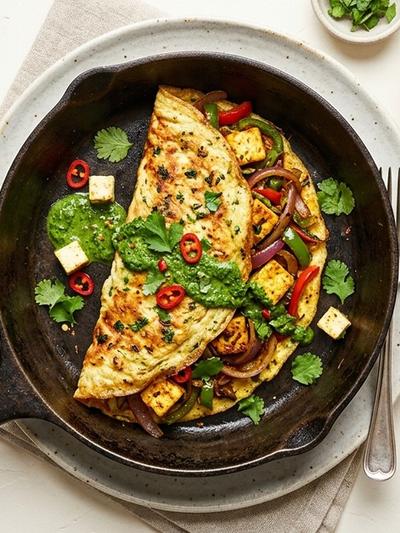
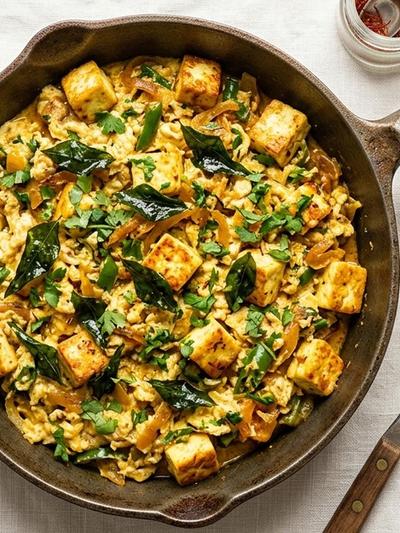
If you have ever crumbled paneer into a hot skillet sizzling with cumin and ghee, you already know the magic of paneer bhurji. This keto version folds soft scrambled eggs into golden, spice-coated paneer crumbles with the bright heat of fresh green chili and a shower of cilantro. Every bite delivers that unmistakable warmth of Indian tempering — cumin seeds crackling in ghee, turmeric staining everything a gorgeous gold, and ginger adding its sharp, clean bite. It is the kind of breakfast that wakes you up before your coffee does.
The macro profile here is exactly what a ketogenic morning calls for. With 44 grams of fat primarily from ghee and paneer, only 6 grams of net carbs, and a generous 30 grams of protein per serving, this scramble keeps you deeply satiated without any blood sugar spike. The high fat-to-carb ratio means you will cruise through your morning in steady ketosis while eating something that genuinely tastes like it came from a weekend brunch spread.
Best of all, the entire dish comes together in a single skillet in about 20 minutes — 10 minutes of simple chopping, 10 minutes of cooking. There is no marinating, no oven preheating, no complicated technique. Crumble, temper, scramble, eat. It is ideal for busy weekday mornings and equally satisfying as a lazy weekend breakfast served alongside a cup of masala chai or bulletproof coffee.
Ingredients (serves 2)
For the paneer bhurji:
- 7 oz (200g) paneer, crumbled into small pieces by hand
- 4 large eggs
- 2 tbsp (30g) ghee
- 1/2 tsp cumin seeds
- 1 medium green chili, finely chopped (adjust to taste)
- 1/2 inch (1cm) fresh ginger, finely grated
- 1/4 cup (40g) finely diced white onion
- 1 small Roma tomato (about 2 oz / 60g), seeded and finely diced
- 1/4 tsp ground turmeric
- 1/2 tsp Kashmiri red chili powder (or sweet paprika)
- 1/2 tsp garam masala
- Salt to taste
For finishing:
- 2 tbsp fresh cilantro leaves, roughly chopped
- 1 tsp fresh lemon juice
- Freshly cracked black pepper
Instructions
Crumble the paneer. Using your hands, break the paneer into rough, uneven crumbles — some the size of peas, some slightly larger. This texture variety gives the dish character. Do not use a grater, as the crumbles will become too fine and turn pasty when cooked. Set aside.
Crack and lightly beat the eggs. In a small bowl, crack all four eggs and beat them gently with a fork — just enough to combine the yolks and whites. You want some streaks of white and yellow remaining for visual contrast in the final dish. Season with a small pinch of salt and the ground turmeric. Stir briefly to combine.
Heat the ghee and bloom the cumin. Place a 10-inch (25cm) non-stick or well-seasoned cast-iron skillet over medium heat. Add the ghee and let it melt completely until it shimmers, about 1 minute. Add the cumin seeds and let them sizzle and crackle for 15 to 20 seconds until they turn a shade darker and smell nutty. Watch carefully — cumin burns quickly.
Cook the aromatics. Add the chopped green chili and grated ginger to the skillet. Stir for 15 seconds until fragrant. Add the diced onion and cook for 2 to 3 minutes, stirring occasionally, until the onion pieces turn translucent and just begin to soften at the edges. You are not looking for deep browning here — just enough heat to take the raw edge off.
Add the tomato and dry spices. Toss in the diced tomato along with the Kashmiri red chili powder and a generous pinch of salt. Cook for 1 to 2 minutes, stirring frequently, until the tomato softens and begins to break down slightly. The mixture should look jammy but not saucy.
Add the crumbled paneer. Scatter the paneer crumbles into the skillet and fold them gently into the spiced mixture. Cook for 2 minutes, stirring occasionally, letting the paneer absorb the spices and develop a few golden spots on the edges. The ghee will help the paneer take on a beautiful, lightly toasted quality.
Fold in the eggs. Reduce the heat to medium-low. Pour the turmeric-tinted beaten eggs over the paneer mixture. Let them sit undisturbed for about 20 seconds until the edges just begin to set, then gently fold and stir with a spatula in large, sweeping motions. Continue folding every few seconds for about 1 to 2 minutes. You want large, soft curds of egg interspersed with spiced paneer — not a dry, tight scramble. Remove the skillet from heat while the eggs still look slightly underdone, as residual heat will finish cooking them.
Finish and serve. Sprinkle the garam masala over the scramble and fold it in once or twice. Squeeze fresh lemon juice over the top, scatter with chopped cilantro, and crack black pepper generously over everything. Serve immediately, straight from the skillet.
Nutrition per Serving
| Nutrient | Amount |
|---|---|
| Calories | ~550 kcal |
| Fat | ~44g |
| Protein | ~30g |
| Total Carbs | ~8g |
| Fiber | ~2g |
| Net Carbs | ~6g |
Nutrition values are approximate and based on the stated ingredients and standard USDA data for paneer, eggs, and ghee.
Tips & Variations
Choose the right paneer for crumbling. Fresh, soft paneer from an Indian grocery store crumbles beautifully and has a moist, creamy texture that is ideal for bhurji. Avoid very firm, rubbery paneer blocks — if that is all you can find, grate it on the large holes of a box grater instead of hand-crumbling. You can also make fresh paneer at home by curdling whole milk with lemon juice, which gives you the softest possible texture.
Control the spice without losing flavor. If you are sensitive to heat, remove the seeds and membranes from the green chili before chopping, or substitute with a milder pepper like an Anaheim. The Kashmiri red chili powder is naturally mild and adds more color than heat — do not swap it for cayenne at a 1:1 ratio, or the dish will become aggressively spicy. A pinch of cayenne plus a generous amount of paprika is a reasonable substitute.
Watch for hidden carbs in store-bought paneer. Some commercially produced paneer brands add starches, fillers, or stabilizers that can increase the carb count. Always check the nutrition label and ingredient list. Authentic paneer should contain only milk and an acid like citric acid or vinegar — nothing else. Homemade paneer is the safest option for strict keto tracking.
Boost the fat even further. If your keto macros call for higher fat, stir a tablespoon of cream cheese or a splash of heavy cream into the eggs before adding them to the skillet. This creates an even richer, creamier scramble without adding significant carbs. You can also drizzle a little extra ghee over the finished dish.
Store and reheat for meal prep. This scramble keeps well in an airtight container in the refrigerator for up to 3 days. Reheat gently in a skillet over medium-low heat with a small pat of ghee and a splash of water to restore moisture. Microwave reheating works in a pinch — cover the bowl and heat in 30-second intervals — but the texture will be slightly less fluffy. Add fresh cilantro and a squeeze of lemon after reheating to brighten the flavors.