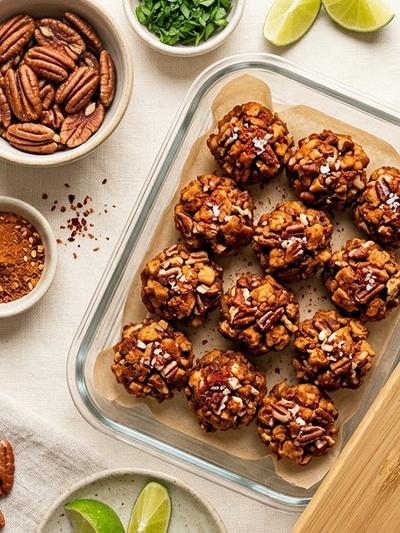
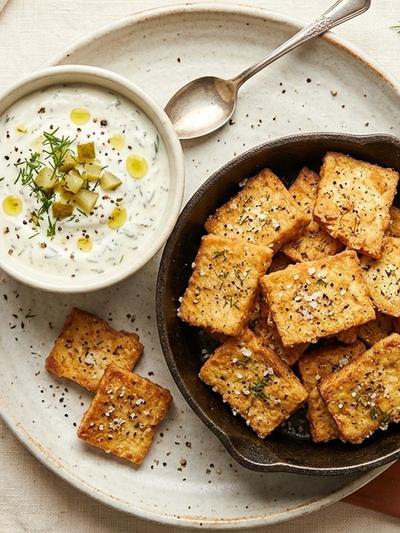
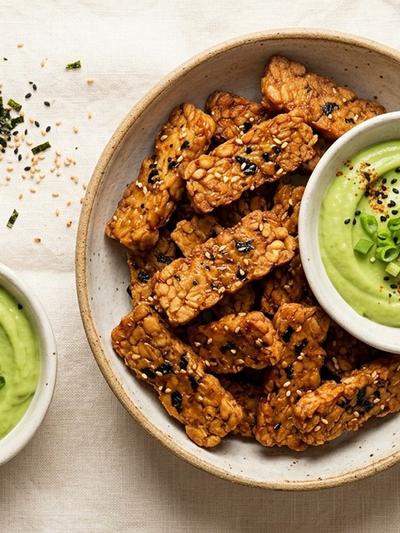
Picture tearing into a strip of smoky, slightly chewy, deeply savory tofu that tastes like the best barbecue jerky you have ever had — except it is entirely plant-based and fits squarely into your keto macros. These Smoky BBQ Tofu Jerky Bites deliver that addictive chew and that unmistakable hit of liquid smoke, smoked paprika, and tangy vinegar that makes real barbecue so irresistible. Paired with a creamy tahini-mustard dip that adds a sharp, tangy richness, they are the kind of snack you reach for all week long.
The macro profile here is built for ketosis. Each snack-sized serving clocks in at roughly 285 calories with 24 grams of fat, 13 grams of protein, and just 3 grams of net carbs. Fat accounts for about 76 percent of total calories, which is right in the sweet spot for maintaining deep ketosis. The protein from tofu keeps you satiated between meals without overshooting your daily target the way some snack-heavy days can.
The real beauty of this recipe is the batch-prep angle. You spend about 15 minutes of active work, let the marinade and oven do the rest, and walk away with four days of grab-and-go snacks stored neatly in the fridge. They actually improve overnight as the smoky flavors concentrate. Toss a container in your bag on the way out the door and you have a keto snack that does not require refrigeration for a few hours — making it one of the most portable options in your rotation.
Ingredients (serves 4)
For the tofu jerky bites:
- 1 block (14 oz / 400g) extra-firm tofu
- 3 tbsp (45ml) avocado oil
- 2 tbsp (30ml) gluten-free tamari
- 1 tbsp (16g) tomato paste
- 1 tbsp (15ml) apple cider vinegar
- 1 tsp liquid smoke (hickory or mesquite)
- 1 tsp smoked paprika
- 1 tsp garlic powder
- 1/2 tsp onion powder
- 1/2 tsp chili powder
- 1/4 tsp cayenne pepper (optional — for heat)
- 1 tsp granulated erythritol or monk fruit sweetener
- 1/2 tsp fine sea salt
- 1/4 tsp freshly ground black pepper
For the tahini-mustard dip:
- 4 tbsp (60g) tahini, well-stirred
- 1 tbsp (15g) Dijon mustard
- 1 tbsp (15ml) apple cider vinegar
- 1 tbsp (15ml) water, plus more to thin
- 1/2 tsp smoked paprika
- 1/4 tsp garlic powder
- Pinch of sea salt
Instructions
Press the tofu. Drain the tofu and wrap it in a clean kitchen towel or several layers of paper towels. Set it on a cutting board, place a heavy skillet or a couple of cans on top, and press for 15 to 20 minutes. You want to remove as much moisture as possible — drier tofu absorbs more marinade and bakes up chewier.
Slice into thin strips. Cut the pressed tofu block in half lengthwise so you have two thin slabs. Then cut each slab into strips roughly 1/2 inch (1.25 cm) wide and 3 inches (7.5 cm) long. You should get about 20 to 24 strips. Thinner strips yield chewier, more jerky-like results; thicker ones stay softer in the center.
Mix the marinade. In a wide, shallow bowl or dish, whisk together the avocado oil, tamari, tomato paste, apple cider vinegar, liquid smoke, smoked paprika, garlic powder, onion powder, chili powder, cayenne if using, erythritol, salt, and black pepper. Stir until the tomato paste is fully dissolved and the mixture is smooth.
Marinate the tofu. Add the tofu strips to the marinade in a single layer as much as possible, turning each piece gently to coat all sides. Cover and refrigerate for at least 30 minutes or up to 8 hours. The longer you marinate, the deeper the smoky barbecue flavor penetrates. Give the strips a gentle flip halfway through if you think of it.
Preheat the oven. Set your oven to 300°F (150°C) and line a large rimmed baking sheet with parchment paper. Low-and-slow baking is what transforms the tofu from soft to chewy — do not be tempted to crank the heat.
Arrange and bake. Lift each tofu strip from the marinade, letting excess drip off for a second, and lay it flat on the prepared baking sheet with a little space between each piece. Reserve any leftover marinade. Bake for 25 minutes, then remove the sheet, brush or drizzle the reserved marinade over the strips, and carefully flip each one using tongs or a thin spatula.
Continue baking. Return the sheet to the oven and bake for another 18 to 22 minutes. The strips are done when they look deeply bronzed, slightly shrunken, and feel firm to the touch with a bit of give — like actual jerky. They will firm up more as they cool, so pull them when they are still slightly pliable rather than rock-hard.
Cool completely on the pan. This step matters. As the jerky bites cool, they lose more moisture and develop that satisfying chew. Let them sit on the baking sheet for at least 15 minutes before transferring.
Make the tahini-mustard dip. While the tofu bakes, whisk together the tahini, Dijon mustard, apple cider vinegar, water, smoked paprika, garlic powder, and salt in a small bowl. It will look thick at first — keep whisking and add water a teaspoon at a time until you reach a smooth, dippable consistency similar to ranch dressing. Taste and adjust salt or vinegar to your liking.
Store for the week. Divide the cooled jerky bites into four airtight containers or resealable bags. Store the dip separately in a small jar. Refrigerate everything. The jerky bites keep beautifully for up to 5 days. The dip lasts a full week.
Nutrition per Serving
| Nutrient | Amount |
|---|---|
| Calories | ~285 kcal |
| Fat | ~24g |
| Protein | ~13g |
| Total Carbs | ~5g |
| Fiber | ~2g |
| Net Carbs | ~3g |
Approximate values based on extra-firm tofu, avocado oil, gluten-free tamari, and tahini. Actual nutrition may vary by brand.
Tips & Variations
Thickness controls texture. Slicing the strips thinner — closer to 1/4 inch (6mm) — produces a crisper, snappier bite that mimics commercial jerky more closely. If you prefer something meatier and chewier with a softer center, keep them at a full 1/2 inch. Either way, keep all strips the same thickness so they finish at the same time.
Boost the smoke. If you are a smoke fiend, add a second teaspoon of liquid smoke to the marinade and an extra half teaspoon of smoked paprika. You can also finish the cooled bites with a light sprinkle of smoked sea salt for a flavor that hits the second they touch your tongue.
Watch the tomato paste. Tomato paste is the biggest carb contributor in this recipe at about 3 grams per tablespoon. Do not be tempted to add more for sweetness — rely on the erythritol and the smoked paprika instead. If you want to cut carbs even further, drop the tomato paste to 2 teaspoons and increase the smoked paprika by half a teaspoon.
Make it spicy or sweet. For a Nashville-hot style kick, double the cayenne and add a pinch of habanero powder. For a sweeter barbecue profile, increase the erythritol to 2 teaspoons and add 1/4 teaspoon of ground cinnamon — this mimics the brown-sugar depth of a Kansas City-style sauce without the carbs.
Room-temperature snacking is fine. These jerky bites are perfectly safe and delicious at room temperature for up to 4 hours, making them ideal for work, road trips, or tossing in a gym bag. The dip contains no dairy and holds well too, though keeping it cool is better for texture.