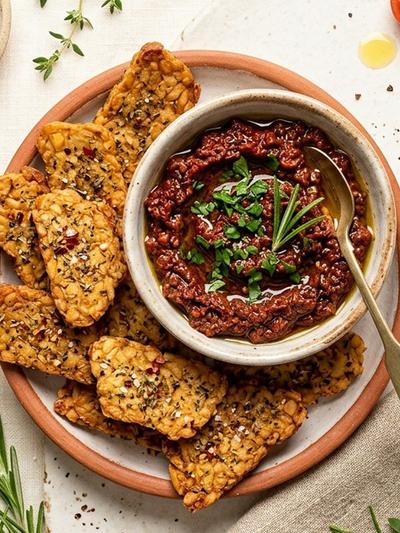
Thin slices of tempeh brushed with a salty-sweet white miso glaze, pressed with crumbled nori, and air fried until the edges shatter and the centers stay just chewy enough to satisfy. Dip one into the cool wasabi-avocado cream sitting alongside and the contrast hits you from every direction — warm meets cold, crispy meets silky, earthy umami meets a bright horseradish burn. These chips land somewhere between Japanese rice crackers and pub-style crisps, except they happen to be packed with plant protein. For a vegan keto snack that actually feels worth reaching for, this is the one.
Each serving delivers roughly 19 grams of fat and just 7 grams of net carbs, with the fat-to-calorie ratio sitting right at 71 percent. Tempeh brings soy-based protein and healthy fats in a far better ratio than most plant sources, and the toasted sesame oil in the glaze adds another layer of concentrated, keto-friendly fat. There are no sneaky sugars here — coconut aminos provides the subtle sweetness without the carb load of soy sauce alternatives, and the avocado cream rounds out the macro profile with heart-healthy monounsaturated fats.
The entire recipe takes under 25 minutes from cutting board to plate, with zero oil splatters and almost nothing to clean up. Make a double batch and store the chips in an airtight container for grab-and-go snacking throughout the week. They travel well in a lunchbox alongside the dip in a small jar, and they hold up surprisingly well at room temperature for a few hours — perfect for setting out when friends come over.
Ingredients (serves 4)
For the miso-nori tempeh chips:
- 6 oz (170g) tempeh, sliced into 1/4-inch (6mm) thick rectangles
- 4 tsp white (shiro) miso paste
- 2 tbsp coconut aminos
- 2 tsp toasted sesame oil
- 1 tsp rice vinegar
- 1 tsp fresh ginger, finely grated
- 2 sheets roasted nori, crumbled into small flakes
- 2 tsp toasted sesame seeds, for garnish
For the wasabi-avocado cream:
- 1 medium ripe avocado (about 140g flesh)
- 1/4 cup (60ml) full-fat coconut cream
- 1 tsp wasabi paste (or more to taste)
- 1 tbsp fresh lime juice
- 1/4 tsp fine sea salt
Instructions
Slice the tempeh. Cut the tempeh block into thin rectangles, roughly 2 inches long by 1 inch wide and 1/4 inch thick. You should get about 16 to 20 pieces. Thinner slices crisp better in the air fryer, so aim for consistency. If your tempeh block is tall, slice it in half horizontally first, then cut into rectangles.
Build the miso glaze. In a small bowl, whisk together the white miso paste, coconut aminos, toasted sesame oil, rice vinegar, and freshly grated ginger until smooth. The glaze should be thin enough to brush easily — if it feels too thick, add a splash more coconut aminos.
Coat the tempeh. Arrange the tempeh slices on a cutting board or sheet of parchment paper. Using a pastry brush or the back of a spoon, coat both sides of each slice with the miso glaze. You want a thin, even layer — too much pooling will steam instead of crisp. Once glazed, press crumbled nori flakes onto both sides of each slice, pressing gently so they stick to the tacky surface.
Preheat the air fryer. Set your air fryer to 375°F (190°C) and let it preheat for 2 to 3 minutes. This initial blast of heat is what gives the chips their satisfying snap on the first bite.
Air fry the chips. Arrange the coated tempeh slices in a single layer in the air fryer basket, leaving a small gap between each piece so hot air circulates freely. You may need to work in two batches depending on the size of your air fryer. Cook for 7 minutes, then flip each chip with tongs and cook for another 6 to 7 minutes until the edges are deeply golden and the nori has darkened slightly. The chips should feel firm and crisp when you tap them with the tongs.
Make the wasabi-avocado cream. While the tempeh cooks, scoop the avocado flesh into a small bowl. Add the coconut cream, wasabi paste, lime juice, and sea salt. Mash with a fork until mostly smooth — a few small avocado chunks add nice texture, but you can blend it completely smooth in a mini food processor if you prefer. Taste and adjust the wasabi level. Start conservative; you can always add more.
Serve. Transfer the hot tempeh chips to a serving plate and sprinkle with toasted sesame seeds. Serve immediately alongside the wasabi-avocado cream for dipping. The chips are best eaten warm, when the contrast between the hot crispy exterior and the cold, creamy dip is at its peak.
Nutrition per Serving
| Nutrient | Amount |
|---|---|
| Calories | ~240 kcal |
| Fat | ~19g |
| Protein | ~11g |
| Total Carbs | ~10g |
| Fiber | ~3g |
| Net Carbs | ~7g |
Nutrition values are approximate and based on the stated ingredients. Actual values may vary depending on the brand of tempeh, coconut cream, and miso paste used.
Tips & Variations
Slice thickness matters more than anything else. Tempeh that is thicker than 1/4 inch will stay chewy inside, which is fine for a main dish but wrong for a crispy snack chip. If your knife skills are uneven, use a mandoline set to 6mm. Consistent thickness means every chip finishes at the same time — no burnt edges or soggy centers.
Swap the wasabi for gochujang if heat is not your thing. Wasabi delivers a sharp, sinus-clearing burn that fades quickly, but if you prefer a slower, sweeter heat, stir 1 teaspoon of gochujang into the avocado cream instead. The fermented chili paste adds its own umami layer and pairs beautifully with the miso on the chips. Keep in mind that gochujang contains some sugar, so use a conservative amount and count roughly 1 extra gram of carbs per teaspoon.
Store chips and dip separately. The tempeh chips will stay crispy in an airtight container at room temperature for up to 2 days, or in the fridge for up to 5 days. Recrisp refrigerated chips in the air fryer at 350°F (175°C) for 3 minutes before serving. The wasabi-avocado cream keeps in a sealed jar in the fridge for up to 2 days — press a piece of plastic wrap directly against the surface to prevent browning.
Watch for hidden carbs in miso and coconut aminos. White miso paste varies widely by brand — some contain added sugars or rice that bumps the carb count. Check the label and aim for a brand with 1 gram or fewer carbs per teaspoon. Similarly, coconut aminos ranges from 0 to 2 grams of sugar per teaspoon depending on the manufacturer. Coconut Secret and Big Tree Farms are solid low-carb options.
Turn these into a party platter. Double the recipe and arrange the chips standing upright in a shallow bowl, like tortilla chips, with the wasabi-avocado cream in the center. Scatter extra nori flakes, black sesame seeds, and thinly sliced scallion greens over everything. Add a drizzle of chili oil for color. The presentation looks deliberate and impressive, and nobody will guess the whole spread took less than half an hour.