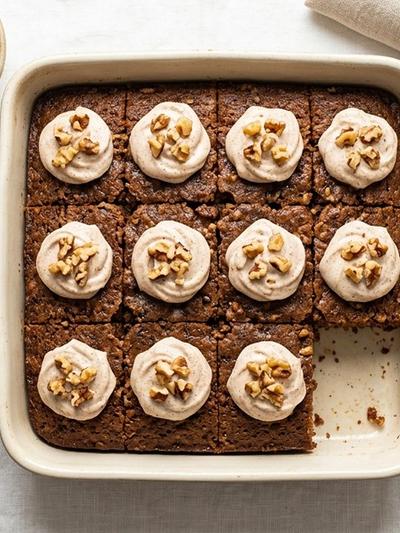
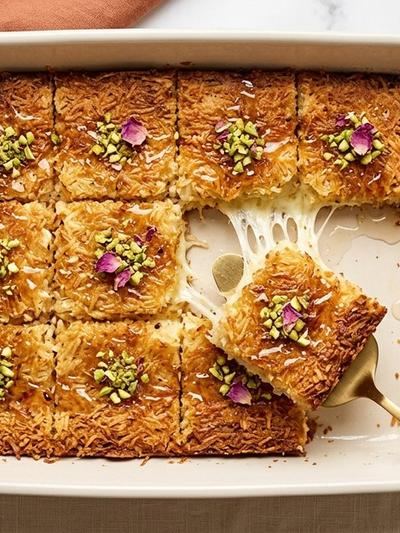
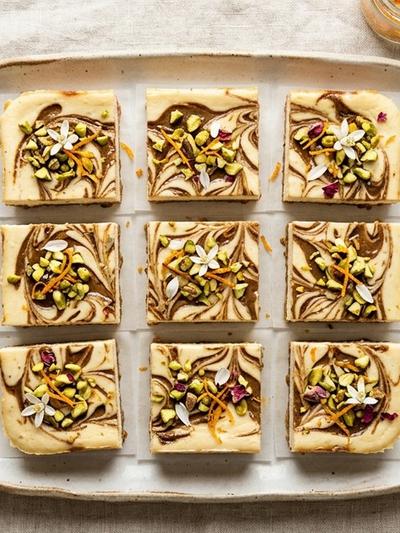
Imagine slicing into a dense, golden square of basbousa — that beloved Middle Eastern semolina cake — only this time it is impossibly moist from almond flour, perfumed with rose water and lemon, and topped with a cloud of whipped cream and crunchy toasted walnuts. Each bite delivers the warm, floral sweetness of the Eastern Mediterranean without a single grain of sugar or wheat. The almond flour creates a texture that is somehow both tender and slightly crumbly, exactly the way traditional basbousa should feel, while sesame seeds scattered across the top add a nutty, toasty finish that ties everything together.
With 52 grams of fat and only 4 grams of net carbs per generous serving, this dessert sits squarely in the keto sweet spot. The fat comes naturally from almond flour, butter, heavy cream, and cream cheese — no tricks, no fillers. At 13 grams of protein per serving from eggs and almonds, it even provides a modest protein boost that many keto desserts lack.
Best of all, this recipe is designed for batch prep. Bake one pan of basbousa squares on Sunday, drizzle with syrup, store them in the fridge, and you have a ready-to-grab keto dessert that stays moist and flavorful for up to five days. Simply add a dollop of rose cream when you are ready to serve. It is the kind of dessert that feels indulgent and special but requires barely any effort on a weeknight.
Ingredients (serves 4)
For the basbousa base:
- 1½ cups (150g) blanched almond flour
- 2 tablespoons (14g) ground golden flaxseed
- ¼ cup (40g) granulated erythritol or monk fruit blend
- ½ teaspoon baking powder
- ¼ teaspoon ground cardamom
- Pinch of fine sea salt
- 2 large eggs, room temperature
- 3 tablespoons (42g) unsalted butter, melted and slightly cooled
- 2 tablespoons (30g) full-fat Greek yogurt
- 1 teaspoon pure vanilla extract
- 1 tablespoon (9g) raw sesame seeds, for topping
For the rose-lemon syrup:
- ¼ cup (60ml) water
- 2 tablespoons (20g) powdered erythritol or monk fruit blend
- 1 tablespoon (15ml) fresh lemon juice
- 1 tablespoon (15ml) rose water
- 1 tablespoon (14g) unsalted butter
For the whipped rose cream:
- ½ cup (120ml) heavy whipping cream, very cold
- 2 ounces (56g) cream cheese, softened
- 1 tablespoon (10g) powdered erythritol or monk fruit blend
- 1 teaspoon rose water
- ½ teaspoon finely grated lemon zest
For the walnut topping:
- 2 tablespoons (15g) walnuts, roughly chopped
- 1 teaspoon (3g) sesame seeds
Instructions
Preheat and prepare the pan. Set your oven to 350°F (175°C). Line an 8×6-inch baking dish or a small 8-inch square pan with parchment paper, leaving an overhang on two sides for easy removal. Lightly grease the parchment with butter.
Toast the walnut topping. Place the chopped walnuts and 1 teaspoon of sesame seeds in a small dry skillet over medium heat. Stir frequently for 2 to 3 minutes until fragrant and lightly golden. Transfer immediately to a plate and set aside.
Mix the dry ingredients. In a large bowl, whisk together the almond flour, ground flaxseed, granulated erythritol, baking powder, cardamom, and salt until evenly combined with no lumps.
Combine the wet ingredients. In a separate bowl, whisk the eggs until smooth. Add the melted butter, Greek yogurt, and vanilla extract. Whisk until the mixture is uniform and slightly thickened.
Make the batter. Pour the wet mixture into the dry ingredients and fold gently with a spatula until just combined — do not overmix. The batter will be thick and slightly sticky, similar to a dense cookie dough. This is correct.
Shape and top. Transfer the batter into the prepared baking dish and press it into an even layer using the back of a damp spoon or your fingertips. The layer should be about ¾ inch thick. Sprinkle the tablespoon of raw sesame seeds evenly across the top, pressing them gently into the surface.
Bake. Place the dish on the center rack and bake for 22 to 25 minutes, until the top is golden brown and a toothpick inserted into the center comes out clean or with only a few moist crumbs. The edges will be slightly darker than the center.
Make the syrup while baking. Combine the water, powdered erythritol, and lemon juice in a small saucepan over medium heat. Stir until the sweetener dissolves, about 1 minute. Bring to a gentle simmer and cook for 3 minutes without stirring. Remove from heat and stir in the rose water and butter until the butter melts completely. The syrup will be thin and fragrant.
Soak the basbousa. Remove the pan from the oven and immediately pour the warm syrup evenly over the hot basbousa. Use a fork to poke about 20 holes across the surface first so the syrup penetrates deeply. Let the basbousa cool in the pan for at least 30 minutes. It will absorb most of the syrup as it cools.
Make the whipped rose cream. Using a hand mixer or stand mixer fitted with the whisk attachment, beat the heavy cream on medium-high speed until soft peaks form, about 2 minutes. In a separate small bowl, beat the cream cheese with the powdered erythritol until smooth. Fold the cream cheese mixture into the whipped cream along with the rose water and lemon zest. Beat on low speed for 15 seconds until just combined. Refrigerate until ready to serve.
Cut and store. Once the basbousa has cooled completely, use the parchment overhang to lift it out of the pan. Cut into 8 equal squares (2 squares per serving). Store the squares in an airtight container in the refrigerator, with parchment between layers, for up to 5 days. Store the whipped rose cream separately in its own sealed container.
Serve. When ready to eat, place two basbousa squares on a plate. Add a generous dollop of the whipped rose cream on top and scatter toasted walnuts and sesame seeds over everything. Serve chilled or at room temperature — both are delicious.
Nutrition per Serving
| Nutrient | Amount |
|---|---|
| Calories | ~558 kcal |
| Fat | ~52g |
| Protein | ~13g |
| Total Carbs | ~7g |
| Fiber | ~3g |
| Net Carbs | ~4g |
Nutrition values are approximate and based on the specific ingredients listed. Erythritol carbs are excluded from net carb calculations as they have a zero glycemic impact.
Tips & Variations
Store the squares and cream separately. The basbousa squares keep beautifully for up to 5 days in the fridge because the syrup keeps them moist. However, the whipped rose cream should be stored in a separate container to prevent the squares from becoming soggy. The cream stays fluffy for 3 to 4 days when sealed tightly.
Choose your keto sweetener wisely. Granulated erythritol works best in the basbousa base because it adds structure, while powdered erythritol dissolves smoothly in the syrup and cream. If you prefer monk fruit sweetener, use a 1:1 sugar-replacement blend — pure monk fruit extract is far too concentrated. Avoid maltitol-based sweeteners, which spike blood sugar and add hidden net carbs.
Add orange blossom water for a Turkish twist. Replace the rose water in both the syrup and cream with orange blossom water for a completely different but equally authentic Mediterranean flavor. You can also use a half-and-half combination of rose and orange blossom water for a more complex profile reminiscent of Turkish and Lebanese pastry shops.
Make it nut-free with sunflower seed flour. If you need to avoid tree nuts, substitute the almond flour with an equal weight of finely ground sunflower seed flour. The basbousa will turn slightly green due to a harmless chemical reaction with baking powder — add a teaspoon of lemon juice to the batter to prevent this. Skip the walnut topping and double the sesame seeds instead.
Freeze for longer storage. The basbousa squares freeze exceptionally well for up to 2 months. Wrap each square individually in plastic wrap, then place them in a freezer bag. Thaw overnight in the refrigerator. Make a fresh batch of whipped rose cream when you are ready to serve, as the cream does not freeze well.