Fat makes up 70–80% of your daily calories on keto. If you eat meat, a lot of that comes automatically — bacon grease, fatty cuts of steak, salmon skin. As a vegetarian, you have to be far more intentional. Every tablespoon of oil you drizzle, every slice of cheese you add, every handful of nuts you snack on is a deliberate choice. And those choices matter enormously — not just for staying in ketosis, but for long-term cardiovascular health, inflammation levels, and how you actually feel day to day.
The challenge is that "eat more fat" is vague advice. Not all fats behave the same way in your body. Coconut oil and soybean oil are both plant fats, but their effects on ketone production, inflammation, and cholesterol couldn't be more different. Saturated, monounsaturated, polyunsaturated, omega-3, omega-6, medium-chain, long-chain — the terminology alone can make your head spin.
Here's the good news: vegetarians actually have access to an incredible range of high-quality fat sources. Between nuts, seeds, avocados, coconut products, olive oil, cheese, butter, and eggs, you can build a fat profile that rivals or exceeds what most omnivore keto dieters achieve. You just need to know what to prioritize.
This guide breaks down every fat category that matters for vegetarian keto. You'll learn which oils to cook with (and which to never heat), how to balance your omega-3 to omega-6 ratio without fish, how MCTs accelerate ketone production, and exactly how to structure your daily fat intake across meals. Whether you follow a lacto-ovo approach or eat fully vegan keto, you'll walk away with a clear, practical framework.
Understanding Fat Types and Why They Matter on Keto
Before diving into specific foods, you need a working knowledge of the four major fat categories. Each plays a distinct role in your body and in ketosis.
Saturated fat has no double bonds in its carbon chain, making it extremely stable at high temperatures. On keto, saturated fat is a primary fuel source. Your liver converts it into ketone bodies efficiently. Key vegetarian sources include coconut oil, butter, ghee, and full-fat cheese. Despite decades of demonization, current research (including a 2020 meta-analysis in the Journal of the American College of Cardiology) suggests that saturated fat in the context of a low-carbohydrate diet does not carry the same cardiovascular risks once attributed to it. That said, moderation and variety still matter — aim for saturated fat to make up roughly 25–30% of your total fat intake, not 80%.
Monounsaturated fat (MUFA) has one double bond and is widely considered the most heart-protective fat. It lowers LDL cholesterol while preserving HDL. Olive oil, avocados, macadamia nuts, and almonds are your main vegetarian sources. MUFAs should be the backbone of your fat intake — target 40–50% of total fat from monounsaturated sources.
Polyunsaturated fat (PUFA) has multiple double bonds, making it less stable and prone to oxidation when heated. This category includes both omega-3 and omega-6 fatty acids, which we'll discuss in depth shortly. Walnuts, flaxseed, chia seeds, hemp hearts, and sunflower seeds are common vegetarian sources. PUFAs should make up 20–30% of your fat intake, with a strong emphasis on omega-3s.
Trans fat is the only category to avoid entirely. Naturally occurring trans fats in dairy (like conjugated linoleic acid) are fine in small amounts, but industrially produced trans fats — found in some margarines, packaged snacks, and hydrogenated oils — are unambiguously harmful. Read labels and avoid anything listing "partially hydrogenated" oil.
The Omega-3 Problem — And How Vegetarians Can Solve It
This is arguably the single most important nutritional consideration for vegetarian keto dieters. The standard Western diet already skews heavily toward omega-6 fatty acids (from vegetable oils, nuts, and seeds), with a typical ratio of 15:1 or even 20:1 omega-6 to omega-3. The ideal ratio is somewhere between 1:1 and 4:1. Chronic omega-6 excess promotes systemic inflammation, which is linked to heart disease, autoimmune conditions, and metabolic dysfunction.
On vegetarian keto, this problem can intensify. You're eating more fat overall, and many convenient vegetarian fat sources — almonds, sunflower seeds, safflower oil — are omega-6 heavy. Without the EPA and DHA from fatty fish, you need a deliberate strategy.
Step 1: Maximize ALA-rich foods daily. Alpha-linolenic acid (ALA) is the plant-based omega-3. Your body converts a small percentage (estimated at 5–10% for EPA, 2–5% for DHA) into the longer-chain forms your brain and cardiovascular system need. The best sources per tablespoon:
- Flaxseed oil: 7.3 g ALA
- Chia seeds: 2.5 g ALA
- Hemp hearts: 1.0 g ALA
- Walnuts (1 oz): 2.6 g ALA
Aim for at least 3–4 g of ALA daily. A tablespoon of ground flaxseed in your morning chia seed pudding or smoothie gets you halfway there.
Step 2: Supplement with algae-derived EPA and DHA. This is non-negotiable for vegetarians on keto. Algae oil supplements provide the same EPA and DHA found in fish oil (fish get their omega-3s from algae in the first place). Look for a supplement providing at least 500 mg combined EPA/DHA daily. Brands vary in concentration — some require two capsules, others one. Cost ranges from $0.30 to $0.80 per day.
Step 3: Reduce omega-6 actively. This means making deliberate swaps in your cooking:
| Instead of | Use | Why |
|---|---|---|
| Sunflower oil | Extra virgin olive oil | 75x less omega-6 |
| Soybean oil | Avocado oil | 10x less omega-6 |
| Peanut oil | Coconut oil | 50x less omega-6 |
| Corn oil | Butter or ghee | Virtually no omega-6 |
This doesn't mean eliminating all omega-6 sources. Almonds, sesame seeds, and peanut butter are nutritious foods. It means being conscious of your total intake and not stacking omega-6 at every meal.
Your Cooking Oil Cheat Sheet: Smoke Points and Best Uses
Choosing the right oil for the right application protects both flavor and nutrition. When an oil is heated past its smoke point, it oxidizes — creating harmful free radicals and off-flavors. Here's your definitive vegetarian keto cooking guide:
High-heat cooking (stir-frying, searing, air frying above 400°F):
- Avocado oil — Smoke point: 520°F. Neutral flavor, extremely versatile. The best all-purpose high-heat oil for keto. Use it when making air fryer paneer tikka or any recipe requiring a high sear.
- Ghee (clarified butter) — Smoke point: 485°F. Rich, nutty flavor. Excellent for Indian dishes like palak paneer and cauliflower tikka masala. Technically dairy-derived but casein- and lactose-free.
- Refined coconut oil — Smoke point: 450°F. Neutral flavor (unlike virgin). Good for baking and frying where you don't want coconut taste.
Medium-heat cooking (sautéing, baking at 350–400°F):
- Extra virgin olive oil — Smoke point: 375–405°F (varies by quality). Despite myths, high-quality EVOO is actually quite stable for sautéing. It's your best daily-use oil for its monounsaturated fat content and polyphenol antioxidants. Recent research from the University of Barcelona confirms EVOO remains stable through normal sautéing temperatures.
- Virgin coconut oil — Smoke point: 350°F. Strong coconut aroma. Ideal for curries like Thai coconut vegetable curry and fat bombs. Contains roughly 60% MCTs.
- Butter — Smoke point: 350°F. Unbeatable flavor for eggs, vegetables, and baking. Rich in fat-soluble vitamins A, D, E, and K2.
No-heat uses (dressings, drizzling, smoothies):
- Flaxseed oil — Never heat this. Use in salad dressings, drizzle over finished dishes, or blend into smoothies like a keto green smoothie. Extremely high in ALA omega-3.
- Walnut oil — Delicate, nutty flavor. Excellent in vinaigrettes.
- MCT oil — Flavorless, mixes into any liquid. Best added to coffee, smoothies, or dressings. More on this below.
Oils to avoid entirely on keto: Soybean oil, corn oil, canola oil (highly processed, high omega-6), grapeseed oil (extremely high omega-6), margarine, and anything partially hydrogenated.
MCTs: The Keto Accelerator Vegetarians Should Prioritize
Medium-chain triglycerides deserve their own section because they behave fundamentally differently from other fats. While long-chain fatty acids (like those in olive oil or almonds) must travel through your lymphatic system and be processed by the liver gradually, MCTs bypass this entirely. They're absorbed directly into the portal vein and converted into ketones within minutes.
This makes MCTs uniquely powerful for:
- Faster ketone production — Measurable blood ketone increases within 30–60 minutes of consumption
- Bridging carb overages — If you accidentally go over your carb limit, MCTs can help maintain ketone levels
- Mental clarity — Ketones from MCTs cross the blood-brain barrier efficiently, providing rapid cognitive fuel
- Appetite suppression — Multiple studies show MCT consumption reduces calorie intake at subsequent meals
Where to get MCTs as a vegetarian:
Coconut oil is the primary whole-food source, containing roughly 60% MCTs by weight. Within that, the breakdown matters:
- C6 (caproic acid): ~1% — Can cause digestive distress, minimal benefit
- C8 (caprylic acid): ~7% — The most ketogenic MCT, converts to ketones fastest
- C10 (capric acid): ~8% — Slightly slower conversion, still excellent
- C12 (lauric acid): ~47% — Debated whether this is a "true" MCT; behaves more like a long-chain fat but has antimicrobial properties
Pure MCT oil supplements concentrate C8 and C10, giving you a more potent ketone boost per calorie. Start with 1 teaspoon daily and work up to 1–2 tablespoons over two weeks. Going too fast causes digestive upset — the infamous "disaster pants" that MCT newcomers learn about the hard way.
A classic way to incorporate MCTs is through bulletproof coffee: blend brewed coffee with 1 tablespoon MCT oil and 1 tablespoon butter (or coconut cream for vegan keto). This provides roughly 25 g of fat and a reliable ketone boost to start your morning. You can also add MCT oil to the matcha black sesame coconut cream latte for a caffeine-lighter alternative.
Building Your Daily Fat Intake: A Practical Framework
Theory is useful, but what does this look like on an actual plate? Let's build a sample day for someone eating 1,800 calories at a standard keto macro split of 75% fat (150 g), 20% protein (90 g), and 5% carbs (22 g net).
Breakfast — 45 g fat: Start with a spinach and Gruyère omelet cooked in 1 tablespoon of butter (12 g fat). The three eggs contribute 15 g fat, and the Gruyère adds another 12 g. Serve alongside half an avocado (11 g fat). Add a cup of coffee blended with 1 teaspoon MCT oil (5 g fat). That's roughly 55 g of fat from a mix of saturated (butter, eggs), monounsaturated (avocado), and MCTs.
Lunch — 45 g fat: A Mediterranean cauliflower rice bowl dressed with 2 tablespoons of extra virgin olive oil (28 g fat), topped with crumbled feta (6 g fat), kalamata olives (5 g fat), and a sprinkle of hemp hearts (5 g fat). Predominantly monounsaturated fat with some omega-3 from the hemp hearts.
Snack — 20 g fat: A handful of macadamia nuts (1 oz = 21 g fat, 80% monounsaturated). Macadamias are the ideal keto nut — highest fat, lowest carb (1.5 g net carbs per ounce), and the best omega-6 to omega-3 ratio of any nut. Alternatively, try some chocolate peanut butter fat bombs made with coconut oil for a sweet option.
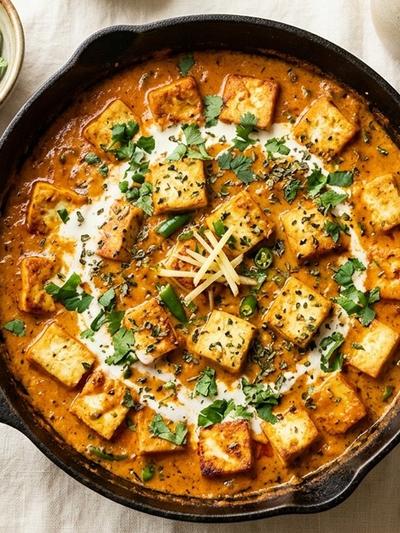
Dinner — 40 g fat: Paneer butter masala provides generous fat from the paneer itself (18 g per 100 g serving), the butter in the sauce (12 g), and the cream (8 g). Serve over perfect cauliflower rice and you have a deeply satisfying, fat-rich meal. If you want to explore more ideas, our Indian recipes are naturally rich in healthy fats from ghee, paneer, and coconut.
Daily totals: ~150 g fat, split approximately as 35% saturated, 45% monounsaturated, 20% polyunsaturated. Add your algae omega-3 supplement and you're nutritionally dialed in.
For those who prefer to meal prep on weekends, batch-cooking fat-rich components — whipped herb butter, marinated paneer, tahini dressing, roasted nut mixes — means you can assemble properly balanced meals all week without thinking too hard about ratios.
Vegan Keto Fats: Thriving Without Dairy
If you eat fully plant-based, you lose butter, ghee, cheese, and eggs — four of the most convenient fat sources on standard vegetarian keto. This is challenging but entirely workable. Here's how vegan keto dieters can hit their fat targets:
Your fat foundation shifts to:
Coconut products — Coconut oil, coconut cream, coconut butter (manna), and unsweetened coconut flakes become your staples. A can of full-fat coconut cream contains roughly 48 g of fat. Our vegan keto recipes feature coconut cream prominently — from one-pot coconut cream broccoli "cheddar" soup to coconut panna cotta.
Avocados — One whole avocado delivers 21 g of fat, predominantly monounsaturated. At roughly 3 g net carbs, it's one of the most keto-friendly whole foods that exists.
Nuts and nut butters — Macadamias (21 g fat/oz), pecans (20 g), Brazil nuts (19 g), and walnuts (18 g) are the top choices. Almond butter and tahini are versatile additions. Be mindful of carbs — cashews are the worst offender at 8 g net carbs per ounce.
Seeds — Hemp hearts are the vegan keto superstar: 14 g fat per 3 tablespoons, with an excellent omega-6 to omega-3 ratio of 3:1. Flaxseed, chia seeds, and pumpkin seeds round out the lineup. Try them in a Thai coconut sesame breakfast porridge for a warming, high-fat morning meal.
Olives and olive oil — Ten large olives contain about 5 g of fat and under 1 g net carbs.
Tofu and tempeh — Not primarily fat sources, but firm tofu contributes about 5 g fat per 100 g serving, and tempeh provides 11 g. They're fat-and-protein combos that form the backbone of vegan keto mains like crispy miso-glazed tofu bowls.
The vegan fat-hit hack: When a recipe calls for cream or butter, substitute coconut cream and coconut oil 1:1. When it calls for cheese, use a combination of nutritional yeast (for flavor), soaked cashews blended smooth (for texture), and coconut oil (for fat). This won't perfectly replicate dairy, but it creates satisfying, high-fat results.
Vegan keto dieters should be especially vigilant about omega-3 supplementation (algae oil is already vegan) and consider supplementing with vitamin K2 (MK-7 form), which omnivores and lacto-ovo vegetarians get from egg yolks and cheese.
Common Fat Mistakes on Vegetarian Keto
Even experienced keto dieters make these errors. Avoiding them will improve your results and how you feel:
1. Relying on a single fat source. Eating coconut oil with everything gives you plenty of saturated fat and MCTs but almost no monounsaturated fat or omega-3s. Rotate through at least 4–5 different fat sources daily.
2. Heating delicate oils. Flaxseed oil, walnut oil, and hemp seed oil should never be used for cooking. Their polyunsaturated fats oxidize rapidly at temperatures above 225°F, creating compounds that are actively harmful. Save them for cold applications.
3. Ignoring fat quality in packaged foods. Many "keto-friendly" packaged snacks use cheap vegetable oils high in omega-6. Check ingredient lists for soybean oil, sunflower oil, or "vegetable oil" — these undermine your omega balance even if the macros look fine.
4. Fearing saturated fat entirely — or eating nothing but. Both extremes miss the point. A balanced approach, with saturated fat making up roughly a quarter to a third of your total fat intake alongside generous monounsaturated fat and adequate omega-3, is what the current evidence supports.
5. Not eating enough fat with fat-soluble nutrients. Vitamins A, D, E, and K are fat-soluble — they need dietary fat present for absorption. Eating a spinach salad with fat-free dressing means you absorb a fraction of the vitamin K and beta-carotene. Always pair vegetables with a fat source. A drizzle of olive oil on your salad or a side of keto guacamole with cheese crisps does the trick.
6. Forgetting that fat has calories. Keto is not a license to add unlimited fat. At 9 calories per gram (versus 4 for protein and carbs), fat is calorie-dense. If weight loss is your goal, you still need a calorie deficit. The fat macro is a limit, not a target — eat enough to feel satisfied, not stuffed. For a complete picture of how to structure your vegetarian keto eating, check our complete beginner's guide.
Frequently Asked Questions
How much fat should I eat per day on vegetarian keto?
Most vegetarian keto dieters aim for 70–80% of total calories from fat. In practical terms, that's roughly 120–165 g of fat per day on an 1,800-calorie diet. However, this is a ceiling, not a floor — if you're trying to lose weight, eating slightly less fat (while keeping carbs under 20–25 g net and protein at 0.8–1.0 g per pound of lean body mass) forces your body to burn stored fat for fuel. Prioritize protein first, keep carbs low, and fill the rest with fat to satiety.
Is coconut oil or olive oil better for keto?
Both are excellent, and you should use both — they serve different roles. Coconut oil is higher in MCTs, which convert to ketones faster and may help deepen ketosis. Olive oil is richer in monounsaturated fat and polyphenol antioxidants, making it superior for cardiovascular health and reducing inflammation. Use coconut oil for higher-heat cooking, baking, and fat bombs. Use extra virgin olive oil for sautéing, salad dressings, and drizzling over finished dishes. If forced to choose only one, olive oil edges out for overall health benefits.
Can I get enough omega-3 on vegetarian keto without supplements?
You can get adequate ALA (the plant form of omega-3) from flaxseed, chia seeds, hemp hearts, and walnuts — 2–3 tablespoons of ground flaxseed alone provides more than the recommended 1.6 g daily ALA intake. However, the conversion rate from ALA to the critical long-chain forms (EPA and DHA) is very low — typically 5–10% for EPA and 2–5% for DHA. For optimal brain health, cardiovascular protection, and anti-inflammatory benefits, an algae-derived EPA/DHA supplement (250–500 mg combined daily) is strongly recommended for all vegetarians, and especially those on keto where fat metabolism is central.
Do I need to worry about cholesterol on vegetarian keto?
It's worth monitoring but not panicking about. Vegetarian keto diets are naturally lower in dietary cholesterol than omnivore keto (no bacon, no fatty meat). Your main cholesterol sources will be eggs (186 mg per yolk) and full-fat dairy. Most people's blood cholesterol responds minimally to dietary cholesterol — the liver adjusts its own production. However, a subset of people (roughly 25%, sometimes called "hyper-responders") see significant LDL increases on high-fat diets. Get a baseline lipid panel before starting keto, retest at 3 and 6 months, and discuss results with your doctor. If LDL rises sharply, shifting more of your fat intake toward monounsaturated sources (olive oil, avocados, macadamias) and reducing saturated fat often normalizes levels.
What are the best high-fat snacks for vegetarian keto?
The most convenient high-fat vegetarian keto snacks include: macadamia nuts (21 g fat, 1.5 g net carbs per ounce), olives (11 g fat per 10 large olives), cheese cubes or string cheese (7–9 g fat per ounce), half an avocado with salt and lime (11 g fat), peanut butter cookies (made with almond or peanut butter), spicy roasted almonds, and homemade fat bombs made with coconut oil and cocoa. For something more substantial, cucumber cream cheese bites or baked mozzarella sticks work beautifully. Browse our full snacks collection for more ideas.