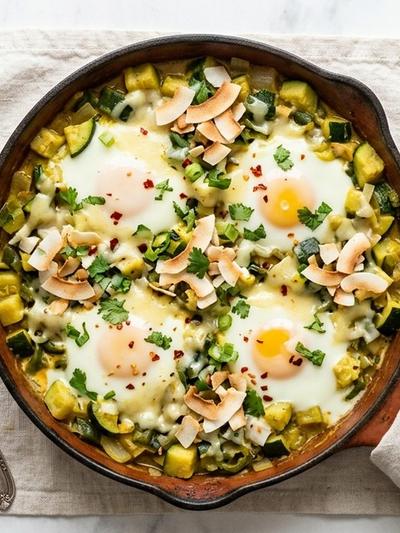
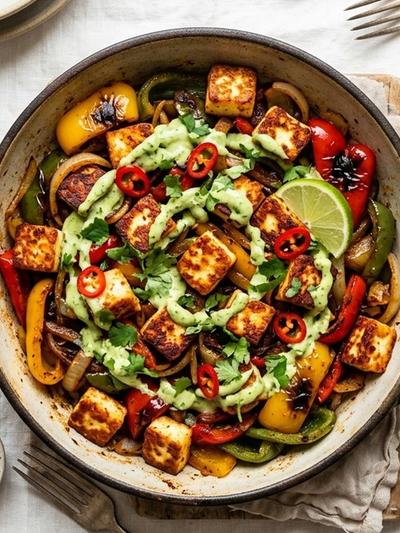
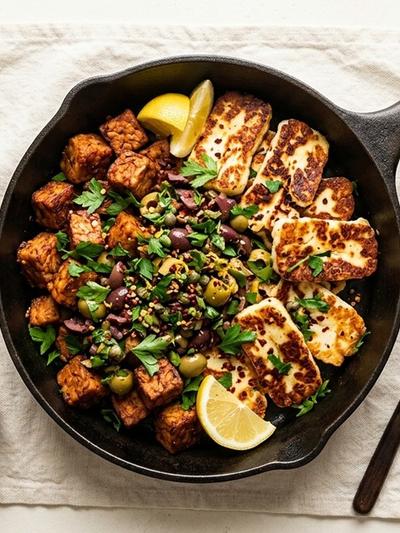
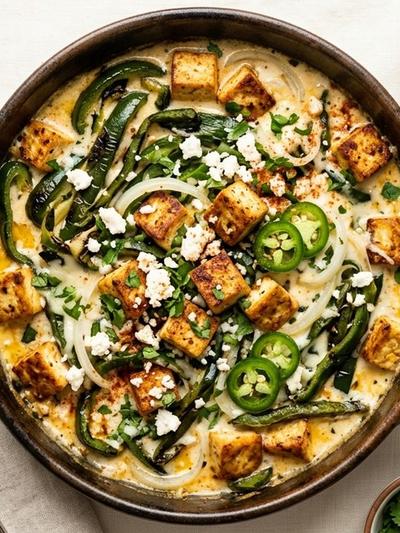
Picadillo is one of Mexico's most soul-satisfying skillet meals — a rustic, spiced scramble that fills the kitchen with cumin, garlic, and charred peppers the moment it hits the pan. This keto version swaps the traditional ground beef for crumbled tempeh that crisps into golden, nutty bits against a hot skillet, then gets tossed with diced poblano, smoky paprika, and a bright squeeze of lime. A thick blanket of melted pepper jack pulls everything together into the kind of bubbling, fork-ready lunch that feels far more indulgent than nine grams of net carbs have any right to feel.
Each serving delivers 53 grams of fat from avocado oil, melted pepper jack, cool sour cream, and ripe avocado, keeping you comfortably in ketosis without a second thought. Tempeh and cheese combine for over 33 grams of protein, which means this is a proper high-protein keto meal that powers you through the afternoon. The fat-to-carb ratio lands at roughly 73 percent of calories from fat — textbook ketogenic territory.
The entire recipe comes together in a single skillet in under 25 minutes, making it a genuine weekday lunch and not just a weekend project. Crumble the tempeh, char the peppers, layer on cheese, eat. If you pack the spiced base separately from the avocado and sour cream, you have meal-prep containers that reheat beautifully in a skillet or microwave for three to four days running.
Ingredients (serves 2)
For the tempeh picadillo:
- 6 oz (170g) tempeh, crumbled into small, rough pieces
- 2 tbsp (30ml) avocado oil
- 1 small poblano pepper, seeded and diced (about ½ cup / 50g)
- 1 jalapeño, seeded and minced
- 1 clove garlic, minced
- 1½ tsp ground cumin
- ½ tsp smoked paprika
- ½ tsp dried Mexican oregano
- ¼ tsp cayenne pepper (optional, for extra heat)
- 1 tbsp (15ml) fresh lime juice
- ½ tsp fine sea salt
- ¼ tsp freshly ground black pepper
For topping:
- 4 oz (115g) pepper jack cheese, shredded (about 1 cup)
- 1 small ripe avocado, sliced (about 80g flesh)
- ¼ cup (60g) full-fat sour cream
- 2 tbsp fresh cilantro, roughly chopped
- Lime wedges for serving
Instructions
Crumble the tempeh. Break the tempeh block apart with your hands or the back of a fork into small, irregular pieces roughly the size of a pencil eraser. You want uneven chunks — some crumbly, some slightly larger — so they crisp at different rates and mimic the texture of traditional picadillo.
Heat the skillet. Set a 10- or 12-inch skillet over medium-high heat and add the avocado oil. Let it shimmer, about 1 minute. The pan needs to be genuinely hot before the tempeh goes in, otherwise it steams instead of browning.
Crisp the tempeh. Scatter the crumbled tempeh across the skillet in a single layer. Let it cook undisturbed for 3 minutes until the bottom edges turn deep golden brown, then stir and cook another 2 minutes until crispy on most sides. The pieces should be firm and toasted, not soft.
Char the peppers. Push the tempeh to one side and add the diced poblano and minced jalapeño to the open space in the skillet. Cook for 2 to 3 minutes, stirring once, until the edges blister and the poblano softens slightly. The charred spots are where all the smoky flavor lives, so resist stirring too often.
Bloom the spices. Add the garlic, cumin, smoked paprika, oregano, cayenne (if using), salt, and black pepper. Stir everything together and cook for 45 to 60 seconds until the spices are fragrant and coat every piece of tempeh. The cumin should smell warm and toasty, not raw.
Add the lime. Squeeze the lime juice directly over the skillet and toss to combine. The acid lifts the spices and cuts through the richness of what comes next. Let the lime juice cook off for about 15 seconds.
Melt the cheese. Reduce the heat to medium-low. Scatter the shredded pepper jack evenly over the entire surface of the picadillo. Cover the skillet with a lid (or a sheet of aluminum foil pressed loosely over the top) and let the cheese melt for 1½ to 2 minutes until it is bubbling and stretchy. Remove from heat.
Top and serve. Divide the picadillo between two plates or bowls. Fan avocado slices over the top, add a generous dollop of sour cream, and scatter the cilantro over everything. Serve with lime wedges on the side for squeezing at the table.
Nutrition per Serving
| Nutrient | Amount |
|---|---|
| Calories | ~650 kcal |
| Fat | ~53g |
| Protein | ~33g |
| Total Carbs | ~16g |
| Fiber | ~7g |
| Net Carbs | ~9g |
Nutrition is approximate and based on the stated ingredient amounts. Actual values may vary depending on specific brands, particularly tempeh and cheese.
Tips & Variations
Make it ahead. Store the cooked picadillo base (tempeh, peppers, and melted cheese) in an airtight container in the fridge for up to four days. Reheat in a skillet over medium heat for 3 to 4 minutes until the cheese re-melts and the tempeh crisps back up. Add the avocado, sour cream, and cilantro fresh when you eat — avocado browns quickly once cut, and sour cream loses its cool contrast when reheated.
Swap the cheese. Pepper jack brings a mild chile kick that pairs naturally with the cumin-smoky tempeh, but it is not your only option. Monterey Jack works if you want a milder melt, sharp cheddar adds tang, and queso Oaxaca gives you that long, stretchy pull. For a more traditional finish, skip the melt entirely and crumble cotija over the top after plating — it will not melt but adds a salty, crumbly texture that is completely authentic.
Watch for hidden carbs in spice blends. Pre-made taco seasoning packets are convenient but almost always contain cornstarch, maltodextrin, or sugar as filler, which can add 2 to 4 grams of hidden carbs per serving. Mixing your own cumin, paprika, and oregano as listed here keeps you in full control and costs nothing extra. If you do use a packet, check the label and subtract from your carb budget.
Check your tempeh labels. Traditional tempeh is made solely from fermented soybeans and is naturally gluten-free, but some brands add barley, brown rice, or flax to their blend, which changes both the carb count and the gluten-free status. If you need strict gluten-free, look for a brand that lists only soybeans and culture on the ingredient panel. The carb difference between soy-only and multigrain tempeh can be as much as 3 to 4 grams per serving.
Boost the fat if you need deeper ketosis. If you are tracking closely and want to push fat higher without adding carbs, drizzle a teaspoon of extra virgin olive oil over the finished plate, add an extra tablespoon of sour cream, or stir a small knob of butter into the skillet right before you add the cheese. Each tablespoon of added fat contributes roughly 14 grams and zero carbs, which can shift your ratio meaningfully on days when you need it.