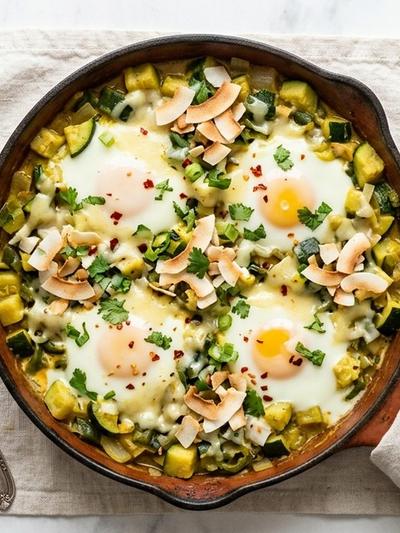
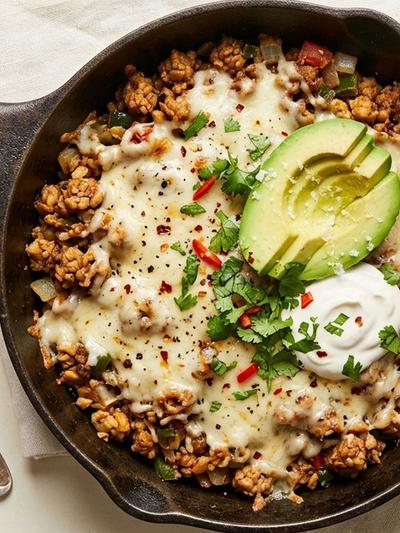
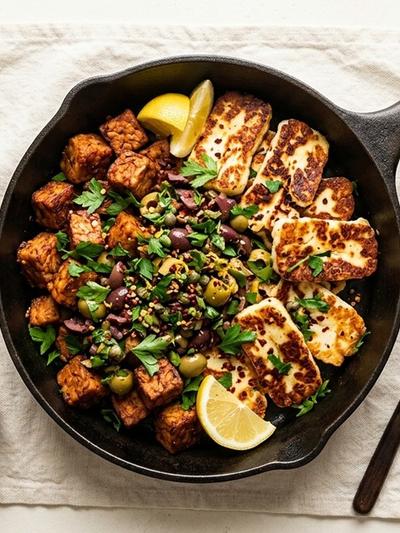
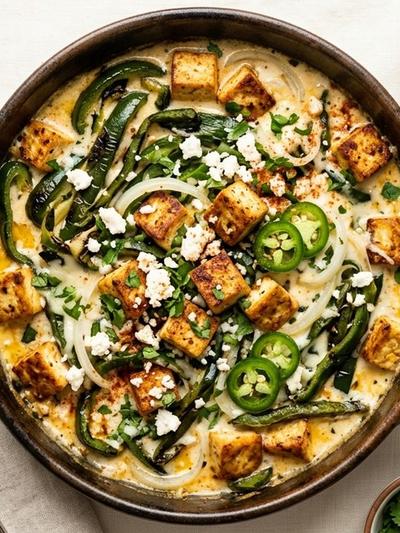
Alambre is one of the most underrated dishes in Mexican cooking — a sizzling taquería staple built on charred peppers, caramelized onion, and an absurd amount of melted cheese. In this vegetarian keto version, thick cubes of halloumi take center stage, seared until they develop a crackling golden crust on the outside while staying squeaky and rich inside. Tossed with blistered poblano and red bell pepper strips, dusted in smoky cumin and paprika, and finished with a cool chipotle-spiked avocado crema, this skillet comes together in under 25 minutes and delivers the kind of bold, layered flavor that makes you forget you are eating low-carb.
Each serving packs roughly 38 grams of fat and 21 grams of protein with only 5 grams of net carbs — a macro profile built for ketosis. The halloumi itself provides a generous dose of both fat and complete protein, while the avocado crema adds heart-healthy monounsaturated fats and keeps things creamy without any flour-based thickeners. There is zero added sugar anywhere in this recipe, and the spice blend leans on smoky, earthy warmth rather than sweet rubs that can sneak in hidden carbs.
From a practical standpoint, this is the kind of lunch you can throw together on a Tuesday without thinking twice. One skillet, one small bowl for the crema, and you are done. It reheats beautifully — the halloumi softens slightly but re-crisps in a hot pan in under two minutes. Pack the crema separately for meal prep, and you have a satisfying midday meal that travels well and holds up in a container without getting soggy or sad.
Ingredients (serves 4)
For the halloumi alambre:
- 12 oz (340g) halloumi cheese, cut into 1/2-inch (1.3cm) cubes
- 1 medium poblano pepper, seeded and cut into thin strips
- 1 medium red bell pepper, cut into thin strips
- 2 tbsp (20g) thinly sliced red onion
- 2 tbsp (30ml) avocado oil
- 1 tsp ground cumin
- 1/2 tsp smoked paprika
- 1/4 tsp ancho chili powder
- 1/4 tsp garlic powder
- Freshly cracked black pepper to taste
For the avocado crema:
- 1 medium ripe avocado, pitted and scooped
- 1/4 cup (60g) full-fat sour cream
- 1 tbsp (15ml) fresh lime juice
- 1 chipotle pepper in adobo, minced
- 1 tsp adobo sauce from the can
- 2 tbsp fresh cilantro leaves, plus more for garnish
- Pinch of fine sea salt
For serving:
- 2 tbsp (16g) raw pepitas (pumpkin seeds)
- Lime wedges
- Fresh cilantro sprigs
Instructions
Make the avocado crema. In a small bowl, mash the avocado with a fork until mostly smooth but still slightly chunky. Stir in the sour cream, lime juice, minced chipotle, adobo sauce, cilantro, and salt. Taste and adjust the lime or salt as needed. Set aside at room temperature — making it first gives the flavors a few minutes to meld while you cook.
Toast the pepitas. Set a large skillet (cast iron works best) over medium heat. Add the pepitas and toast, shaking the pan occasionally, for 2 to 3 minutes until they start to pop and turn golden. Transfer immediately to a small dish so they do not burn. Wipe the skillet clean with a paper towel.
Sear the halloumi. Return the same skillet to medium-high heat and add 1 tablespoon of the avocado oil. Once the oil shimmers, add the halloumi cubes in a single layer — do not crowd them. Let them cook undisturbed for about 2 minutes until the bottoms are deeply golden and crispy. Flip using tongs or a spatula and sear for another 1 to 2 minutes on the second side. The halloumi should have a rich amber crust. Transfer to a plate and set aside.
Char the peppers. Add the remaining 1 tablespoon of avocado oil to the skillet, still over medium-high heat. Add the poblano strips, red bell pepper strips, and red onion. Let them cook without stirring for about 2 minutes so they develop char marks. Toss once and cook for another 2 to 3 minutes until the peppers are tender-crisp with blistered, darkened edges. The poblano strips should be soft but still have some bite.
Season and combine. Sprinkle the cumin, smoked paprika, ancho chili powder, garlic powder, and black pepper over the charred vegetables. Toss everything together for about 30 seconds until the spices bloom and become fragrant in the hot oil. Return the seared halloumi cubes to the skillet and gently fold them into the peppers, cooking for another 30 seconds just to warm everything through.
Serve. Divide the alambre among four plates or shallow bowls. Spoon the avocado crema generously over the top. Scatter the toasted pepitas and fresh cilantro leaves over each serving and squeeze a lime wedge over the whole thing right before eating.
Nutrition per Serving
| Nutrient | Amount |
|---|---|
| Calories | ~465 kcal |
| Fat | ~38g |
| Protein | ~21g |
| Total Carbs | ~9g |
| Fiber | ~4g |
| Net Carbs | ~5g |
Approximate values based on the stated ingredients and standard USDA nutritional data. Your results may vary slightly depending on the specific halloumi brand and avocado size.
Tips & Variations
Do not skip the dry-sear step for halloumi. The key to great halloumi is a scorching hot, lightly oiled pan and zero movement for those first two minutes. If you fidget with the cubes or flip too early, they will not develop that caramelized crust that makes the texture so addictive. Wait until the cheese releases naturally from the pan — that is your sign it is ready to flip.
Make it a full meal-prep batch. The alambre itself keeps for up to 4 days in the refrigerator. Store the halloumi and peppers together in one container and the avocado crema separately in a small jar with plastic wrap pressed directly against the surface to prevent browning. To reheat, toss the alambre in a hot dry skillet for 2 minutes — the halloumi crisps right back up. The crema stays fresh for 2 days; squeeze extra lime juice on top before sealing.
Watch the hidden carbs in chipotle cans. Many brands of chipotles in adobo contain added sugar in the sauce. One pepper plus a teaspoon of sauce adds minimal carbs, but if you use half the can you could add several grams of sugar without realizing it. Check labels, and stick to the measured amount. La Costeña and San Marcos tend to be lower-sugar options.
Swap the cheese to match your mood. Queso panela works beautifully here — it does not melt but gets a similar golden sear to halloumi. For a gooier, stretchier result, try cubed Oaxaca cheese and let it just barely soften in the pan. Both keep the carbs equally low. Paneer also works if you are leaning Indian-Mexican fusion — sear it the same way as halloumi.
Add a quick pickled element for brightness. Thinly slice a few radishes and toss them in lime juice with a pinch of salt for 5 minutes while you cook. Pile them on top before serving. They add almost no carbs, zero fat, and just enough acid and crunch to cut through the richness of the halloumi and crema. Pickled jalapeño slices work just as well.