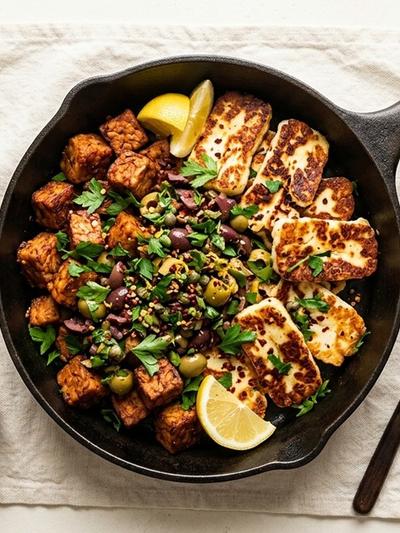
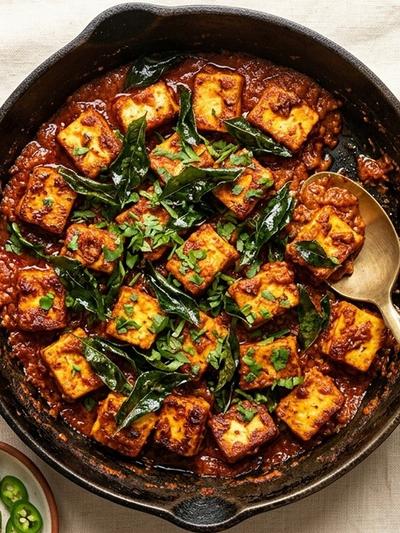
Imagine golden cubes of paneer with crispy, butter-kissed edges nestled in a silky sauce made from roasted red peppers and crumbled feta — briny Kalamata olives scattered throughout, and tender spinach wilted right into every spoonful. This one-skillet Mediterranean dinner delivers layers of smoky, tangy, and savory flavor that feel restaurant-worthy but come together in under 30 minutes. The paneer absorbs just enough of that gorgeous coral-pink cream sauce to make every bite utterly satisfying, while still holding its golden sear. It is the kind of dinner that makes you forget you are eating keto.
With 56 grams of fat and only 5 grams of net carbs per generous serving, this dish hits textbook ketogenic macros without a single compromise on flavor. The fat comes from a combination of butter, heavy cream, olive oil, feta, and the paneer itself — all whole-food sources that keep you satiated for hours. At 23 grams of protein per serving, it provides meaningful muscle-supporting nutrition to round out your evening meal.
Everything cooks in a single skillet from start to finish, which means minimal cleanup on a busy weeknight. The roasted red pepper feta sauce comes together in minutes using jarred roasted peppers — no roasting required. This recipe also reheats beautifully, making it an excellent option for meal prepping two or three dinners ahead of time.
Ingredients (serves 4)
For the paneer:
- 14 oz (400g) paneer, cut into 3/4-inch (2cm) cubes
- 2 tablespoons (30g) unsalted butter
- 1/4 teaspoon fine sea salt
- 1/4 teaspoon freshly ground black pepper
For the roasted red pepper feta cream sauce:
- 1 tablespoon (15ml) extra virgin olive oil
- 3 cloves garlic, minced
- 3.5 oz (100g) jarred roasted red peppers, drained and roughly chopped
- 3.5 oz (100g) feta cheese, crumbled
- 1/2 cup (120ml) heavy whipping cream
- 2 tablespoons (30ml) extra virgin olive oil
- 1/2 teaspoon smoked paprika
- 1/4 teaspoon red pepper flakes (optional)
For finishing:
- 2 oz (60g) Kalamata olives, pitted and halved
- 3.5 oz (100g) fresh baby spinach
- 1 tablespoon fresh lemon juice
- 2 tablespoons fresh flat-leaf parsley, chopped
- 1 tablespoon fresh oregano leaves (or 1 teaspoon dried)
Instructions
Pat the paneer dry. Remove the paneer from its packaging and press gently with paper towels to absorb surface moisture. Cut into even 3/4-inch (2cm) cubes. Dry paneer is the secret to achieving a beautiful golden sear rather than a steamed, rubbery texture.
Sear the paneer. Heat a large 12-inch (30cm) skillet over medium-high heat. Add the butter and let it melt until foaming. Arrange the paneer cubes in a single layer — do not crowd the pan. Sear undisturbed for 2 to 3 minutes per side until deep golden brown on at least two sides. Season with the salt and pepper, then transfer the paneer to a clean plate and set aside.
Build the sauce base. Reduce the heat to medium. Add 1 tablespoon of olive oil to the same skillet and let it heat for 30 seconds. Add the minced garlic and cook, stirring constantly, for 45 seconds until fragrant but not browned. Add the chopped roasted red peppers and cook for 1 minute, stirring occasionally.
Create the feta cream. Pour in the heavy cream and the remaining 2 tablespoons of olive oil. Scatter the crumbled feta over the top. Stir gently and let the mixture simmer for 3 to 4 minutes, allowing the feta to partially melt and the sauce to thicken slightly. Use the back of a wooden spoon to press some of the roasted pepper pieces against the bottom of the skillet — this releases their natural sweetness into the sauce and creates a gorgeous uneven texture. Stir in the smoked paprika and red pepper flakes if using.
Wilt the spinach and add olives. Add the baby spinach to the skillet in two batches, folding it into the sauce with tongs until just wilted, about 1 to 2 minutes total. Scatter the halved Kalamata olives across the pan and stir gently to distribute.
Return the paneer. Nestle the seared paneer cubes back into the sauce, pressing them down gently so they sit halfway submerged. Let everything simmer together on medium-low heat for 2 to 3 minutes so the paneer absorbs some of the sauce and the flavors meld.
Finish and serve. Remove the skillet from the heat. Squeeze the lemon juice over the top and scatter with the chopped parsley and fresh oregano. Serve directly from the skillet while the sauce is still bubbling, spooning plenty of that roasted red pepper feta cream over each portion.
Nutrition per Serving
| Nutrient | Amount |
|---|---|
| Calories | ~615 kcal |
| Fat | ~56g |
| Protein | ~23g |
| Total Carbs | ~7g |
| Fiber | ~2g |
| Net Carbs | ~5g |
Nutritional values are approximate and based on the specific ingredients and quantities listed. Actual values may vary depending on brands used and exact portion sizes.
Tips & Variations
Choose full-fat paneer for the best results. Low-fat paneer will not sear properly and will crumble apart in the sauce. Look for blocks that feel firm and dense — fresh paneer from an Indian grocery store tends to hold up better than some supermarket brands. If your paneer is very soft, freeze it for 20 minutes before cutting to get cleaner cubes.
Make it ahead for easy weeknight dinners. The sauce and paneer can be stored together in an airtight container in the refrigerator for up to 4 days. Reheat gently in a skillet over medium-low heat, adding a splash of cream if the sauce has thickened too much. The flavors actually deepen overnight, making leftovers even more delicious.
Watch your carbs with jarred roasted peppers. Some brands add sugar to their jarred roasted red peppers, which can sneak in unexpected carbs. Always check the label and choose brands that list only peppers, water, salt, and perhaps citric acid. If you prefer, you can roast a fresh red bell pepper under the broiler for 8 to 10 minutes per side and peel it yourself.
Swap the spinach for other keto-friendly greens. Chopped kale, arugula, or Swiss chard all work beautifully here. Arugula adds a pleasant peppery bite that pairs especially well with the feta cream, while kale provides a heartier, more substantial texture. Adjust wilting time accordingly — kale may need an extra minute or two.
Serve with a keto-friendly base to soak up the sauce. Cauliflower rice is the obvious pairing here and takes just 5 minutes in a separate pan. For a more indulgent option, serve alongside keto garlic naan or with roasted zucchini wedges. The sauce is rich enough that you truly do not need a heavy side — a simple green salad dressed with olive oil and lemon is often all you want.