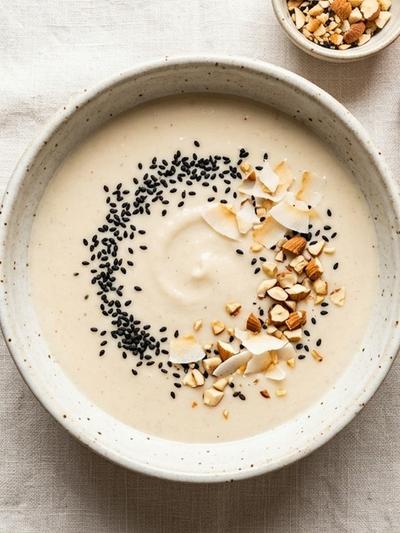
Hojicha is one of Japan's most underrated teas — roasted over charcoal until the leaves turn a deep amber, producing a flavor that is toasty, caramel-sweet, and naturally low in caffeine. When you whisk it into a warm cloud of coconut cream and MCT oil, it transforms into a latte that tastes like a cozy autumn afternoon in Kyoto. The toasted hemp hearts and sesame sprinkled on top add a gentle nuttiness that grounds every sip with fat and protein.
This drink delivers 34 grams of fat and only 3 grams of net carbs per serving, making it a textbook keto beverage that doubles as a satisfying snack replacement. The combination of MCT oil for rapid ketone production and coconut cream for sustained satiety keeps you fueled for hours without spiking blood sugar. At 345 calories per cup, it fits beautifully into a daily macro budget as a morning starter or afternoon pick-me-up.
Best of all, you need exactly one saucepan and about ten minutes. No blender required — a simple whisk creates enough froth to rival any café pour. Brew a double batch of hojicha concentrate in the morning and reheat with your fats whenever you need a cup throughout the day.
Ingredients (serves 2)
For the hojicha base:
- 2 cups (480ml) filtered water
- 3 tablespoons loose-leaf hojicha tea (or 3 hojicha tea bags)
For the creamy latte:
- 1/3 cup (80ml) full-fat coconut cream (from the thick top of a chilled can)
- 2 tablespoons MCT oil
- 1 tablespoon unsweetened almond butter (smooth, no added sugar)
- Pinch of fine sea salt
For the toasted seed topping:
- 2 tablespoons hemp hearts
- 1 tablespoon white sesame seeds
Optional:
- 3–4 drops liquid monk fruit sweetener (to taste)
- Pinch of ground cinnamon
Instructions
Toast the seed topping. Place a small dry saucepan over medium-low heat. Add the hemp hearts and sesame seeds. Stir gently for 90 seconds to 2 minutes until the sesame turns pale gold and the hemp smells nutty. Transfer immediately to a small dish and set aside — they burn quickly if left in the pan.
Brew the hojicha. In the same saucepan, bring the 2 cups of water to a gentle simmer over medium heat — you want small bubbles, not a rolling boil (around 175°F / 80°C is ideal for hojicha). Remove from heat, add the loose-leaf tea or tea bags, and steep for 3 minutes. The liquid should turn a rich reddish-brown.
Strain the tea. If using loose-leaf, pour the brewed hojicha through a fine-mesh strainer back into the saucepan (or into a measuring cup, then back). Discard the leaves. If using tea bags, simply remove and squeeze them gently.
Add the fats. Return the saucepan to low heat. Add the coconut cream, MCT oil, almond butter, and sea salt. Whisk vigorously for 30 to 45 seconds until the mixture is fully emulsified and a light froth forms on the surface. The latte should look creamy and uniform with no oil slicks floating on top.
Sweeten if desired. Taste the latte and add monk fruit drops if you prefer a touch of sweetness. The natural caramel notes of hojicha often make sweetener unnecessary, but a few drops enhance the toasty flavor beautifully.
Serve. Divide between two mugs. Sprinkle each with half of the toasted hemp and sesame seed mixture. Serve immediately while hot and frothy.
Nutrition per Serving
| Nutrient | Amount |
|---|---|
| Calories | ~345 kcal |
| Fat | ~34g |
| Protein | ~7g |
| Total Carbs | ~4g |
| Fiber | ~1g |
| Net Carbs | ~3g |
Nutrition is approximate and calculated based on the stated ingredients using standard USDA values for coconut cream, MCT oil, almond butter, hemp hearts, and sesame seeds.
Tips & Variations
Use the thick cream from chilled cans. Refrigerate your coconut cream can overnight. The thick white layer on top is nearly pure fat with minimal carbs — this is what you want. The thin watery liquid underneath has proportionally more sugars, so save it for smoothies or discard it. Brands like Aroy-D and Thai Kitchen consistently yield thick cream.
Upgrade to a froth with an immersion blender. While a whisk works well, 10 seconds with a handheld milk frother or immersion blender directly in the saucepan creates café-quality microfoam that holds its shape in the mug. This is especially satisfying if you are serving the latte to guests.
Watch for hidden carbs in almond butter. Many commercial almond butters sneak in sugar, palm oil, or honey. Read labels carefully — you want a brand with only almonds (and possibly salt) listed. Brands like MaraNatha or 365 Organic no-stir varieties are reliably clean. Each tablespoon of pure almond butter has about 3g total carbs and 1g fiber.
Make a cold version for warm days. Brew the hojicha double-strength (use only 1 cup water with the same 3 tablespoons of tea), let it cool, then blend with the coconut cream, MCT oil, almond butter, and a handful of ice. Pour over more ice and top with the toasted seeds. The fat content keeps it creamy even when cold.
Swap hemp for chia for an omega-3 boost. If you cannot find hemp hearts, substitute 2 tablespoons of whole chia seeds as a topping. They add a pleasant crunch and are equally low-carb (about 1g net carbs per tablespoon). However, hemp hearts provide more complete protein with all essential amino acids, so they remain the top choice for a vegan keto diet.