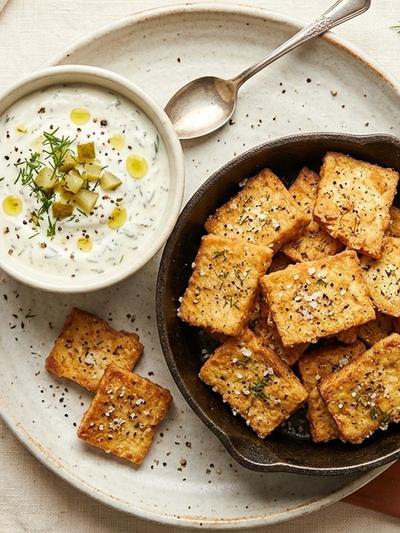
There is something almost addictive about tempeh when you get the sear just right — a shattering golden crust giving way to a warm, nutty interior that soaks up every drop of spicy-sweet gochujang glaze. These crispy skillet tempeh bites deliver exactly that, with a bold Korean-inspired kick balanced by a cool, creamy tahini-sesame dipping sauce that you will want to put on everything. Each piece is caramelized in a screaming-hot skillet until the edges go deeply bronzed and irresistible, then tumbled in a sticky, umami-rich glaze that clings to every craggy surface. This is snacking at its most satisfying.
The macro profile here is built for keto success. With 34 grams of fat per serving — mostly from avocado oil, toasted sesame oil, and tahini — fat accounts for nearly 80 percent of the total calories. Net carbs land at just 6 grams, well within strict keto limits, while tempeh delivers a solid 14 grams of plant-based protein per snack portion. It is the kind of high-fat, low-carb ratio that keeps you in ketosis without feeling like you are eating "diet food."
Best of all, this recipe comes together in a single skillet in about 20 minutes flat. The dipping sauce whisks together in a bowl while the tempeh sears, so everything finishes at the same time with almost zero cleanup. Make a batch on Sunday and stash them in the fridge for grab-and-go snacking all week, or serve them warm on a platter when friends come over — they disappear fast either way.
Ingredients (serves 4)
For the tempeh bites:
- 8 oz (227g) tempeh, cut into ½-inch (1.25cm) cubes
- 2 tbsp (30ml) avocado oil
- 1 tbsp (15ml) coconut aminos
- 1 tbsp (18g) gochujang (check label for no added sugar, or use keto-friendly brand)
- 1 tsp (5ml) toasted sesame oil
- 1 clove garlic, finely minced
- 1 tsp freshly grated ginger
- Pinch of sea salt
For the sesame dipping sauce:
- ¼ cup (60g) tahini
- 1 tbsp (15ml) coconut aminos
- 1 tbsp (15ml) rice vinegar (unseasoned)
- 1 tsp (5ml) toasted sesame oil
- 1-2 tbsp (15-30ml) warm water, to thin
For garnish:
- 1 tbsp (9g) toasted sesame seeds
- 2 scallions, thinly sliced on the bias
- Pinch of gochugaru flakes (optional)
Instructions
Prepare the tempeh. Cut the tempeh block into ½-inch (1.25cm) cubes. You should get roughly 30-36 bite-sized pieces. Pat them completely dry with a clean kitchen towel or paper towels — this step is critical for achieving a crispy sear rather than a steamed, rubbery exterior.
Make the glaze. In a small bowl, whisk together the gochujang, coconut aminos, toasted sesame oil, minced garlic, and grated ginger until smooth. Set aside.
Whisk the dipping sauce. In a separate small bowl, combine the tahini, coconut aminos, rice vinegar, and toasted sesame oil. Stir until smooth, then add warm water one tablespoon at a time until you reach a drizzleable consistency similar to heavy cream. Taste and adjust with a pinch of salt if needed. Set aside.
Sear the tempeh. Heat the avocado oil in a large skillet or wok over medium-high heat until the oil shimmers and just barely begins to smoke, about 2 minutes. Add the tempeh cubes in a single layer, making sure none are touching — work in two batches if your skillet is small. Let them cook undisturbed for 2-3 minutes until the bottom sides are deeply golden and crispy. Flip and sear the second side for another 2 minutes until equally browned.
Glaze the bites. Reduce the heat to medium-low. Pour the gochujang glaze over the tempeh and toss quickly with a spatula or by shaking the pan, coating every piece evenly. Cook for 30-45 seconds more, just until the glaze caramelizes and turns sticky and fragrant. Be careful not to let the garlic burn — if it starts to darken too quickly, pull the pan off the heat and toss.
Serve immediately. Transfer the glazed tempeh bites to a serving plate. Sprinkle generously with toasted sesame seeds, sliced scallions, and a pinch of gochugaru flakes if you like extra heat. Serve the tahini-sesame dipping sauce alongside in a small bowl. These are best eaten warm, when the crust is at peak crispiness.
Nutrition per Serving
| Nutrient | Amount |
|---|---|
| Calories | ~390 kcal |
| Fat | ~34g |
| Protein | ~14g |
| Total Carbs | ~9g |
| Fiber | ~3g |
| Net Carbs | ~6g |
Nutrition values are approximate and may vary based on specific brands of gochujang and coconut aminos used.
Tips & Variations
Choose your gochujang carefully. Traditional gochujang contains rice flour and sugar, which adds carbs quickly. Look for brands labeled sugar-free or keto-friendly, or check the nutrition panel — you want one with no more than 2-3 grams of carbs per teaspoon. If you cannot find a low-carb version, substitute with a paste made from 1 teaspoon of sriracha mixed with ½ teaspoon of white miso paste for a similar fermented, spicy flavor.
Get the sear right by not overcrowding. The single most common mistake with pan-fried tempeh is cramming too many pieces into the skillet. Overcrowding drops the pan temperature and creates steam, which gives you soft, pale tempeh instead of crispy golden bites. Use a 12-inch (30cm) skillet, or sear in two batches. You want to hear an aggressive sizzle the entire time.
Make them ahead for weekly snacking. Store the glazed tempeh bites and dipping sauce separately in airtight containers in the refrigerator for up to 5 days. Reheat the bites in a dry skillet over medium heat for 2-3 minutes per side to restore crispiness — microwaving works but sacrifices the crunch. The dipping sauce may thicken in the fridge; stir in a teaspoon of warm water to loosen it back up.
Try a Japanese variation. Swap the gochujang glaze for a mixture of 1 tablespoon white miso paste, 1 teaspoon toasted sesame oil, and 1 teaspoon rice vinegar for a mellower, umami-forward flavor profile. Garnish with shredded nori and furikake seasoning (check that your furikake is vegan — some contain bonito flakes). The carb count remains virtually identical.
Watch for hidden carbs in sauces. Asian-style cooking relies heavily on sauces, and many are surprisingly high in sugar. Regular soy sauce is fine at about 1 gram of carbs per tablespoon, but hoisin sauce, sweet chili sauce, and teriyaki sauce can pack 7-10 grams of sugar per tablespoon. Always read labels and stick with coconut aminos, tamari, or liquid aminos as your go-to keto-safe options.