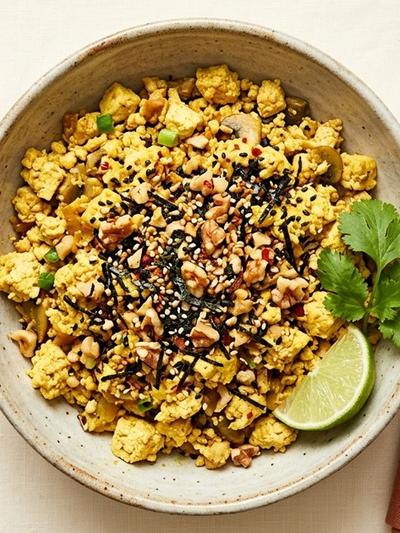
Imagine crumbled tempeh, deeply golden and caramelized at the edges, tossed in a sticky sesame-garlic glaze with a whisper of Korean chili heat. It sits atop a cool, creamy coconut cabbage slaw scattered with toasted sesame seeds and bright scallions. Every bite delivers that addictive balance of savory, nutty, and subtly spicy that makes Korean-inspired food so craveable — and this version is entirely plant-based and keto-friendly.
The macro profile here is designed for ketosis without compromise. Each generous bowl delivers 36 grams of fat primarily from coconut oil, sesame oil, and coconut cream, while tempeh provides a solid 20 grams of plant protein. At just 8 grams of net carbs per serving, you stay comfortably within keto limits even with a full day of eating ahead.
This recipe is built for batch cooking. You will prepare all four servings in about 35 minutes, and the bowls store beautifully in the fridge for up to five days. The tempeh actually improves as it absorbs the glaze overnight, and the coconut slaw stays crisp and fresh far longer than leafy greens would. Pack them into containers on Sunday and you have dinner handled for most of the work week.
Ingredients (serves 4)
For the sesame-garlic tempeh:
- 14 oz (400g) tempeh, crumbled into small pieces
- 3 tablespoons (45ml) coconut oil
- 2 tablespoons (30ml) toasted sesame oil
- 2 tablespoons (30ml) coconut aminos
- 3 cloves garlic, minced
- 1 tablespoon (15g) fresh ginger, finely grated
- 1 teaspoon gochugaru (Korean chili flakes)
- 1/2 teaspoon fine sea salt
For the coconut cabbage slaw:
- 3 cups (210g) napa cabbage, finely shredded
- 1/3 cup (80ml) full-fat coconut cream
- 1 tablespoon (15ml) rice vinegar (unsweetened)
- 1 teaspoon toasted sesame oil
- 1/4 teaspoon fine sea salt
For topping:
- 2 tablespoons (16g) toasted sesame seeds
- 2 tablespoons (10g) unsweetened toasted coconut flakes
- 2 scallions, thinly sliced
- Fresh cilantro leaves, for garnish
- Sriracha or chili oil, to taste (optional)
Instructions
Crumble the tempeh. Break the tempeh into small, irregular crumbles about the size of large peas. You want varied texture — some bits will crisp up while others stay chewy. If your tempeh block is very firm, you can grate it on the large holes of a box grater for finer crumbles.
Heat the cooking fat. Set a large skillet or wok over medium-high heat and add the coconut oil. Once the oil is shimmering and a small piece of tempeh sizzles immediately when dropped in, the pan is ready.
Cook the tempeh until golden. Add all the crumbled tempeh to the skillet and spread it into an even layer. Let it cook undisturbed for 3 to 4 minutes until the bottom turns deep golden brown. Stir, then let it sit again for another 3 minutes. You want plenty of crispy edges — resist the urge to stir constantly.
Build the glaze. Push the tempeh to the edges of the skillet and add the sesame oil, minced garlic, and grated ginger to the center. Stir the aromatics in the oil for about 30 seconds until fragrant, then toss everything together. Pour in the coconut aminos and sprinkle the gochugaru and salt over the top. Stir well and cook for another 2 to 3 minutes until the liquid has reduced to a sticky glaze that clings to each piece of tempeh.
Toast the toppings. While the tempeh cooks, toast the sesame seeds and coconut flakes in a small dry skillet over medium-low heat, stirring frequently, for 2 to 3 minutes until golden and fragrant. Transfer immediately to a small bowl to prevent burning.
Make the coconut slaw. In a large bowl, whisk together the coconut cream, rice vinegar, sesame oil, and salt until smooth. Add the shredded napa cabbage and toss until every strand is coated in the creamy dressing.
Assemble the bowls. Divide the coconut slaw evenly among four meal-prep containers or bowls. Top each with a quarter of the sesame-garlic tempeh. Scatter toasted sesame seeds, coconut flakes, and sliced scallions over the top. Add fresh cilantro if eating immediately.
Store for meal prep. Let the tempeh cool completely before sealing the containers. Refrigerate for up to 5 days. The bowls can be eaten cold, at room temperature, or reheated — see tips below for best results.
Nutrition per Serving
| Nutrient | Amount |
|---|---|
| Calories | ~465 kcal |
| Fat | ~36g |
| Protein | ~20g |
| Total Carbs | ~14g |
| Fiber | ~6g |
| Net Carbs | ~8g |
Nutrition values are approximate and based on the stated ingredients. Actual values may vary depending on specific brands and exact measurements used.
Tips & Variations
Reheat the tempeh separately for best texture. If you have a minute to spare at dinner time, scoop the tempeh off the slaw and reheat it in a hot dry skillet for 2 to 3 minutes to re-crisp the edges. The slaw is best served cold or at room temperature, so keeping the components slightly separated in your container preserves the contrast of warm and cool.
Swap the heat level to your taste. Gochugaru delivers a gentle, smoky warmth rather than sharp heat. For a spicier bowl, drizzle chili oil or sriracha over the finished dish. For a milder version, reduce the gochugaru to half a teaspoon or omit it entirely — the sesame-garlic flavor stands on its own beautifully.
Watch for hidden carbs in coconut aminos. Different brands of coconut aminos vary significantly in sugar content, ranging from 0 to 3 grams per tablespoon. Check labels carefully and choose a brand with no added sugar. If you cannot find a low-carb option, substitute tamari or soy sauce (which is naturally very low carb) and add a tiny pinch of monk fruit sweetener for balance.
Add extra fat with a drizzle at serving. If your daily macros need a fat boost, drizzle each bowl with an extra teaspoon of toasted sesame oil or a tablespoon of chili crisp oil right before eating. This adds roughly 40 to 120 calories of pure fat without changing the carb count at all.
Try bok choy or shredded Brussels sprouts instead of cabbage. Both are low-carb alternatives that hold up well in the coconut cream dressing over several days of storage. Shredded Brussels sprouts add a slightly nutty, peppery note that pairs wonderfully with the sesame-garlic glaze. Keep the quantities the same — the carb count will stay nearly identical.