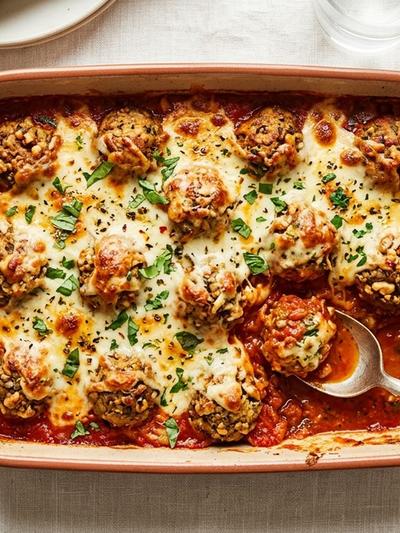
Thin, golden egg crêpes wrapped around a pillowy herbed ricotta filling, nestled into a garlic-spiked rosa sauce, and baked until the mozzarella on top turns bubbly and bronzed. This is Italian comfort cooking at its finest: the kind of dish that fills your kitchen with the scent of oregano and toasted cheese, makes you forget you are eating low-carb, and somehow tastes even better reheated on a Tuesday night than it did fresh from the oven. Each bite delivers the layered satisfaction of classic manicotti without a single gram of pasta.
The macro profile is tailor-made for keto. At roughly 56 grams of fat and only 8 grams of net carbs per serving, the ratio sits comfortably in the ketogenic sweet spot. The fat comes from whole-milk ricotta, heavy cream, Parmesan, mozzarella, and olive oil, while the eggs and cheese push protein to 33 grams. There is no filler, no hidden starch, and no flour-based binder anywhere in the dish.
Designed from the ground up for batch cooking, this recipe yields eight manicotti in a standard 9×13-inch pan. Divide them into four containers, stash them in the fridge, and you have dinner sorted for up to five days. Reheating takes three minutes in a microwave or fifteen in a low oven. Sunday cooking, weeknight eating.
Ingredients (serves 4)
For the egg crêpes:
- 8 large eggs
- 3 tablespoons (45ml) heavy cream
- 3 tablespoons (21g) almond flour
- ¼ teaspoon fine salt
- 1 tablespoon (15ml) olive oil, for the pan
For the ricotta filling:
- 1¼ cups (310g) whole-milk ricotta
- ½ cup (50g) finely grated Parmesan
- 1 large egg yolk
- 2 cloves garlic, minced
- ¼ teaspoon ground nutmeg
- ¼ cup (7g) fresh basil, finely chopped
- ¼ teaspoon freshly ground black pepper
For the garlic rosa sauce:
- 2 tablespoons (30ml) extra-virgin olive oil
- 3 cloves garlic, thinly sliced
- ½ cup (125g) crushed tomatoes (no sugar added)
- ½ cup (120ml) heavy cream
- ½ teaspoon dried oregano
- ¼ teaspoon red pepper flakes
- ¼ teaspoon salt
For the topping:
- 1 cup (113g) shredded whole-milk mozzarella
- 2 tablespoons (14g) grated Parmesan
- Fresh basil leaves, for finishing
Instructions
Make the crêpe batter. Crack the eight eggs into a large bowl. Add the heavy cream, almond flour, and salt. Whisk vigorously until completely smooth with no lumps of almond flour remaining. Let the batter rest for five minutes while you prepare the filling; this allows the almond flour to hydrate and yields more pliable crêpes.
Prepare the ricotta filling. In a separate bowl, combine the ricotta, Parmesan, egg yolk, minced garlic, nutmeg, chopped basil, and black pepper. Stir with a fork until evenly blended. The mixture should be thick and scoopable, not runny. Set aside.
Cook the egg crêpes. Heat an 8-inch (20cm) non-stick skillet over medium heat. Add a thin slick of olive oil and wipe out the excess with a folded paper towel, keeping the towel nearby for between crêpes. Pour roughly 3 tablespoons of batter into the center of the pan and immediately tilt and swirl so it coats the bottom in a thin, even layer. Cook for 60 to 90 seconds until the top surface looks set and the edges begin to pull away from the pan. Flip carefully with a thin spatula and cook the second side for 30 seconds. Slide onto a plate. Repeat with the remaining batter, re-oiling the pan lightly as needed, to make eight crêpes total. Stack them with a slight offset so they do not stick together.
Build the garlic rosa sauce. In a small saucepan, warm the olive oil over medium-low heat. Add the sliced garlic and cook, stirring often, for about 90 seconds until fragrant and just barely golden. Pour in the crushed tomatoes, oregano, red pepper flakes, and salt. Stir and let the mixture simmer for three minutes. Reduce the heat to low, pour in the heavy cream, and stir until the sauce turns a uniform coral-pink color. Simmer gently for two more minutes, then remove from heat.
Assemble the manicotti. Preheat the oven to 375°F (190°C). Spread a thin layer of rosa sauce across the bottom of a 9×13-inch (23×33cm) baking dish, using about one-third of the total sauce. Lay a crêpe flat on your work surface. Spoon roughly 2½ tablespoons of the ricotta filling in a line across the lower third. Roll the crêpe up snugly and place it seam-side down in the baking dish. Repeat with the remaining seven crêpes, arranging them in a single layer. Spoon the rest of the rosa sauce evenly over the top. Scatter the shredded mozzarella and Parmesan over the entire surface.
Bake. Place the dish on the center rack and bake for 25 to 30 minutes, until the sauce is bubbling around the edges and the cheese has melted into a golden, lightly blistered crust. If you want a deeper char on the mozzarella, switch the broiler to high for the final 60 to 90 seconds, watching closely.
Cool and portion. Let the baking dish rest on a wire rack for 10 minutes. The sauce thickens as it sits, making the manicotti easier to lift out cleanly. Scatter fresh basil leaves over the top. Cut or lift out two manicotti per serving and transfer to airtight meal-prep containers. Refrigerate within one hour.
Nutrition per Serving
| Nutrient | Amount |
|---|---|
| Calories | ~680 kcal |
| Fat | ~56g |
| Protein | ~33g |
| Total Carbs | ~9g |
| Fiber | ~1g |
| Net Carbs | ~8g |
Values are approximate and may vary depending on specific brands of ricotta, crushed tomatoes, and cheese used.
Tips & Variations
Choose your crushed tomatoes wisely. Not all canned tomatoes are created equal on keto. Some brands add sugar or citric acid that pushes carb counts higher. Look for labels that list only tomatoes and salt, with no more than 4 grams of net carbs per half-cup serving. San Marzano-style or fire-roasted varieties tend to be naturally sweeter without added sugar.
Swap the almond flour if you need a nut-free version. Replace the 3 tablespoons of almond flour in the crêpe batter with 2 tablespoons of coconut flour. Coconut flour absorbs more liquid, so add an extra tablespoon of heavy cream to keep the batter pourable. The crêpes will be slightly thicker but still flexible enough to roll.
Add vegetables to the filling for variety. Fold 1/3 cup of finely chopped sautéed spinach or wilted arugula into the ricotta mixture. Both are negligible in carbs and add color and iron. Finely diced roasted red pepper also works, but count roughly 1 gram of extra net carbs per serving.
Reheat gently for the best texture. Microwave a single portion covered at 70% power for 2 to 3 minutes, or place the container contents in a small oven-safe dish, cover with foil, and reheat at 325°F (160°C) for 12 to 15 minutes. The crêpes stay tender rather than rubbery when you avoid blasting them with high heat. These keep well in the refrigerator for up to five days. For longer storage, freeze individual portions wrapped tightly in plastic and then foil; they hold for up to two months.
Scale up for a full week without extra work. This recipe doubles seamlessly in two 9×13 pans or one large hotel-style half-sheet pan. Doubling gives you eight servings and a full work week of dinners with one left over for the freezer. The crêpe batter scales linearly, and the sauce can be made in a single larger saucepan.