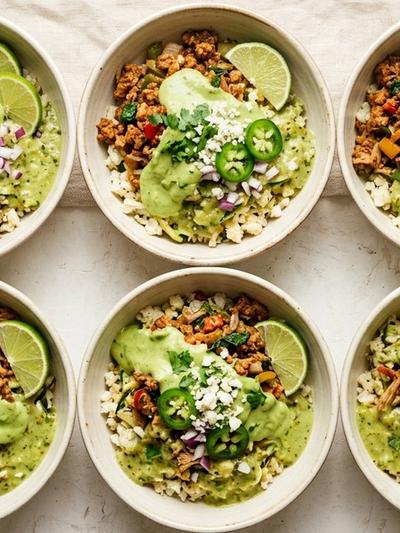
Imagine a bowl of smoky, silky pozole verde — the kind of deeply satisfying Mexican soup that warms you from the inside out — but made impossibly creamy with full-fat coconut cream and completely keto-friendly. Roasted poblano peppers bring their signature earthy heat, tender cauliflower florets stand in beautifully for traditional hominy, and a blizzard of toasted pepitas, crumbled queso fresco, and ripe avocado slices crown every bowl. The coconut cream doesn't just add richness; it rounds out the bright, tangy verde flavors with a subtle tropical sweetness that makes each spoonful more complex and craveable than the last.
This is a high-fat, very low-carb lunch that delivers exactly what your keto macros demand. Each generous bowl packs roughly 44 grams of fat — primarily from coconut cream, coconut oil, avocado, and pepitas — while keeping net carbs down to just 7 grams. The combination of queso fresco, pepitas, and coconut cream provides a respectable 14 grams of protein, making this a well-rounded midday meal that keeps you satiated for hours without a blood sugar spike.
Best of all, this pozole is purpose-built for batch cooking. The soup base holds beautifully in the fridge for up to five days, and the flavors actually deepen overnight as the roasted poblano and cumin meld into the coconut broth. Simply reheat a portion each day and add your fresh toppings — avocado, pepitas, cilantro, and a squeeze of lime — for a restaurant-quality keto lunch in under three minutes.
Ingredients (serves 4)
For the pozole base:
- 2 tablespoons (28g) coconut oil
- 3 cloves garlic, minced
- 1 jalapeño, seeded and finely diced
- 2 large poblano peppers, roasted, peeled, and chopped (about 1 cup / 150g)
- 3 cups (340g) cauliflower florets, cut into bite-sized pieces
- 1 teaspoon ground cumin
- 1 teaspoon dried Mexican oregano
- 1/2 teaspoon smoked paprika
- 1 can (13.5 oz / 400ml) full-fat coconut cream
- 2 cups (480ml) low-sodium vegetable broth
- 2 tablespoons (30ml) fresh lime juice
- 1/2 teaspoon fine sea salt, plus more to taste
- 1/4 teaspoon freshly ground black pepper
For the toppings (per serving):
- 1/4 medium ripe avocado, sliced
- 1 tablespoon (9g) raw pepitas (pumpkin seeds), toasted
- 1 tablespoon (15g) crumbled queso fresco or cotija cheese
- Fresh cilantro leaves
- 1 lime wedge
- Pinch of red pepper flakes (optional)
Instructions
Roast the poblanos. Place the whole poblano peppers directly over a gas burner flame or under a broiler set to high. Turn them every 2–3 minutes using tongs until the skin is blistered and charred on all sides, about 8–10 minutes total. Transfer to a bowl, cover tightly with plastic wrap or a plate, and let steam for 10 minutes. Peel off the charred skin, remove the seeds and stems, and chop the flesh. Set aside. You can do this step up to two days ahead.
Toast the pepitas. While the poblanos steam, place the pepitas in a dry skillet over medium heat. Stir frequently until they begin to pop and turn golden, about 3–4 minutes. Transfer immediately to a small bowl so they don't burn. Set aside for topping.
Build the base. Heat the coconut oil in a large pot or Dutch oven over medium heat. Add the minced garlic and diced jalapeño and sauté for 1–2 minutes until fragrant and softened. Stir in the cumin, Mexican oregano, and smoked paprika, and cook for 30 seconds until the spices bloom and become deeply aromatic.
Add the vegetables and liquids. Add the chopped roasted poblanos and cauliflower florets to the pot and stir to coat in the spiced oil. Pour in the coconut cream and vegetable broth. Stir well, scraping up any spices from the bottom of the pot. Bring the mixture to a gentle boil.
Simmer until tender. Reduce the heat to medium-low, cover, and simmer for 15–18 minutes until the cauliflower is fork-tender but still holds its shape. You want the florets to mimic the soft bite of hominy, not turn to mush. Check at 15 minutes — they should yield easily when pierced with a knife but not fall apart.
Season and finish. Remove the pot from the heat. Stir in the lime juice, salt, and pepper. Taste and adjust seasoning — the soup should taste bright, smoky, and subtly rich. Add a pinch more salt or an extra squeeze of lime if needed.
Batch and store. If meal prepping, let the soup cool completely, then divide the base evenly among four airtight containers. Refrigerate for up to 5 days. Keep toppings separate — store pepitas in a small jar at room temperature, keep avocado whole until serving day, and wrap queso fresco tightly in the fridge.
Serve. Reheat a portion in the microwave for 2–3 minutes or on the stovetop over medium heat until steaming. Ladle into a deep bowl and top with sliced avocado, toasted pepitas, crumbled queso fresco, fresh cilantro, and a generous squeeze of lime. Add red pepper flakes if you like extra heat.
Nutrition per Serving
| Nutrient | Amount |
|---|---|
| Calories | ~510 kcal |
| Fat | ~44g |
| Protein | ~14g |
| Total Carbs | ~11g |
| Fiber | ~4g |
| Net Carbs | ~7g |
Nutrition is approximate and may vary based on specific brands of coconut cream and the size of your vegetables.
Tips & Variations
Toast your pepitas properly — they make the dish. Don't skip the dry-toasting step. Raw pepitas are flat and starchy, but toasted pepitas develop a deep, nutty crunch that contrasts beautifully with the silky soup. Watch them carefully in the pan — they go from golden to burnt in about 30 seconds. Store toasted pepitas separately from the soup so they stay crunchy all week.
Use canned roasted poblanos to save time. If fire-roasting poblanos feels like too much effort for a batch-cook session, look for canned whole roasted green chiles at your grocery store. Drain them well, chop, and use in place of fresh. The flavor is slightly less smoky but perfectly acceptable for a weekday lunch.
Watch for hidden carbs in your vegetable broth. Many store-bought vegetable broths contain added sugars, potato starch, or tomato paste that can add 2–4 grams of carbs per cup. Read labels carefully and choose a brand with less than 1 gram of carbs per serving. Bone broth alternatives marketed as "vegetable" sometimes contain animal products, so always check that it is genuinely vegetarian.
Boost the protein with a halved hard-boiled egg. If you need more protein to hit your macros, add a halved hard-boiled egg to each bowl. It adds about 6 grams of protein and only 0.5 grams of carbs, and the creamy yolk is gorgeous against the smoky verde broth. Hard-boil a batch of eggs during your cook session and store them peeled in the fridge for easy additions.
Freeze the base for longer storage. This pozole verde freezes beautifully for up to two months. Portion into freezer-safe containers, leaving about half an inch of headroom for expansion. Thaw overnight in the fridge and reheat gently on the stovetop, adding a splash of broth if the soup has thickened. The cauliflower softens slightly after freezing but the flavor remains excellent.