Traveling is one of the biggest stress tests for any dietary commitment, and vegetarian keto might be the ultimate challenge. You're already navigating a niche within a niche — no meat, no fish, and under 20–30 g of net carbs per day. Now add airport terminals, unfamiliar cities, limited kitchen access, and well-meaning relatives who insist you "just try one bite of grandma's pasta." It's no wonder so many vegetarian keto followers quietly abandon their macros the moment they zip up a suitcase.
But here's the thing: staying in ketosis while traveling isn't just possible — it can actually be straightforward once you have a system. After all, the core foods of vegetarian keto — cheese, nuts, seeds, avocados, eggs, and coconut-based fats — are some of the most portable, shelf-stable, and universally available foods on the planet. You don't need a full kitchen to assemble a 70% fat meal. You need a plan, a few key supplies, and the confidence to order off-menu at restaurants.
This guide walks you through every phase of travel: what to pack before you leave, how to eat well in airports and on planes, strategies for hotels and vacation rentals, navigating restaurants in any cuisine, and special considerations for road trips, international travel, and vegan keto travelers. Whether you're heading out for a three-day work conference or a two-week European holiday, these tactics will keep your macros intact and your energy high.
If you're newer to this way of eating, our Complete Guide to Vegetarian Keto covers the fundamentals. The tips below assume you already know your target macros and are comfortable with the basics — now it's time to take them on the road.
Pack a Keto Travel Kit Before You Leave
The single most important thing you can do for travel success happens before you walk out the door. A well-stocked travel kit eliminates the panic moment when you're starving at a gas station surrounded by chips and candy bars.
Your carry-on essentials (TSA and most international security friendly):
- Nut butter packets (1–2 oz single-serve) — 15 g fat, 2–3 g net carbs each. Brands like Justin's and Artisana make almond and coconut butter squeeze packs.
- Individually wrapped cheese — string cheese, Babybel, or aged cheddar portions. Each provides 6–9 g fat and 0 g carbs.
- Seed and nut mixes — portion into 1 oz bags (roughly 28 g). A mix of macadamias, pecans, and pumpkin seeds hits about 20 g fat and 1–2 g net carbs. For deeper guidance on choosing the right varieties, check out our Complete Guide to Nuts & Seeds on Vegetarian Keto.
- Coconut butter or MCT oil packets — great for adding fat to coffee or tea. MCT oil packets (15 mL) deliver 14 g fat and zero carbs.
- Dark chocolate — 85% cacao or higher, broken into 10 g squares. That's roughly 1.5 g net carbs and 5 g fat per square.
- Seed crackers — flax and sesame crackers (like those inspired by our Air Fryer Italian Herb Seed Crackers with Walnut-Basil Pesto) pack well and run about 1–2 g net carbs per serving.
- Electrolyte packets — sodium, potassium, and magnesium are critical, especially when flying causes extra dehydration. Look for sugar-free options with at least 1,000 mg sodium per packet.
- Herbal tea bags or instant coffee — pair with MCT oil or coconut cream for a fat-boosted drink anywhere you can get hot water.
Important liquid note: If flying, remember the 3.4 oz (100 mL) liquid limit for carry-ons. MCT oil packets, nut butter squeeze packs, and coconut cream in pouches generally pass through fine, but loose oils in large bottles will be confiscated. Pack larger liquids like avocado oil or full-size coconut cream cans in checked luggage.
For road trips, you have more flexibility. Add a small cooler with hard-boiled eggs, sliced halloumi, cream cheese, avocados, and pre-made fat bombs. Six hard-boiled eggs and an avocado give you a full meal for about 48 g fat, 36 g protein, and 4 g net carbs.
Airports, Planes, and Train Stations
Airport food has improved dramatically over the past decade, but it's still a minefield of sandwiches, wraps, and sugary smoothies. Here's how to navigate it.
Best airport food options for vegetarian keto:
- Cheese and nut boxes — Most airport shops stock pre-made snack boxes with cheese cubes, almonds, and sometimes olives. Ignore any crackers or dried fruit included. A typical box runs 25–30 g fat and 3–5 g net carbs (minus the crackers).
- Salad bars — Look for greens with cheese, hard-boiled eggs, olives, seeds, and an oil-based dressing. Avoid croutons, candied nuts, and sweet dressings. A large salad with feta, olive oil, and avocado can easily hit 35 g fat and stay under 8 g net carbs.
- Starbucks and coffee shops — Order an Americano or brewed coffee with heavy cream (ask for "extra heavy cream" — most locations stock it). Add a cheese-and-egg protein box if available. Avoid anything labeled "keto" that includes milk-based smoothie elements; they often have 15+ g sugar.
- Mexican fast-casual — Places like Chipotle exist in many airports. Order a salad bowl with no rice, no beans, add cheese, sour cream, guacamole, and fajita veggies. The sofritas (tofu) option gives about 10 g protein with 5 g net carbs; pair it with guac and cheese for a solid 40 g fat meal.
- Asian takeaway — Grab edamame (6 g net carbs per cup — use sparingly) and miso soup for a quick 5 g net carb snack.
On the plane itself, you're largely dependent on what you've packed. Most airlines' complimentary snacks are pretzels, cookies, or crackers — all off-limits. Business-class meals can sometimes be modified; when booking, request a "vegetarian, low-carb" special meal. Results vary wildly by airline, but you'll often get a cheese plate or an egg-based dish, which is far better than the default pasta.
Pro tip: Eat a large, high-fat meal before heading to the airport. Something like a Spinach and Gruyère Omelet with a side of avocado — roughly 50 g fat and 4 g net carbs — will keep you full for 5–6 hours. That alone can cover a short-haul flight without needing any airport food at all.
Hotel Rooms, Airbnbs, and Limited Kitchen Setups
Your accommodation type dramatically shapes your eating strategy. Here's how to handle each scenario.
Full kitchen (Airbnb, vacation rental, extended stay hotel):
This is the easiest situation. On arrival, hit a local grocery store and stock up on your staples: eggs, cheese, avocados, coconut cream, olive oil, leafy greens, and low-carb vegetables like zucchini, broccoli, and bell peppers. Consult the Vegetarian Keto Food List for a complete shopping reference you can pull up on your phone in any store.
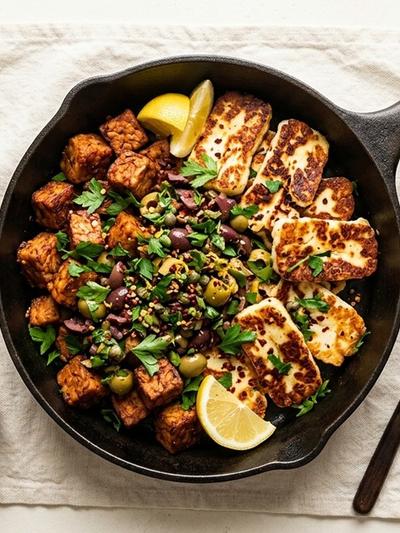
With a kitchen, you can batch-cook for several days. A Batch-Prep Cheddar-Gruyère Broccoli Crustless Quiche takes about 45 minutes and yields 6 servings — perfect for breakfasts and lunches throughout a week-long stay. Pair that with a One-Skillet Coconut Harissa Tofu with Olives and Wilted Greens for dinners and you've essentially meal-prepped your vacation. Our Weekend Batch Cooking guide translates perfectly to a first-evening-of-vacation cooking session.
Hotel room with mini-fridge and microwave:
More common and more challenging, but still very workable. Stock the mini-fridge with:
- Pre-sliced cheese (cheddar, Gouda, or brie)
- Small tubs of cream cheese or mascarpone
- Pre-washed salad greens in a bag
- Avocados (buy firm, they'll ripen during your stay)
- Whole-milk Greek yogurt (plain, full-fat — roughly 5 g net carbs per 150 g serving)
- Small cartons of coconut cream
For microwave meals, think scrambled eggs in a mug (2 eggs + 1 tbsp butter + cheese = 30 g fat, 14 g protein, <1 g carbs, ready in 90 seconds), steamed broccoli with melted cheese, or cauliflower rice bowls with coconut cream and spices.
Hotel room with nothing but a kettle:
This is survival mode, but it's still doable. Rely on your travel kit, room service breakfast eggs, and restaurant meals. Use the kettle for coffee with MCT oil or coconut cream, instant miso soup, or herbal teas. Many hotels offer a breakfast buffet with eggs, cheese, olives, and salad — load up at breakfast and aim for 50+ g of fat to carry you through to dinner.
Restaurant Strategies for Any Cuisine
Eating out is one of the genuine pleasures of travel, and you don't have to skip it. The key is knowing what to look for in each cuisine and being comfortable making modifications.
Universal restaurant rules:
- Always ask for olive oil or butter on the side — most kitchens have both and will drizzle extra for you at no charge.
- Replace starches with extra vegetables or salad — most restaurants will swap rice, potatoes, or bread for a side salad or steamed greens.
- Don't be afraid to order two appetizers instead of a main — appetizer menus often have more keto-friendly vegetarian options (cheese plates, stuffed mushrooms, salads) than entrée sections.
- Check for hidden sugars — sauces, dressings, and glazes are the biggest carb traps. Ask for sauces on the side and choose oil-and-vinegar or cream-based options.
Cuisine-by-cuisine breakdown:
Italian: Order a caprese salad (fresh mozzarella, tomatoes, basil, olive oil — about 25 g fat, 5 g net carbs), vegetable antipasti with cheese, or eggplant parmigiana without breading (many upscale Italian places will accommodate this). Ask if they can do zucchini noodles instead of pasta. Browse our Italian recipes for inspiration on what flavors to seek out.
Indian: One of the best cuisines for vegetarian keto when you know what to order. Paneer dishes are your best friend — palak paneer, paneer tikka, and paneer bhurji are all naturally high-fat, moderate-protein, and low-carb if you skip the rice and naan. A typical serving of palak paneer contains about 30 g fat, 18 g protein, and 6 g net carbs. Ask for extra ghee. Avoid dal (lentils — too many carbs), anything with potato, and sweet chutneys. Check out our Indian recipe collection for dishes you might recognize on menus.
Mexican: Skip the tortillas, rice, and beans. Focus on cheese quesadillas (eat the filling, leave the tortilla if it's flour), guacamole with vegetable dippers, cheese-stuffed peppers, and salads with sour cream and cheese. A good strategy: order a "burrito bowl" style dish with no rice, no beans, double cheese, sour cream, and guac.
Asian (Thai, Japanese, Chinese): This requires the most caution due to sugar in sauces. Thai coconut curries can work — ask for no sugar and extra coconut cream. Tofu and vegetable stir-fries are good if you request minimal sauce. At Japanese restaurants, order edamame, a seaweed salad, and vegetable tempura (the batter adds some carbs, so limit to 3–4 pieces). Miso soup is generally 2–3 g net carbs per bowl.
Mediterranean/Middle Eastern: A dream for vegetarian keto. Order a mezze platter with hummus (use sparingly — about 4 g net carbs per 2 tbsp), baba ghanoush (lower carb at 2 g per 2 tbsp), olives, feta, halloumi, and a fattoush salad (skip the pita chips). A full mezze meal can easily deliver 50+ g fat and stay under 15 g net carbs. Our Mediterranean recipes capture these same flavor profiles for home cooking.
Road Trips and Domestic Driving Travel
Road trips offer unique advantages: you control the schedule, you can pack a cooler, and you can stop wherever you choose. But they also bring the constant temptation of drive-throughs and gas station snack aisles.
Your road trip cooler should include:
- Hard-boiled eggs (6–12, depending on trip length) — 5 g fat, 6 g protein each
- Sliced cheese and cream cheese portions
- Celery sticks with almond butter
- Avocados (bring a knife and spoon)
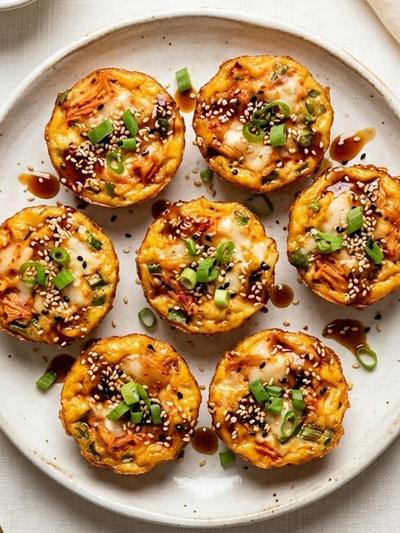
- Pre-made egg muffins like Keto Egg Muffins with Spinach and Cheese — perfect one-handed driving food
- A thermos of Bulletproof Coffee made that morning
Gas station survival guide:
Even the most basic gas station usually stocks string cheese, pork rinds (not vegetarian — skip these), whole nuts, and sometimes hard-boiled eggs. Your best bets: a bag of almonds or pecans, a packet of cheese, and a bottle of water. That's 30 g fat, 10 g protein, and about 3 g net carbs for roughly $5–7.
Fast food stops: If you must stop at a chain, most burger places will make a veggie patty or grilled cheese. Order it lettuce-wrapped or just eat the insides. Taco Bell can build a "power bowl" with no rice and no beans, adding extra cheese and guacamole — ask for the vegetarian option. Panera Bread locations often have a Greek salad with feta that works well.
Timing your meals on the road: Many vegetarian keto travelers find that intermittent fasting pairs naturally with driving days. Eat a large, fat-heavy breakfast before departing, skip lunch (or have just nuts and cheese), and eat a proper dinner at your destination. This 16:8 pattern keeps you alert while driving and eliminates the need to find keto food mid-route.
Vegan Keto Travelers: Extra Strategies
If you're following vegan keto, travel requires an additional layer of planning since you can't fall back on cheese and eggs — the two most convenient keto travel foods.
Your vegan keto travel kit adjustments:
- Replace cheese with extra nut butter packets, coconut butter, and tahini squeeze packets
- Pack nori sheets (almost zero carbs, rich in minerals)
- Bring nutritional yeast in a small container — adds a cheesy flavor to anything and provides B vitamins
- Carry vegan protein powder (pea or hemp-based, under 3 g net carbs per scoop) for emergency shakes mixed with coconut cream and water
- Stock up on olives in single-serve cups — 11 g fat and <1 g net carbs per serving
Restaurant ordering for vegan keto: Your best options are avocado-heavy dishes, tofu or tempeh preparations, coconut-based curries, large salads with olive oil and seeds, and vegetable-forward plates with added fats. Always ask if dishes are cooked in butter (request oil instead) and whether sauces contain dairy or honey.
For recipe ideas that translate well to what you'll find on menus, dishes like Air Fryer Chipotle-Cumin Tofu Steaks with Avocado Salsa Verde mirror the kind of preparations many restaurants now offer.
Grocery stores are your best friend: In almost every city worldwide, you can find avocados, coconut cream, nuts, seeds, tofu, olive oil, and leafy greens. A simple vegan keto travel meal: half an avocado mashed with olive oil, lemon, salt, and hemp seeds on a bed of greens. That's 40 g fat, 10 g protein, and 4 g net carbs — assembled in 3 minutes with no cooking.
International Travel: Region-Specific Tips
Traveling internationally adds language barriers and unfamiliar food landscapes. Here's a quick guide to vegetarian keto in popular travel regions.
Europe: Generally excellent. France and Italy have abundant cheese, eggs, and olive oil. Greece is arguably the easiest country on Earth for vegetarian keto — feta, halloumi, olives, and olive oil are at every meal. Scandinavia offers great dairy but watch for hidden sugars in pre-made foods. Germany and the Netherlands have fantastic cheese selections at every supermarket. Most European countries label net carbs on packaging (not total carbs like in the US), making tracking easier.
Southeast Asia: Thailand, Vietnam, and Indonesia can be challenging due to sugar and rice in nearly everything, but tofu and coconut are abundant. In Thailand, order "Tom Kha" (coconut galangal soup) with tofu and ask for no sugar — it's a near-perfect keto meal. In Bali, health-conscious cafés often have avocado-and-coconut bowls that can be made keto by skipping granola.
India: Paradise for vegetarian keto if you navigate carefully. Paneer is everywhere, coconut oil is a staple in southern cuisine, and ghee flows freely. Avoid: dal, rice, roti, naan, potato dishes (aloo anything), and sweet desserts. Embrace: paneer tikka, palak paneer, coconut chutneys, raita, and tandoori preparations. Street food is harder — most is fried in refined oils with starchy batters — but sit-down restaurants will happily customize.
Latin America: Avocados are absurdly cheap and abundant. Mexico, Colombia, and Peru all have excellent cheese (queso fresco, Oaxacan cheese) and avocado-centric dishes. Ask for dishes "sin arroz, sin frijoles" (without rice, without beans) and add extra queso and aguacate.
Japan: Tricky but doable. Tofu is everywhere, but sauces often contain sugar and mirin. Seek out tofu kaiseki meals, edamame, seaweed salads, and tamago (egg). Convenience stores (7-Eleven, Lawson) stock individually wrapped cheese, hard-boiled eggs, and edamame — a surprisingly solid keto snack run for under ¥500 (about $3.50).
No matter where you travel, remember that you can always browse our full recipe collection on your phone for inspiration when facing an unfamiliar grocery store or menu. Knowing what flavors and combinations work for vegetarian keto helps you spot opportunities in any food culture.