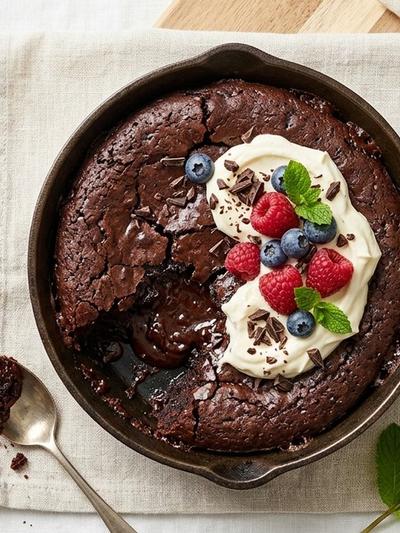
Imagine pulling a cast-iron skillet out of the oven, the edges bronzed and slightly crispy, the center still soft and stretchy with melted mozzarella threaded through every bite. This is not your average keto cookie. The fathead dough technique — mozzarella melted with cream cheese, then folded into almond flour — creates a texture that sits somewhere between a chewy pizzeria breadstick and a warm chocolate chip cookie, and it is completely addictive. Chunks of 85% dark chocolate go molten in the oven, espresso powder deepens every note, and toasted almonds shatter against that pillowy, cheese-pull center.
Each thick wedge delivers 38 grams of fat and only 5 grams of net carbs, making this one of the most satisfying keto desserts you can bake. The high fat content comes naturally from mozzarella, cream cheese, almond flour, and butter — no coconut oil hacks or fat bombs needed. At roughly 77% of calories from fat, this is textbook ketogenic territory while still tasting like something you would order at a bakery.
The best part is the simplicity. You melt two cheeses, stir everything together, press the dough into a buttered skillet, and bake for under twenty minutes. One bowl for mixing, one skillet for baking, and you are done. Slice it into wedges for an after-dinner treat, or bake it on a weekend afternoon when you want the kitchen to smell like an Italian café without spending hours on elaborate pastry.
Ingredients (serves 4)
For the mozzarella cookie dough:
- 1½ cups (170g) shredded low-moisture mozzarella
- 2 oz (57g) cream cheese, cut into small cubes
- 1 cup (96g) blanched almond flour
- ⅓ cup (53g) granulated erythritol or monk fruit sweetener
- 1 large egg, at room temperature
- 1 tsp pure vanilla extract
- ½ tsp instant espresso powder
- ¼ tsp baking soda
- Pinch of fine sea salt
For the skillet and toppings:
- 2 tbsp (28g) unsalted butter
- 1 oz (28g) dark chocolate (85% cacao or higher), roughly chopped
- 2 tbsp (14g) sliced almonds
- Flaky sea salt, for finishing
Instructions
Preheat the oven to 350°F (175°C) and position a rack in the center.
Butter the skillet. Place the butter in a 10-inch cast-iron skillet and set it in the warming oven for 2–3 minutes, just until the butter melts. Remove the skillet, swirl to coat the bottom and halfway up the sides, and set aside.
Melt the cheeses. Combine the shredded mozzarella and cream cheese cubes in a large microwave-safe bowl. Microwave in 30-second bursts, stirring with a silicone spatula between each, until the mixture is smooth, stretchy, and fully melted — about 60 to 90 seconds total. Do not overheat or the mozzarella will seize.
Mix the dry ingredients. While the cheese melts, whisk the almond flour, sweetener, espresso powder, baking soda, and salt together in a medium bowl.
Build the dough. Add the egg and vanilla to the dry mixture and stir until just combined. Immediately scrape this into the hot melted cheese and work the two mixtures together with the spatula or lightly oiled hands. It will be sticky and stretchy — that is exactly right. Fold in about two-thirds of the chopped dark chocolate while the dough is still warm and pliable.
Press into the skillet. Transfer the dough to the buttered skillet. Using damp fingers or the back of an oiled spatula, press the dough into an even layer reaching about half an inch from the edges. Scatter the remaining dark chocolate chunks and sliced almonds across the top, pressing them gently into the surface.
Bake for 15–18 minutes. The cookie is done when the edges turn golden brown and pull slightly away from the skillet, but the center still looks soft and slightly underset — it will firm as it cools. Do not overbake; the gooey center is the whole point.
Finish and serve. Remove the skillet from the oven and immediately sprinkle flaky sea salt over the top. Let the cookie rest in the skillet for 5 minutes — the mozzarella sets up during this time, creating that perfect chewy-stretchy texture. Cut into 4 wedges and serve warm.
Nutrition per Serving
| Nutrient | Amount |
|---|---|
| Calories | ~442 kcal |
| Fat | ~38g |
| Protein | ~19g |
| Total Carbs | ~9g |
| Fiber | ~4g |
| Net Carbs | ~5g |
Nutrition is approximate and based on the stated ingredients. Erythritol carbs are excluded from net carb count as they have zero glycemic impact.
Tips & Variations
Use low-moisture mozzarella only. Fresh mozzarella packed in water contains far too much moisture and will turn the dough into a soupy, unworkable mess. The bagged shredded or block-style low-moisture mozzarella sold for pizza is exactly what you want — it melts smoothly and creates that signature stretchy chew.
Work the dough while the cheese is warm. Mozzarella dough stiffens quickly as it cools. If it becomes too firm to press into the skillet, pop the bowl back in the microwave for 15 seconds to re-soften. Oiling your hands lightly with olive oil or coconut oil prevents sticking and makes shaping effortless.
Choose your sweetener carefully. Granulated erythritol produces the best cookie-like texture here, but it can recrystallize slightly as it cools, creating a faint cooling sensation. If that bothers you, use an erythritol-monk fruit blend (like Lakanto Golden), which stays smoother. Avoid liquid sweeteners — they will throw off the dough consistency.
Make it a double-chocolate version. Replace 2 tablespoons of the almond flour with unsweetened cocoa powder for a deeply fudgy brownie-cookie hybrid. The espresso powder will amplify the chocolate even further. Keep the chopped dark chocolate on top for textural contrast.
Store and reheat for maximum gooeyness. Leftovers keep in an airtight container in the fridge for up to 4 days. To reheat, place a wedge in a dry skillet over medium-low heat for 2–3 minutes per side, or microwave for 20 seconds. The skillet method re-crisps the edges while re-melting the center — far superior to the microwave for texture.