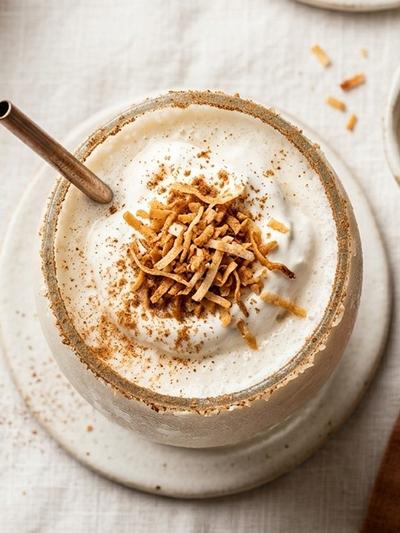
There is something deeply satisfying about a warm, dense bite of pound cake that crumbles just right between your teeth — buttery, golden, and unapologetically rich. These toasted coconut pound cake bites deliver exactly that experience, pulled from the air fryer with a crisp edge and tender center that rivals anything from your grandmother's kitchen. Shredded coconut gets folded into a thick, egg-rich batter and air-fried until the tops turn a gorgeous shade of amber, then each warm bite gets a lazy drizzle of tangy cream cheese glaze that pools into every crevice. They taste like a county fair dessert that somehow wandered into your keto lifestyle and decided to stay.
The macros tell a story that makes keto eaters grin. Each serving of three bites clocks in at roughly 33 grams of fat, only 3 grams of net carbs, and 8 grams of protein — with fat accounting for over 80% of the calories. Coconut flour and shredded coconut do the heavy lifting where wheat flour normally would, while butter and coconut oil keep the crumb impossibly moist. There is no sugar in sight, just a monk fruit–erythritol blend that caramelizes beautifully in the air fryer's dry heat.
The best part? You go from a mixing bowl to warm, glazed pound cake bites in about 22 minutes flat. No preheating a full oven, no waiting for a loaf pan to bake through, no testing with a toothpick every five minutes. The air fryer crisps the outside while keeping the inside soft and custardy — a texture that full-size pound cake rarely achieves. Make a batch after dinner, and you will be eating dessert before the kitchen is even cleaned up.
Ingredients (serves 4)
For the pound cake bites:
- 1/3 cup (40g) coconut flour
- 1/3 cup (25g) unsweetened shredded coconut
- 4 large eggs, room temperature
- 1/4 cup (56g) unsalted butter, melted
- 2 tablespoons (28g) coconut oil, melted
- 1/3 cup (55g) granular erythritol–monk fruit blend
- 1 teaspoon pure vanilla extract
- 1/2 teaspoon baking powder
- 1/4 teaspoon fine sea salt
For the cream cheese glaze:
- 2 oz (56g) full-fat cream cheese, softened
- 1 tablespoon (14g) unsalted butter, melted
- 2 tablespoons powdered erythritol–monk fruit blend
- 1/2 teaspoon pure vanilla extract
- 1 tablespoon heavy cream (if needed for consistency)
For the toasted coconut garnish:
- 2 tablespoons (10g) unsweetened shredded coconut
Instructions
Toast the garnish coconut. Place 2 tablespoons of shredded coconut in your air fryer basket in a single layer. Air fry at 300°F (150°C) for 2–3 minutes, shaking the basket once halfway through, until the flakes are golden and fragrant. Watch closely — coconut goes from toasted to burned in seconds. Transfer to a small bowl and set aside.
Mix the wet ingredients. In a large bowl, whisk together the melted butter, melted coconut oil, granular sweetener, and vanilla extract until smooth. Add the eggs one at a time, whisking thoroughly after each addition until the mixture is pale and well combined. The batter should look glossy and thick.
Add the dry ingredients. In a separate small bowl, whisk together the coconut flour, shredded coconut, baking powder, and salt. Add the dry mixture to the wet ingredients and stir with a spatula until no dry pockets remain. Let the batter rest for 3 minutes — coconut flour absorbs liquid slowly, and the rest will thicken the batter to a proper pound cake consistency. It should be thick and scoopable, not pourable.
Fill the molds. Lightly grease a silicone mini muffin mold (the kind with 6–8 cups that fits inside your air fryer basket) with a thin layer of coconut oil or cooking spray. Spoon the batter into each cup, filling them about three-quarters full. You will get approximately 12 bites total, so you will air fry in two batches.
Air fry the bites. Place the filled silicone mold in the air fryer basket. Cook at 325°F (163°C) for 10–12 minutes until the tops are domed, firm to the touch, and golden brown at the edges. A toothpick inserted into the center should come out with just a few moist crumbs — not wet batter. Remove the mold carefully and let the bites cool in the cups for 2 minutes before popping them out onto a wire rack. Repeat with the second batch.
Make the cream cheese glaze. While the second batch cooks, stir together the softened cream cheese, melted butter, powdered sweetener, and vanilla extract until completely smooth. If the glaze is too thick to drizzle, add heavy cream one teaspoon at a time until it reaches a lazy, pourable consistency — you want it thick enough to cling, not so thin that it runs right off.
Glaze and garnish. Arrange the cooled bites on a serving plate. Drizzle the cream cheese glaze generously over each one using a spoon or a fork, letting it drip down the sides. Immediately sprinkle the toasted coconut flakes over the glaze while it is still tacky so they stick. Serve warm or at room temperature.
Nutrition per Serving
| Nutrient | Amount |
|---|---|
| Calories | ~353 kcal |
| Fat | ~33g |
| Protein | ~8g |
| Total Carbs | ~8g |
| Fiber | ~5g |
| Net Carbs | ~3g |
Approximate values based on the stated ingredients. Erythritol carbs are excluded from net carb calculations as they have no glycemic impact.
Tips & Variations
Room-temperature eggs are not optional. Cold eggs will seize the melted butter and coconut oil into clumps, giving you a greasy, uneven batter. Pull your eggs out of the fridge at least 20 minutes before starting, or submerge them in a bowl of warm water for 5 minutes. The difference in texture is night and day — warm eggs create a smooth, emulsified batter that bakes into a velvety crumb.
Store and reheat like a pro. Unglazed bites keep in an airtight container in the fridge for up to 5 days. Reheat in the air fryer at 300°F (150°C) for 2–3 minutes to restore that crisp edge. Drizzle with fresh glaze just before serving — pre-glazed bites get soggy during storage. You can also freeze unglazed bites for up to 6 weeks; thaw overnight in the fridge before reheating.
Watch your sweetener choice for best results. Not all keto sweeteners behave the same. Granular erythritol–monk fruit blends work best in the batter because they dissolve cleanly and will not crystallize as the bites cool. Pure erythritol can develop a cooling aftertaste — the monk fruit component balances that out. For the glaze, powdered sweetener is essential; granular will leave a gritty texture. You can pulse granular sweetener in a blender for 30 seconds to powder it yourself.
Add a flavor twist. Fold 2 tablespoons of sugar-free dark chocolate chips (85% cacao or higher) into the batter for a chocolate-studded variation that adds roughly 1g net carbs per serving. Alternatively, add 1/2 teaspoon of almond extract alongside the vanilla for a Southern-style coconut-almond pound cake flavor. A light dusting of ground cinnamon on top of the glaze is a simple but excellent finishing touch.
Silicone molds make or break this recipe. Metal muffin tins conduct too much heat in the concentrated air fryer environment, often burning the bottoms before the centers set. A silicone mini muffin mold — widely available for a few dollars at any kitchen store — insulates the batter gently and lets you pop the bites out cleanly without sticking. If you only have a metal tin, line each cup with a small parchment square and reduce the temperature to 310°F (154°C).