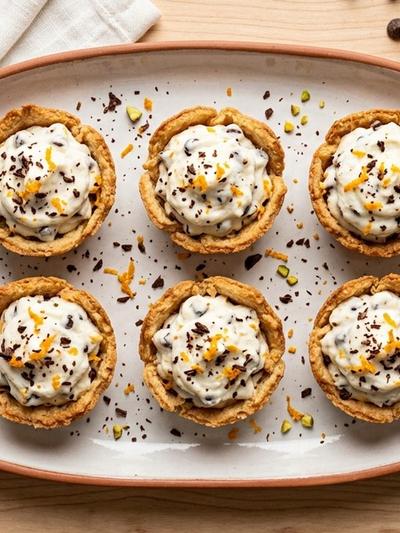
Imagine biting through a buttery cocoa-almond crust into a cloud of espresso-laced mascarpone so impossibly creamy it practically melts on your tongue. These air fryer mini cheesecakes capture everything you love about tiramisu and classic Italian cheesecake in a single, perfectly portioned bite. The mascarpone and cream cheese filling is dense yet silky, with a rich coffee backbone that deepens with every mouthful. A final dusting of unsweetened cocoa powder brings the whole thing together with bittersweet elegance.
Each serving delivers 35 grams of fat primarily from mascarpone and cream cheese, with only 3 grams of net carbs — making these mini cheesecakes a textbook keto dessert. At roughly 85% of calories from fat, the macro profile is ideal for anyone deep in ketosis who refuses to sacrifice dessert.
The air fryer is the secret weapon here. It circulates heat evenly around small ramekins or silicone molds, producing a set, custardy center without the fuss of a water bath or full-size oven. From start to finish, you are looking at just over 30 minutes — and most of that is hands-off cook time while the air fryer does the work.
Ingredients (serves 4)
For the cocoa-almond crust:
- 1/2 cup (48g) blanched almond flour
- 2 tablespoons (28g) unsalted butter, melted
- 1 tablespoon (5g) unsweetened cocoa powder
- 1 tablespoon (8g) granulated erythritol
- Pinch of fine sea salt
For the mascarpone filling:
- 8 oz (226g) mascarpone cheese, at room temperature
- 4 oz (113g) full-fat cream cheese, at room temperature
- 2 large eggs, at room temperature
- 1/3 cup (43g) powdered erythritol
- 2 tablespoons (30ml) freshly brewed espresso, cooled (or 2 teaspoons instant espresso dissolved in 2 tablespoons hot water)
- 1 teaspoon pure vanilla extract
- 1/8 teaspoon fine sea salt
For the cocoa dust topping:
- 1 tablespoon (5g) unsweetened cocoa powder
- 1/4 teaspoon powdered erythritol (optional, for a hint of sweetness in the dust)
Instructions
Prepare the crust. In a small bowl, stir together the almond flour, melted butter, cocoa powder, granulated erythritol, and salt until the mixture resembles wet sand. Divide the crust evenly among four oven-safe ramekins (6 oz / 180ml each) or silicone muffin cups. Press the mixture firmly into the bottom of each ramekin using the back of a spoon or your fingers. Place the ramekins in the freezer for 5 minutes while you make the filling — this helps the crust hold together.
Make the filling. In a medium bowl, beat the mascarpone and cream cheese with a hand mixer on medium-low speed until smooth and lump-free, about 1 minute. Add the powdered erythritol, cooled espresso, vanilla extract, and salt, and mix on low until combined. Add the eggs one at a time, beating on low after each just until incorporated. Do not over-mix — you want a silky batter with minimal air bubbles, which prevents cracking.
Fill the ramekins. Remove the ramekins from the freezer and divide the filling evenly among them, pouring over the chilled crust. Each ramekin should be about three-quarters full. Gently tap each ramekin on the counter two or three times to release any trapped air bubbles.
Preheat the air fryer. Set your air fryer to 300°F (150°C) and let it run for 2 minutes. The low temperature is essential — cheesecakes need gentle, even heat to stay creamy and avoid cracking.
Air fry the cheesecakes. Place the ramekins in the air fryer basket, leaving at least half an inch of space between them for air circulation. You may need to cook in two batches depending on the size of your air fryer. Cook at 300°F (150°C) for 16 to 18 minutes. The cheesecakes are done when the edges are set and the centers still have a slight jiggle — like soft gelatin, not liquid. They will continue to firm up as they cool.
Cool completely. Carefully remove the ramekins from the air fryer using tongs or an oven mitt. Let them cool on a wire rack at room temperature for 20 minutes, then transfer to the refrigerator. Chill for at least 2 hours, or ideally overnight, for the best texture and cleanest flavor.
Dust and serve. Just before serving, sift the unsweetened cocoa powder (mixed with the optional pinch of powdered erythritol) evenly over the top of each cheesecake. Serve straight from the ramekin, or run a thin knife around the edge and carefully unmold onto a plate.
Nutrition per Serving
| Nutrient | Amount |
|---|---|
| Calories | ~374 kcal |
| Fat | ~35g |
| Protein | ~10g |
| Total Carbs | ~5g |
| Fiber | ~2g |
| Net Carbs | ~3g |
Nutrition is approximate and calculated based on the stated ingredients. Erythritol carbs are excluded from net carb count as they have zero glycemic impact.
Tips & Variations
Room temperature ingredients are non-negotiable. Cold mascarpone and cream cheese will leave lumps in your batter no matter how long you mix. Set them out on the counter for at least 30 minutes before you begin, or microwave each in 10-second bursts until just softened — not melted.
Swap the espresso for other Italian flavors. For a lemon ricotta variation, replace the espresso with 1 tablespoon of fresh lemon juice and 1 teaspoon of lemon zest — just note that ricotta is slightly higher in carbs than mascarpone, so check labels. For an amaretto twist, use 1 tablespoon of sugar-free almond extract and fold in 2 tablespoons of toasted sliced almonds.
Watch your cocoa powder for hidden carbs. Not all cocoa powders are equal — some brands add sugar or fillers. Use 100% unsweetened natural or Dutch-process cocoa. A single tablespoon of pure cocoa has about 1 gram of net carbs and adds tremendous depth of flavor without moving the needle on your macros.
These are perfect for meal prep. Store the cheesecakes covered in the refrigerator for up to 5 days — they actually taste better on day two once the espresso flavor has had time to deepen and meld with the mascarpone. Add the cocoa dust just before serving so it stays dry and powdery. They also freeze well for up to 6 weeks; thaw overnight in the fridge.
Choose your sweetener wisely. Powdered erythritol blends most seamlessly into the filling, giving a smooth texture without grittiness. If you prefer monk fruit sweetener, use a brand that measures cup-for-cup like erythritol. Avoid liquid stevia here — the tiny volume makes it difficult to get even sweetness, and it can develop a bitter aftertaste when concentrated in a custard-style dessert.