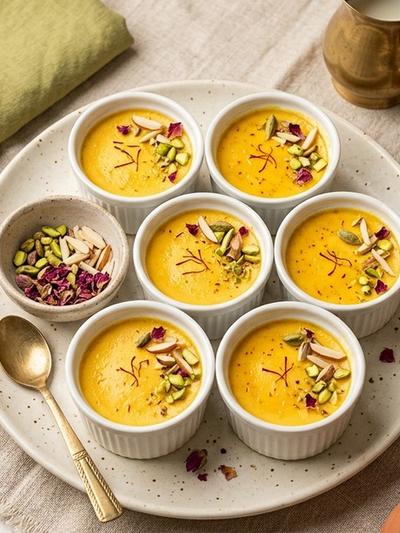
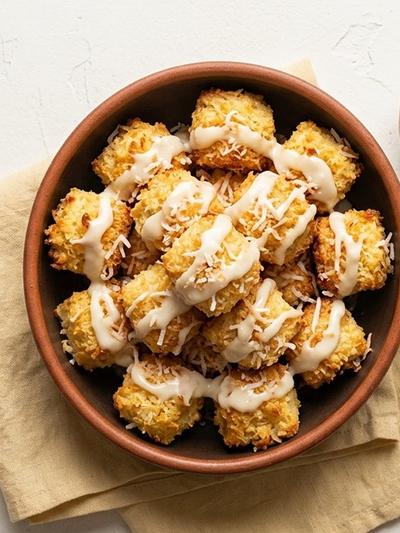
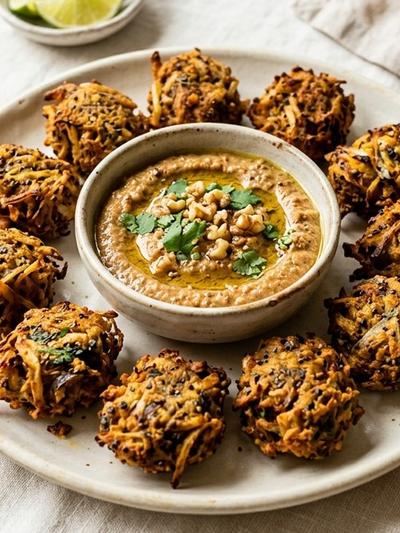
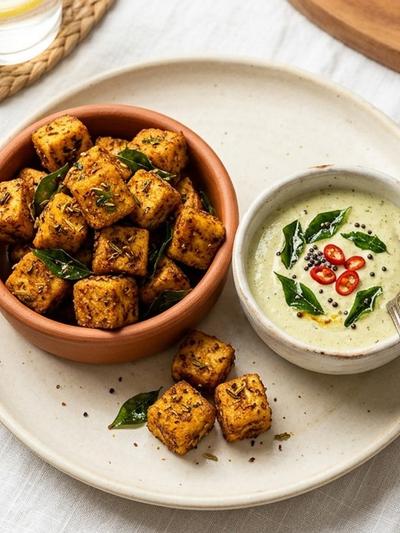
Imagine biting into a warm, golden square of kalakand — that beloved Indian milk cake — with a delicate crumble on the outside and a soft, fudgy center perfumed with cardamom and saffron. This air fryer version delivers exactly that experience, swapping traditional sugar for monk fruit sweetener and using almond flour as the base to keep every bite firmly in keto territory. The toasted pistachios on top add a gorgeous emerald crunch, and the saffron threads infuse each piece with that unmistakable golden warmth that makes Indian sweets so special.
Each serving delivers roughly 22 grams of fat from almond flour, cream cheese, and ghee, with only 4 grams of net carbs — well within strict keto limits. At 248 calories per generous two-piece serving, this dessert fits comfortably into your daily macros without sacrificing any of the richness you crave. The combination of paneer and cream cheese provides 8 grams of protein, making this more than just empty sweetness.
The air fryer is the secret weapon here. Traditional kalakand requires long, patient stirring on the stovetop as milk reduces. This shortcut version mixes everything in a bowl, shapes the batter, and air fries it in just 12 minutes. The result is a lightly caramelized exterior with a melt-in-your-mouth interior — perfect for Diwali celebrations, afternoon chai, or whenever you need a keto-friendly Indian sweet that actually tastes like the real thing.
Ingredients (serves 4)
For the kalakand batter:
- 1 cup (112g) blanched almond flour
- ½ cup (120g) fresh paneer, crumbled (or ricotta, well-drained)
- 3 tbsp (45g) cream cheese, softened
- 3 tbsp (42g) ghee, melted
- ¼ cup (40g) granulated monk fruit sweetener (or erythritol blend)
- ½ tsp ground cardamom
- Pinch of saffron threads, soaked in 1 tbsp warm cream
- 1 tbsp (7g) chia seeds
- ⅛ tsp salt
For the topping:
- 2 tbsp (16g) raw pistachios, finely chopped
- 1 tbsp (7g) flaked almonds
- 4-5 saffron threads
- ⅛ tsp ground cardamom
Instructions
Prepare the saffron cream. Warm 1 tablespoon of heavy cream in a small dish (10 seconds in the microwave or briefly on the stove) and add the pinch of saffron threads. Set aside to bloom for at least 5 minutes while you prepare the batter — the cream will turn a deep golden-orange color.
Mix the dry ingredients. In a medium mixing bowl, whisk together the almond flour, chia seeds, ground cardamom, monk fruit sweetener, and salt until evenly combined. The chia seeds will help bind the batter and add subtle texture without adding significant carbs.
Combine wet ingredients. In a separate bowl, combine the crumbled paneer, softened cream cheese, and melted ghee. Mash and stir vigorously with a fork until the mixture is mostly smooth with small paneer curds remaining — these little curds give kalakand its characteristic grainy texture. Stir in the bloomed saffron cream.
Form the batter. Pour the wet mixture into the dry ingredients and fold together until a thick, slightly sticky dough forms. It should hold together when pressed between your fingers. If it feels too dry, add another teaspoon of ghee. If too wet, add a tablespoon of almond flour.
Shape the kalakand. Line a small air fryer-safe pan or silicone mold (approximately 6 × 4 inches or 15 × 10 cm) with parchment paper. Press the batter evenly into the pan to about ¾-inch (2 cm) thickness. Use the back of a spoon or your fingers dampened with a little ghee to smooth the top firmly — compacting the mixture well ensures clean slices later.
Add the topping. Scatter the chopped pistachios and flaked almonds evenly over the surface, pressing them gently into the batter so they adhere. Place the remaining saffron threads decoratively on top and dust lightly with the extra pinch of ground cardamom.
Preheat the air fryer. Set your air fryer to 320°F (160°C) and let it preheat for 2 minutes. This moderate temperature is important — too high and the almond flour will brown before the center sets.
Air fry. Place the pan in the air fryer basket and cook for 10–12 minutes, until the top is golden and the edges just begin to pull away from the parchment. The center should feel firm to a gentle touch but still have a slight give — it will firm up further as it cools. If your air fryer runs hot, check at 8 minutes.
Cool and slice. Remove the pan carefully and let it cool in the pan for at least 15 minutes. The kalakand needs this resting time to set its fudgy texture. Once cooled, lift the parchment out and slice into 8 equal squares (2 pieces per serving). For the cleanest cuts, use a sharp knife wiped between slices.
Serve. Enjoy at room temperature or slightly warm alongside masala chai. For an extra-special presentation, place each square in a small paper candy cup and arrange on a decorative plate.
Nutrition per Serving
| Nutrient | Amount |
|---|---|
| Calories | ~248 kcal |
| Fat | ~22g |
| Protein | ~8g |
| Total Carbs | ~6g |
| Fiber | ~2g |
| Net Carbs | ~4g |
Nutrition is approximate, calculated based on the stated ingredients using standard USDA values. Actual values may vary depending on specific brands of paneer, almond flour, and sweetener used.
Tips & Variations
Choose the right sweetener for the best texture. Granulated monk fruit or an erythritol–monk fruit blend works best here because it dissolves into the batter and provides bulk similar to sugar. Pure stevia drops are too concentrated and will not give you the same fudgy consistency — if using stevia, reduce to ¼ teaspoon liquid and add 2 extra tablespoons of almond flour to compensate for the lost volume. Avoid sweeteners with maltodextrin or dextrose fillers, which spike blood sugar and add hidden carbs.
Store for up to five days. Keep leftover kalakand in an airtight container in the refrigerator. The texture actually improves after a day as the chia seeds continue to absorb moisture and the flavors meld. Bring pieces to room temperature for 10 minutes before eating for the best fudgy texture, or enjoy them cold for a denser, more cheesecake-like bite.
Swap paneer for ricotta in a pinch. If fresh paneer is hard to find, well-drained whole-milk ricotta works beautifully. Strain the ricotta through cheesecloth for 30 minutes to remove excess moisture. The texture will be slightly smoother than traditional kalakand but equally delicious. Avoid low-fat ricotta — full-fat is essential to hit the right keto macros.
Turn these into festive rose kalakand. Replace the saffron cream with 1 teaspoon of rose water and tint the batter with a tiny drop of natural pink food coloring for a stunning rose-flavored variation. Top with dried rose petals and silver leaf (vark) for an authentic Indian mithai presentation that is perfect for Diwali, Eid, or Holi celebrations.
Watch the air fryer temperature closely. Every air fryer model heats differently, and almond flour burns more easily than wheat flour because of its higher fat content. If you notice the top browning too quickly, tent a small piece of foil loosely over the pan for the remaining cook time. The kalakand is done when a toothpick inserted in the center comes out with just a few moist crumbs — not wet batter.